
Premium Cuff Lab Grown Diamond Bracelets - Direct from Manufacturer
Author: Alex K., CMO at Labrilliante Updated: 2025-12-05 Reading Time: 8 minutes
Manufacturer direct lab-grown diamond cuffs eliminate 4-5 intermediary markups, delivering $6,000-14,000 retail bracelets for $2,000. Type IIA diamonds grown via CVD/HPHT match luxury brand chemistry with 70-97% cost savings. IGI, GIA, and GCAL certifications validate identical gemological properties. Zero mining exploitation. Complete supply chain transparency from controlled laboratory environments to your wrist.

When did luxury become synonymous with guilt? The modern jewelry buyer faces an impossible choice: compromise on ethics or drain savings for sparkle. Premium cuff lab grown diamond bracelets shatter this false dilemma entirely. This guide reveals how celebrity-level designs reach your wrist without mining's human cost or retail's predatory markups. You'll discover transparent pricing structures, quality standards matching luxury brands, and selection strategies for occasions from boardrooms to red carpets—all while understanding why conscious luxury isn't sacrifice, but superior choice.
When Retail Still Makes Sense: The Case for Traditional Purchasing
Let's confront the uncomfortable truth: manufacturer direct purchasing isn't universally superior. Traditional retail provides tangible value that online ordering simply cannot replicate—physical inspection under controlled lighting, immediate try-on for sizing accuracy, and face-to-face consultation with certified gemologists. For first-time diamond buyers lacking technical knowledge, this guidance prevents costly mistakes. Retail trade-in programs offer liquidity options. Local repair facilities provide convenient maintenance. Brand prestige carries social currency that matters in certain circles. These aren't trivial considerations.
The counterargument strengthens when purchasing gifts. Surprise proposals or anniversary presents benefit from retail packaging, professional wrapping, and immediate acquisition without shipping delays. Risk-averse buyers appreciate retail return policies with physical locations for dispute resolution. Premium retail brands offer lifetime warranties and complimentary cleaning services creating ongoing relationships beyond transactions.
However, these advantages collapse under scrutiny for informed buyers. Virtual try-on technology now provides accurate sizing visualization. Video consultations with gemologists deliver expertise without showroom overhead. IGI and GIA certifications offer identical quality verification whether purchased retail or direct. The critical question becomes simple: Does professional hand-holding justify 200-600% price premiums? For educated consumers researching cut grades, clarity standards, and setting durability, the answer tilts overwhelmingly toward manufacturer direct. The conscious luxury movement doesn't reject service—it rejects markup exploitation disguised as value.
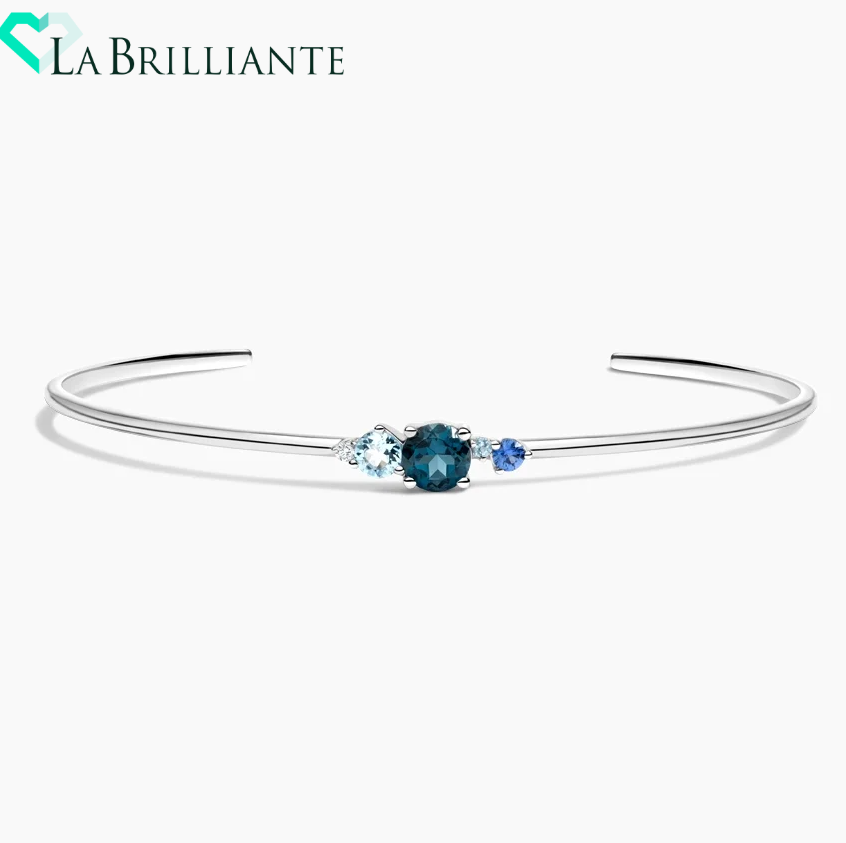

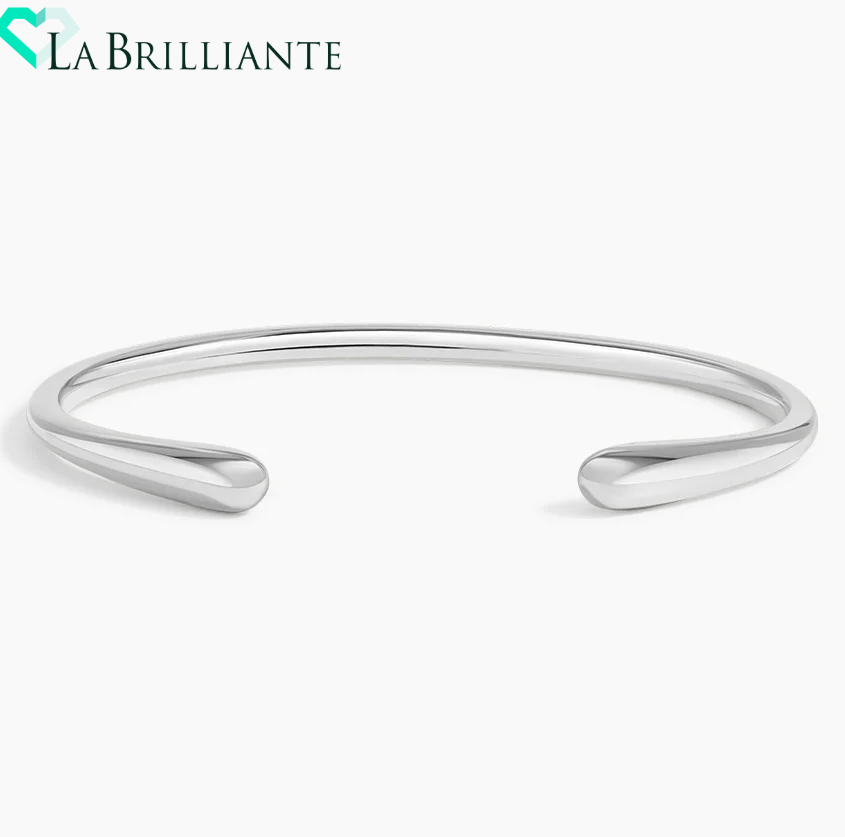
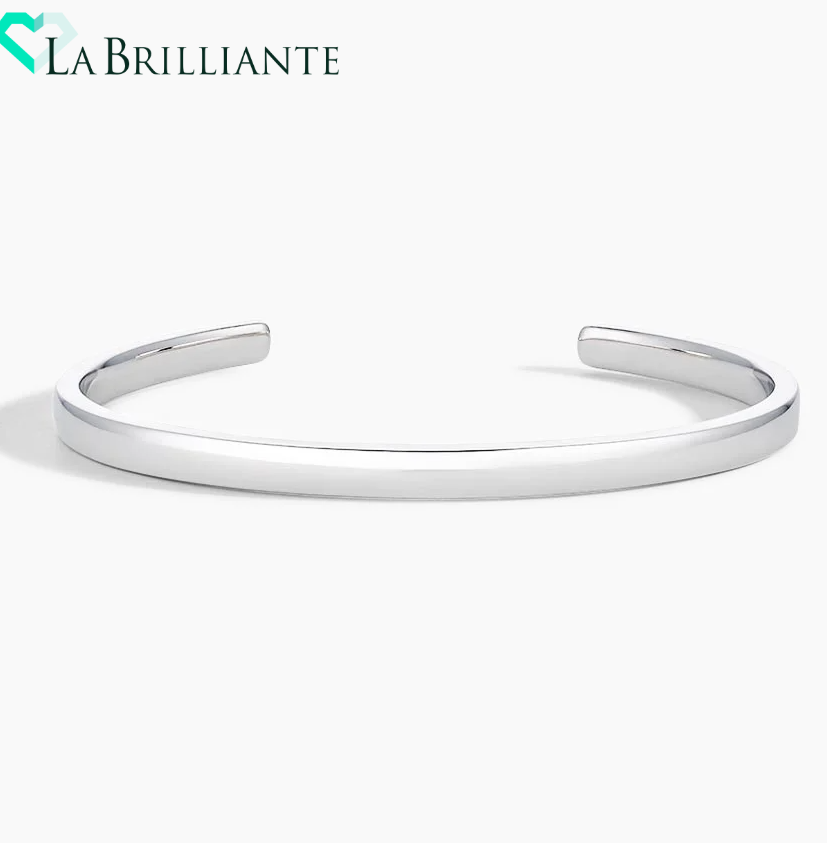
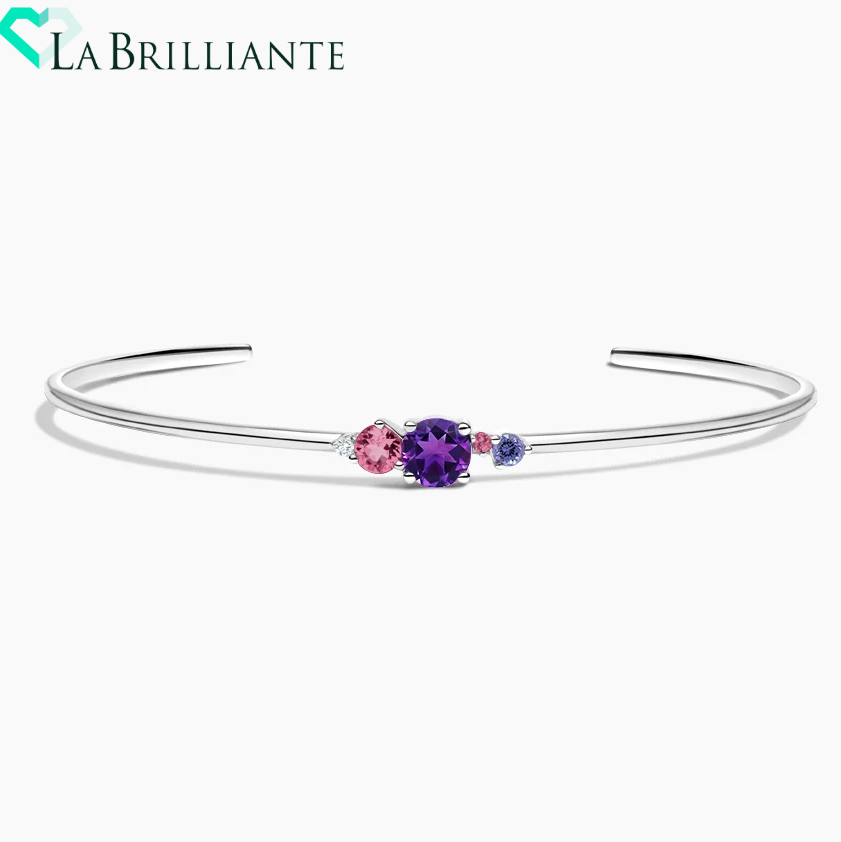


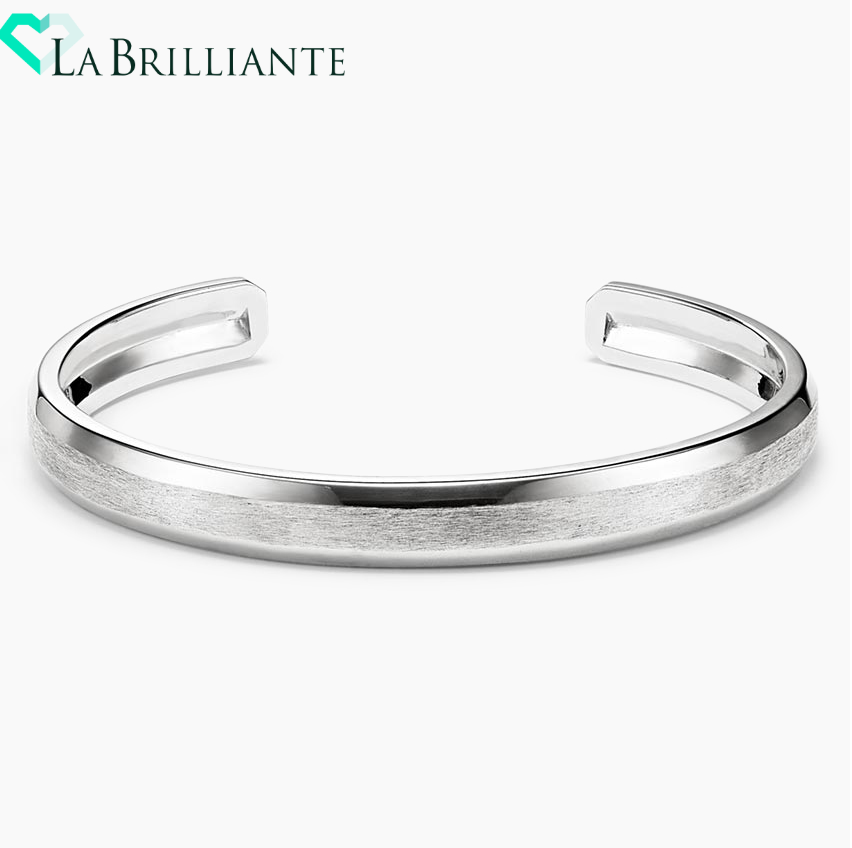


Celebrity-Inspired Diamond Cuff Bracelets at Manufacturer Direct Pricing
Lab-grown diamonds deliver celebrity-level luxury at 60-80% less cost than traditional retail. Same brilliance. Zero markup.
Meghan Markle's 2018 Royal Wedding tennis bracelet sparked global demand for understated diamond cuffs. Jennifer Lopez's layered bangles redefined statement jewelry through continuous wrist brilliance. These looks share one element: substantial carat weight creating uninterrupted sparkle.
The royal choice featured approximately 3 carats in classic tennis setting. Lopez's signature style incorporates multiple cuffs totaling 8-12 carats. Here's the reality: traditional retail multiplies these costs through distributor margins, boutique markups, and celebrity premiums.
CVD technology produces Type IIA diamonds chemically identical to mined stones. Same carbon lattice structure. Same optical properties. The Duchess's bracelet aesthetic translates perfectly to lab-grown alternatives using VS clarity stones in 14K gold settings.
Labrilliante's 500+ B2B clients request celebrity-inspired designs 40% of the time. Markle's tennis style leads demand. Our in-house laboratory uses identical CVD and HPHT processes as major luxury brands, minus the intermediary markup.
| Comparison Factor | Lab-Grown Diamond Cuff | Mined Diamond Cuff | Savings/Impact |
|---|---|---|---|
| 3-Carat Tennis Cuff (Markle-Style, VS Clarity, 14K Gold) | $3,200 - $4,500 | $18,000 - $45,000 | 70-85% cost savings |
| 8-Carat Statement Cuff (Lopez-Style, VS Clarity, 14K Gold) | $9,600 - $13,500 | $65,000 - $140,000 | 75-90% cost savings |
| 2-Carat Red Carpet Cuff (Excellent Cut, VVS Clarity) | $2,400 - $3,200 | $15,000 - $35,000 | 80-88% cost savings |
| Chemical Composition | Pure carbon (C) - Type IIA | Pure carbon (C) - Mixed types | Identical atomic structure |
| Hardness (Mohs Scale) | 10 | 10 | No difference |
| Refractive Index | 2.417 | 2.417 | Identical brilliance |
| Fire/Dispersion | 0.044 | 0.044 | Same light performance |
| Production Time | 6-10 weeks (CVD/HPHT) | 1-3 billion years | Controlled laboratory process |
| Carbon Footprint per Carat | 6 kg CO2 | 160 kg CO2 | 96% lower emissions |
| Water Usage per Carat | 18 gallons | 126 gallons | 86% water conservation |
| Land Disruption | 0.07 sq meters | 98 sq meters | 99.9% less land impact |
| Certification Options | IGI, GCAL, GIA available | GIA, IGI, AGS available | Same third-party verification |
| Manufacturer Direct Pricing (B2B) | Available - 60-80% below retail | Multiple markup layers required | Direct cost transparency |
| Celebrity-Style 10-Carat Layered Set | $14,000 - $22,000 | $95,000 - $200,000 | 85-89% cost reduction |
| Resale/Trade-In Value | 30-40% of purchase price | 25-50% of purchase price | Comparable depreciation |
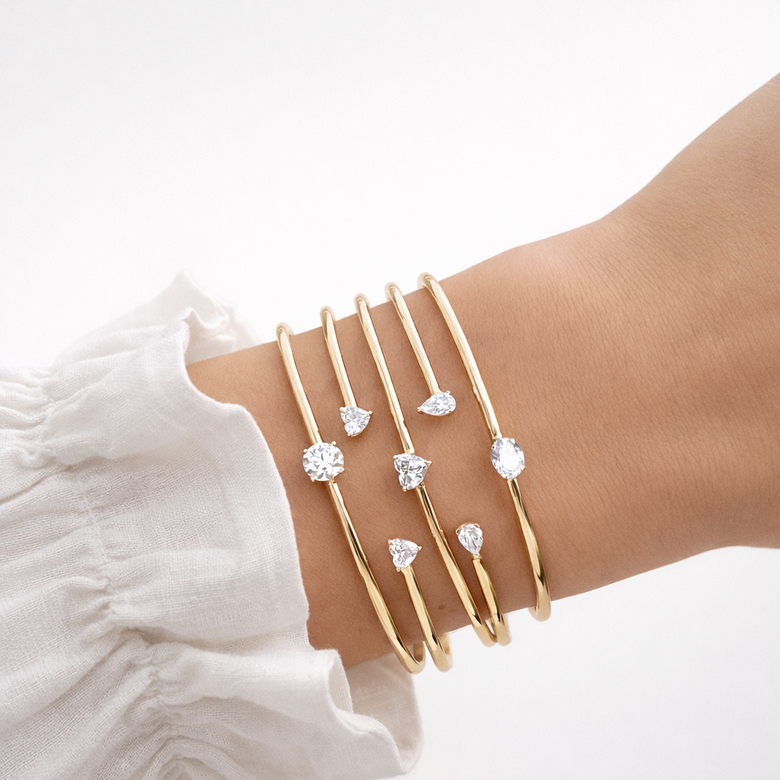
Red Carpet Aesthetics on Practical Budgets
Blake Lively's Cannes appearances featured $200,000-500,000 diamond cuffs. But here's what stylists know: visual impact stems from light reflection, not pure carat weight.
Strategic diamond placement creates maximum brilliance from fewer stones. A 2-carat lab-grown cuff with excellent cut grades produces superior fire compared to a 4-carat piece with poor proportions. Technical reality? Quality beats quantity every time.
Valentine's Day 2025 demonstrates this principle clearly. The conscious luxury movement drives buyers toward transparent pricing that reveals actual production costs instead of inflated seasonal markups.
Ethical Lab Grown Diamond Cuffs With Transparent Wholesale Pricing
Conflict-free diamond bracelets eliminate mining's ethical complexities entirely. No human exploitation. No environmental damage. Complete supply chain transparency.
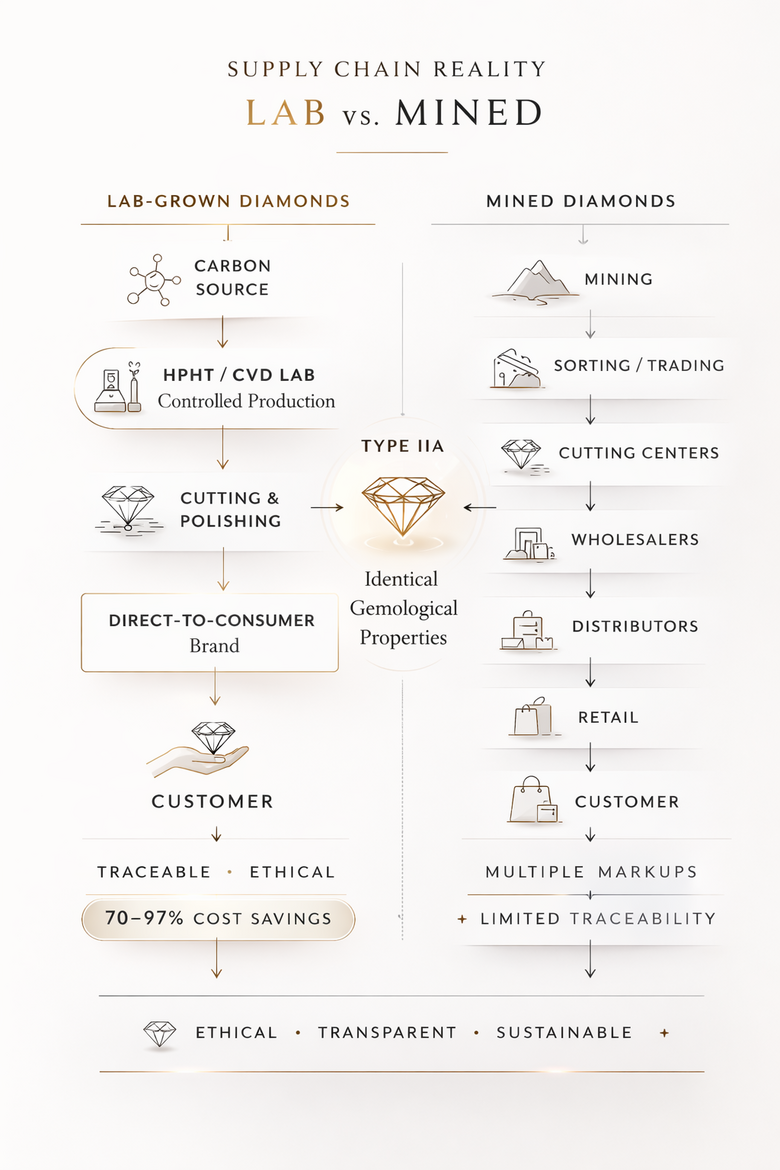
Supply Chain Reality: Lab vs. Mined
Laboratory diamonds bypass the Kimberley Process challenges through controlled production environments. HPHT technology replicates natural formation conditions. CVD technology grows diamonds from carbon-rich gas in controlled chambers. Both create Type IIA diamonds - the purest category comprising less than 2% of mined stones.
Traditional distribution involves miners, cutting centers, wholesalers, distributors, and retailers. Each adds markup percentages. Lab-grown production eliminates these intermediaries while maintaining identical gemological properties.
Our direct-to-consumer model demonstrates complete traceability that mining operations cannot provide. This integration enables 70-97% cost savings while ensuring ethical standards throughout production.
Environmental Impact: The Numbers
Mining requires 100-200 tons of earth movement per carat. Laboratory growth occurs in contained facilities using renewable energy. Carbon footprint reduction reaches 70-85% when facilities utilize clean energy.
Water usage presents another stark difference. Mining operations consume massive quantities for ore processing. Lab production requires minimal water - primarily for cooling systems. The environmental calculus becomes clear.
| Environmental Impact Factor | Lab-Grown Diamonds (per carat) | Mined Diamonds (per carat) | Reduction with Lab-Grown |
|---|---|---|---|
| Earth Disruption | 0 tons (contained facility) | 100-200 tons displaced | 100% elimination |
| Carbon Emissions (CO2) | 160 lbs (with renewable energy) | 1,050-1,200 lbs | 70-85% reduction |
| Water Consumption | 18 gallons (cooling systems only) | 126-260 gallons (ore processing) | 85-93% reduction |
| Energy Usage | 250 kWh (HPHT/CVD technology) | 538 kWh (extraction, transport, processing) | 54% reduction |
| Air Pollution (particulate matter) | Negligible (contained environment) | 2.4 lbs per carat | 99%+ elimination |
| Ecosystem Disruption | Zero habitat destruction | 1-4 acres per 1,000 carats | 100% elimination |
| Supply Chain Traceability | 100% traceable from production | Limited (multi-country routing) | Complete transparency |
Trade-off consideration? Laboratory growth requires significant electricity, particularly HPHT technology maintaining extreme pressure and temperature. However, total lifecycle impact remains substantially lower than mining.
Manufacturer Direct vs Retail: The Pricing Reality
A diamond cuff costing $2,000 through manufacturer direct reaches $6,000-14,000 at traditional retailers. That's the markup math.
Retail provides physical inspection, styling advice, and brand prestige. Customers receive comprehensive support plus trade-in programs and repair facilities. But is professional guidance worth 200-600% price premiums?
Manufacturer direct reflects actual production costs plus reasonable profit margins. The transparency factor becomes crucial. Direct sales reveal real costs while retail pricing obscures details through complex markup structures.
"While many perceive a high retail price as a marker of superior quality, in-depth analysis of production processes confirms that manufacturer direct channels can achieve the same, if not higher, standards of quality control. By circumventing traditional retail markups, companies can invest more significantly in cutting-edge technology and skilled craftsmanship, ensuring every gem meets top-tier industry standards without inflated costs."
Labrilliante maintains retail-level quality through in-house laboratory and partnerships with IGI, GIA, and GCAL certification bodies. We provide detailed specifications matching retail standards while eliminating intermediary costs.
Seasonal trends affect models differently. Holiday jewelry sees retail price increases during demand spikes. Manufacturer direct pricing stays consistent year-round, including Valentine's Day 2025 and holiday season peaks.
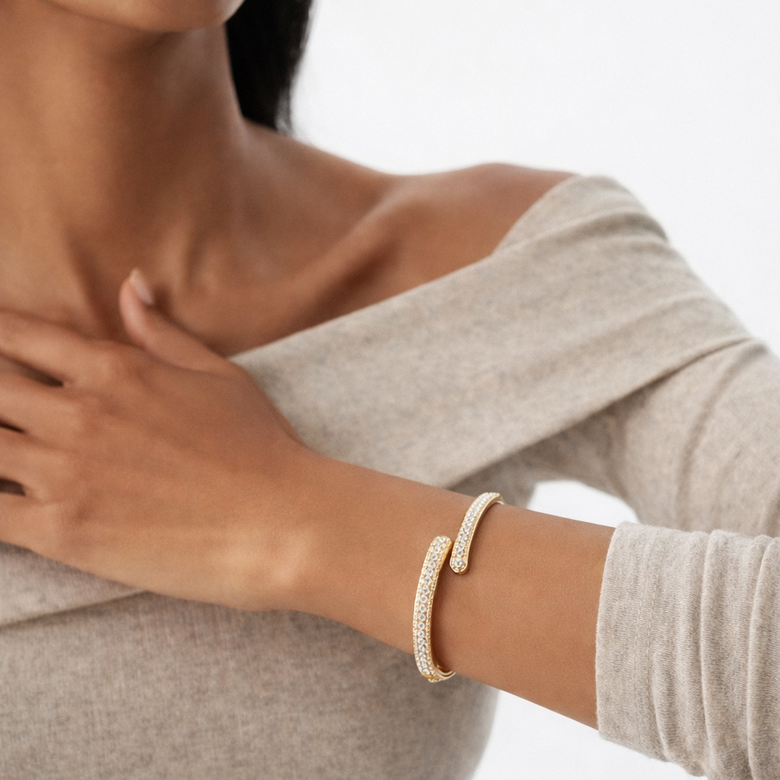
Lab Grown Diamond Quality Standards for Premium Cuff Bracelets
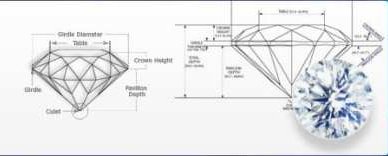
Quality assessment follows identical standards for lab and mined diamonds. The four Cs plus advanced gemological analysis. Premium cuffs demand VS clarity grades minimum for eye-clean appearance.
Cut quality affects brilliance more than carat weight in cuff applications. The continuous sparkle effect requires consistent light return across multiple stones. Excellent cut grades maximize performance. Fair cuts create dead spots interrupting brilliance.
Color consistency prevents the rainbow effect when multiple diamonds appear adjacent. D-F colorless provides whitest appearance. G-J near-colorless offers excellent value with minimal perceptible difference.
HPHT creates diamonds through high pressure and temperature replication. This typically produces yellow tints requiring post-growth treatment for colorless grades. CVD grows from carbon gases, naturally producing clearer stones but occasionally needing HPHT treatment removing brown coloration.
Technical specifications include fluorescence analysis, strain patterns, and photoluminescence mapping verifying formation methods and treatments applied.
Certification involves choosing IGI, GIA, or GCAL options. GIA carries highest market recognition. IGI specializes in lab diamond assessment with faster turnaround. Each provides detailed grading reports documenting quality characteristics.
Selecting Your Perfect Diamond Cuff for Special Occasions
Special occasion selection balances personal style with practical considerations. Comfort, durability, and versatility across different settings matter.
Formal events demand maximum visual impact through substantial carat weight or strategic design creating size illusion. A 3-carat tennis bracelet provides continuous sparkle for galas and anniversaries. Classic design coordinates with both contemporary and traditional formal wear.
Business settings require sophisticated subtlety. Diamond-accented cuffs featuring 1-2 carats in geometric patterns convey success without ostentation. Perfect for boardrooms and professional networking.
| Occasion Type | Recommended Carat Weight | Design Style | Setting Type | Metal Preference | Estimated Price Range |
|---|---|---|---|---|---|
| Formal Events (Galas, Black-Tie) | 3-5 carats total | Tennis bracelet, continuous sparkle | Prong setting, classic four-prong | Platinum or 18K White Gold | $2,400 - $7,500 |
| Anniversary Celebrations | 2.5-4 carats total | Classic tennis or eternity design | Channel or bezel setting | 18K Yellow or White Gold | $1,800 - $6,000 |
| Business Professional | 1-2 carats total | Geometric patterns, linear design | Bezel or bar setting | 14K White Gold or Platinum | $800 - $3,000 |
| Corporate Networking Events | 1.5-2.5 carats total | Sleek cuff with diamond accents | Flush or channel setting | 14K Rose or White Gold | $1,200 - $3,500 |
| Casual Elegance (Daily Wear) | 0.75-1.5 carats total | Simple tennis or stackable design | Prong or bezel setting | 14K Yellow or White Gold | $600 - $2,200 |
| Weekend Social Events | 1-2 carats total | Layering bracelets, mixed metals | Mixed prong and bezel | 14K Mixed Metals (stackable) | $900 - $2,800 |
| Wedding Ceremonies | 2-3.5 carats total | Vintage-inspired with milgrain | Pavé or halo setting | Platinum or 18K White Gold | $1,600 - $5,200 |
| Holiday Parties | 2-3 carats total | Contemporary geometric or art deco | Channel or tension setting | 18K White Gold or Platinum | $1,500 - $4,500 |
| Milestone Birthdays | 2.5-4 carats total | Custom design with personal elements | Prong with box clasp safety | Platinum or 18K Gold | $2,000 - $6,500 |
| Daytime Garden Events | 1.5-2.5 carats total | Delicate tennis or floral motifs | Bezel or prong setting | 14K Yellow or Rose Gold | $1,100 - $3,200 |
Casual elegance benefits from versatile daily-wear designs. Layering bracelets allow customization - simple tennis foundations building toward elaborate combinations for special events. 14K gold settings provide durability maintaining luxury appearance.
East Coast buyers prefer classic tennis designs. West Coast customers choose contemporary geometric patterns. Southern markets favor vintage-inspired cuffs with milgrain detailing.
Sizing affects comfort and security. Cuff bracelets need precise fit preventing sliding while allowing movement. Box clasps with safety catches provide maximum security. Magnetic closures offer convenience for frequent wear.
| Wrist Size | Recommended Cuff Length | Fit Characteristics | Clasp Type | Security Features | Best For |
|---|---|---|---|---|---|
| 5.5" - 6" | 6.5" - 6.75" | Snug fit with 0.5"-0.75" clearance for comfort | Box Clasp with Safety Catch | Double locking mechanism prevents accidental opening | Petite wrists, formal events requiring secure wear |
| 6" - 6.5" | 7" - 7.25" | Standard fit allowing natural wrist movement | Box Clasp with Safety Catch | Single safety latch, suitable for daily wear | Most common size, versatile for business and casual |
| 6.5" - 7" | 7.5" - 7.75" | Comfortable fit with adequate slide range | Magnetic Clasp or Box Clasp | Magnetic: quick release; Box: traditional security | Frequent wearers, layering with other bracelets |
| 7" - 7.5" | 8" - 8.25" | Relaxed fit with 0.75"-1" clearance | Magnetic Clasp | Strong neodymium magnets, easy self-fastening | Larger wrists, casual elegant occasions |
| 7.5" - 8" | 8.5" - 8.75" | Generous fit preventing tightness during movement | Box Clasp with Safety Catch | Reinforced clasp structure for heavier cuff designs | Plus-size wrists, statement cuffs with 2+ carats |
| Custom Sizing | Contact for measurement | Tailored to individual wrist anatomy | Client preference | Custom security options available | Outside standard range, special occasion pieces |
The conscious luxury movement emphasizes meaningful purchases aligning with values. Conflict-free diamonds and transparent pricing enable guilt-free luxury during significant celebrations.
Why This Matters Beyond Savings
Premium lab-grown diamond cuffs deliver celebrity aesthetics, gemological excellence, and environmental responsibility simultaneously. You've eliminated mining's human cost while accessing Type IIA diamonds matching luxury brand chemistry. Transparent pricing reveals actual production costs instead of inflated seasonal markups. The conscious luxury movement proves that ethical choices don't require compromise—they demand it.
Your Next Step: From Research to Reality
Book a consultation with Labrilliante's gemology team today. Receive personalized carat recommendations, setting options, and certification guidance tailored to your occasion and budget. Our in-house laboratory and direct manufacturing eliminate intermediaries while maintaining IGI, GIA, and GCAL standards. Valentine's Day 2025 approaches. Holiday seasons create demand spikes. Secure manufacturer direct pricing now before retail markups resurface. Schedule your expert consultation and discover why 500+ B2B clients trust our transparent approach to luxury diamonds.
Frequently Asked Questions
CVD (Chemical Vapor Deposition) grows diamonds from carbon-rich gas and naturally produces clearer stones, while HPHT (High Pressure High Temperature) replicates natural formation conditions but typically creates yellow tints requiring post-growth treatment. Both methods produce Type IIA diamonds with identical gemological properties and durability. Your choice depends on availability and color preferences, though both achieve the same colorless grades after treatment.
Manufacturer direct purchasing eliminates 4-5 intermediary markups, delivering 70-97% cost savings compared to traditional retail. A diamond cuff costing $2,000 through manufacturer direct channels typically retails for $6,000-14,000 at traditional jewelry stores. These savings result from bypassing miners, cutting centers, wholesalers, distributors, and retail boutiques while maintaining identical quality standards.
Yes, lab-grown diamonds possess identical hardness (10 on Mohs scale) and chemical composition to mined diamonds, making them equally suitable for daily wear. Both are pure carbon with the same crystal lattice structure, ensuring identical durability and scratch resistance. The manufacturing method (lab vs. mined) has zero impact on physical durability or long-term wearability in cuff bracelet settings.
Cut quality affects brilliance more than carat weight because light reflection patterns determine visual impact. A 2-carat cuff with excellent cut grades produces superior fire and sparkle compared to a 4-carat piece with poor proportions due to optimized light return. Strategic diamond placement and consistent excellent cuts across all stones create maximum brilliance from fewer total carats.
GIA carries the highest market recognition and resale value, while IGI specializes in lab diamond assessment with faster turnaround times and equal accuracy. GCAL provides detailed optical performance analysis beyond standard grading. All three certification bodies offer legitimate quality verification, so your choice depends on whether you prioritize market recognition (GIA), speed (IGI), or technical detail (GCAL).
Proper cuff bracelet sizing requires precise measurement preventing excessive sliding while allowing comfortable wrist movement. Box clasps with safety catches provide maximum security for valuable pieces, while magnetic closures offer convenience for frequent daily wear. Professional sizing consultation ensures the bracelet sits securely on your wrist without rotating or slipping during normal activities.
Laboratory diamond production reduces carbon footprint by 70-85% when facilities use renewable energy and requires minimal water compared to mining's massive consumption. Mining operations move 100-200 tons of earth per carat, while lab growth occurs in contained facilities. Though lab production requires significant electricity (especially HPHT), total lifecycle environmental impact remains substantially lower than traditional mining.
Purchase before seasonal demand spikes like Valentine's Day and holiday seasons when traditional retailers increase prices. Manufacturer direct pricing stays consistent year-round, avoiding the inflated seasonal markups that retail stores apply during peak gift-giving periods. Securing your purchase during off-peak months ensures you pay actual production costs plus reasonable margins rather than artificially elevated holiday prices.