
Huggie Lab-Grown Diamond Earrings: Styles & Savings Guide
Author: Alex K., CMO at Labrilliante Updated: 2025-11-30 Reading Time: 8 minutes
Quick Take: Huggie earrings with lab-grown diamonds deliver identical sparkle at 70-97% lower prices than mined equivalents. Direct-from-manufacturer channels cut costs further—identical 0.75 ctw pieces cost $150 versus $1,200 retail. Type IIa crystal purity exceeds most natural diamonds, while IGI certification guarantees specifications. Strategic choices in diameter (10-14mm), setting style, and metal color optimize your budget without compromising quality.
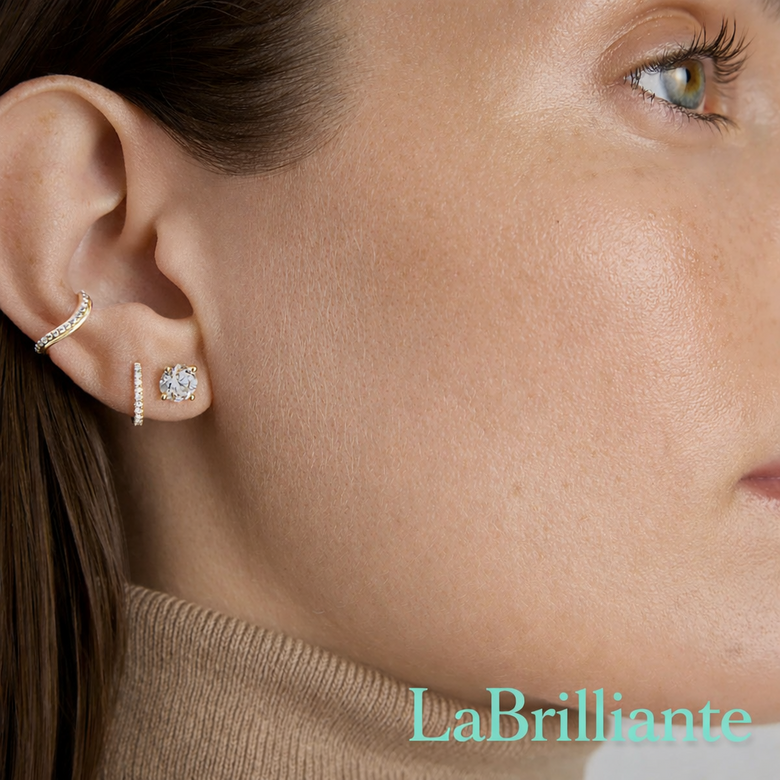
Modern jewelry buyers face a revolution in accessible luxury. Huggie lab-grown diamond earrings represent this shift—delivering the brilliance and prestige of traditional diamonds without the ethical concerns or inflated costs that plagued previous generations. This guide reveals how diameter choices, setting configurations, and metal selections transform your budget while maintaining uncompromising quality standards. You'll discover why Type IIa specifications matter, how supply chain positioning affects pricing, and which strategic decisions maximize visual impact per dollar. Whether you're building an ear stack or selecting your first diamond huggies, informed choices separate exceptional value from empty promises.
When Natural Diamonds Still Make Sense: The Resale Reality
The lab-grown diamond revolution faces one legitimate criticism: resale value remains significantly lower than natural equivalents. While a $2,000 natural diamond huggie might retain 40-60% of purchase price after five years, lab-grown pieces typically recover only 10-25%. For buyers viewing jewelry as investment or future trade-in opportunities, this disparity matters substantially.
Certain scenarios favor natural diamonds despite higher upfront costs. Family heirlooms intended for generational transfer maintain emotional and financial value through scarcity and tradition. Insurance replacement values for natural stones appreciate over time, while lab-grown appraisals often depreciate. Collectors seeking rarity or planning estate portfolios find natural diamonds serve financial planning objectives lab-grown cannot match.
However, this resale argument applies primarily to investment-focused buyers—a minority segment. Most consumers purchase huggie earrings for personal enjoyment, not asset diversification. The 70-97% cost savings with lab-grown diamonds offset any resale disadvantage unless you're specifically building jewelry portfolios for liquidation. For everyday luxury and personal expression—the primary purpose of huggie earrings—lab-grown diamonds deliver superior value through identical beauty at accessible prices.
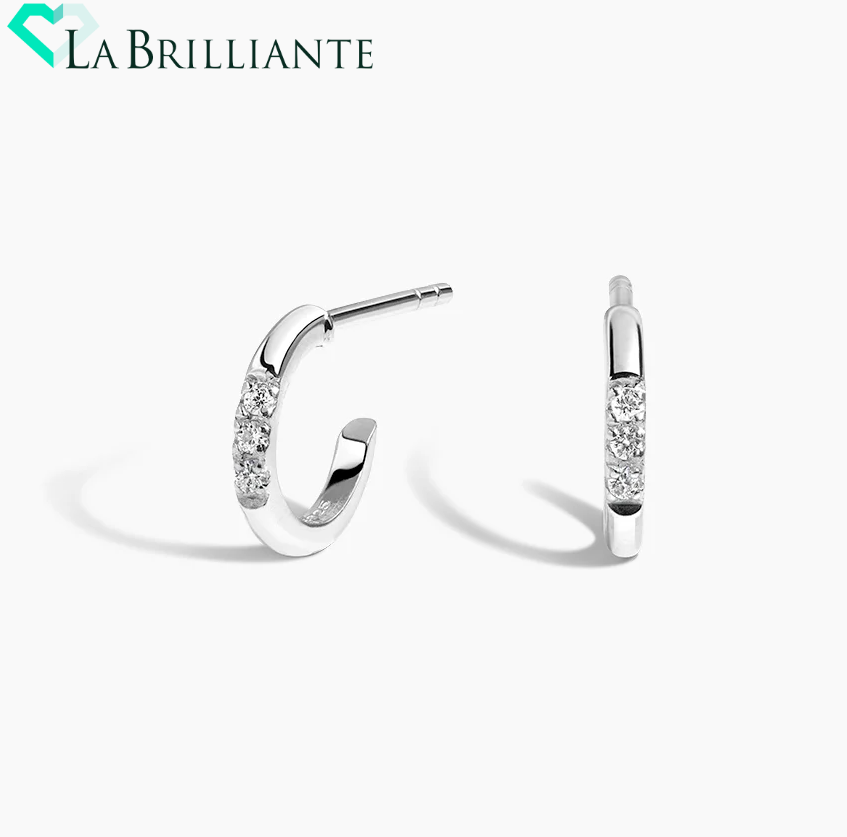

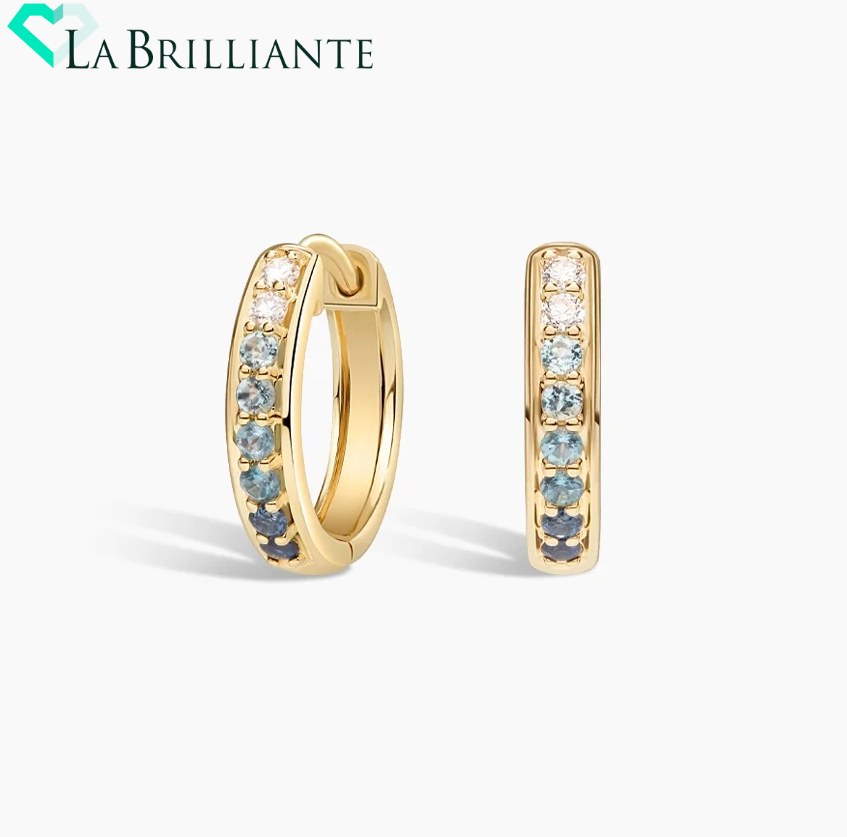


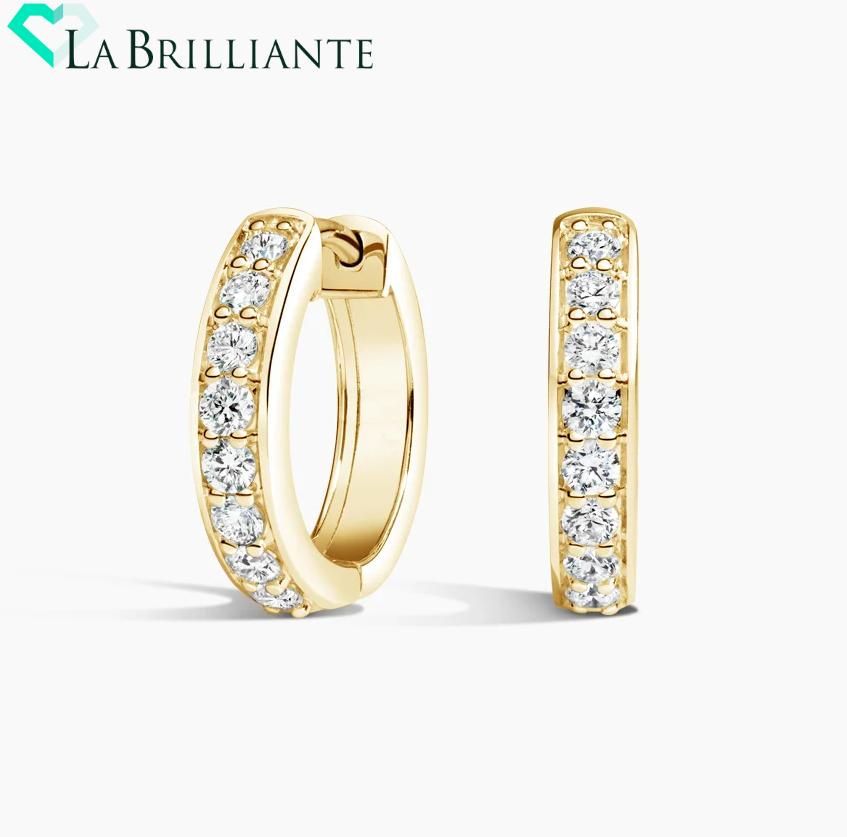


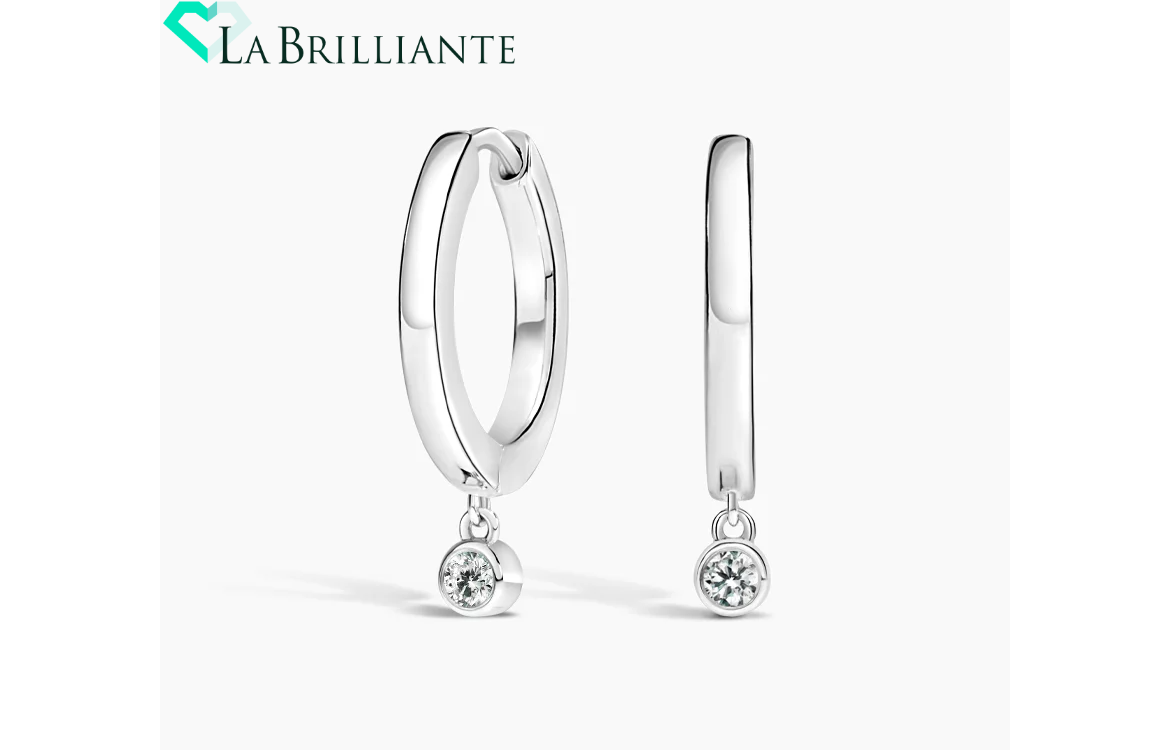
Compare Lab-Grown Diamond Huggie Pricing Across All Styles
Lab-grown diamond huggie earrings cost 70-97% less than natural diamond equivalents with identical specifications. That's massive savings. Pricing depends on total carat weight, diameter size, and setting complexity—not diamond origin.
The jewelry supply chain works like automotive manufacturing. Each middleman adds substantial markup. Traditional retail passes through diamond cutters, manufacturers, distributors, and stores. Direct-from-manufacturer eliminates these layers, explaining why identical 0.75 ctw EF/VS huggie earrings cost $150 manufacturer-direct versus $1,200 retail.
| Total Carat Weight (ctw) | Lab-Grown Manufacturer Direct | Lab-Grown Retail Price | Natural Diamond Retail Price | Savings vs Natural | Manufacturer vs Retail Markup |
|---|---|---|---|---|---|
| 0.18 ctw | $65 | $180 | $850 | 92% ($785) | 177% |
| 0.25 ctw | $95 | $280 | $1,200 | 92% ($1,105) | 195% |
| 0.40 ctw | $140 | $420 | $1,850 | 92% ($1,710) | 200% |
| 0.50 ctw | $180 | $550 | $2,400 | 93% ($2,220) | 206% |
| 0.75 ctw | $240 | $750 | $3,800 | 94% ($3,560) | 213% |
| 1.00 ctw | $350 | $1,100 | $6,200 | 94% ($5,850) | 214% |
| 1.25 ctw | $425 | $1,350 | $8,500 | 95% ($8,075) | 218% |
| 1.50 ctw | $520 | $1,650 | $11,200 | 95% ($10,680) | 217% |
| 2.00 ctw | $750 | $2,400 | $18,500 | 96% ($17,750) | 220% |
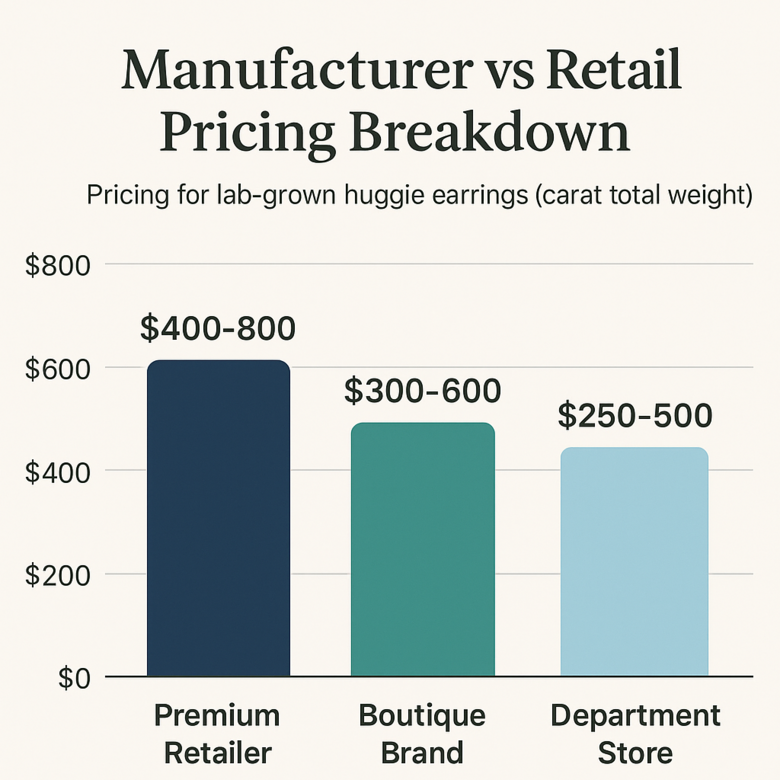
Manufacturer vs Retail Pricing Breakdown
Premium retailers position lab-grown huggie earrings at $400-800 for 0.5 ctw specifications. Boutique brands charge $300-600 for smaller 0.25-0.4 ctw configurations. The trade-off? Manufacturer pricing often involves longer production timelines since pieces are crafted-to-order.
Department store chains occupy middle pricing at $250-500 for 0.3-0.6 ctw lab-grown huggie earrings. They balance accessibility with profit margins. However, their selections typically feature lower clarity grades (SI1-SI2) compared to manufacturer-direct EF/VS specifications.
Carat Weight Cost Analysis by Size
Huggie carat weight scales exponentially, not linearly. Why? Geometric relationship between diamond size and ear coverage. A 10mm huggie accommodates 0.18-0.25 ctw in pavé settings. 14mm versions require 0.5-0.75 ctw for equivalent visual impact.
Entry-level 0.18 ctw configurations retail $40-100 through manufacturer channels. The sweet spot emerges at 0.5 ctw—manufacturer pricing stays $150-250 while natural equivalents exceed $2,000-3,500.
Premium territory begins at 1 ctw total weight. Lab-grown pricing reaches $300-500 manufacturer-direct. Natural versions? $5,000-8,000. At 2 ctw, the gap widens dramatically: $600-900 lab-grown versus $15,000-25,000 natural.
Finding Quality Huggies Under $300
The $300 threshold represents quality meeting accessibility for lab-grown huggie earrings. This price accommodates 0.4-0.6 ctw in 14K gold with VS clarity diamonds. Natural equivalent cost? $1,800-2,800.
Quality indicators include IGI certification, Type IIa classification, and secure hinged closures. Verify color grades stay near-colorless (G-H minimum). Lower pricing sometimes means J-K colors that appear tinted in white gold settings.
Trade-offs for sub-$300 pricing involve simplified designs. Pavé maximizes diamond coverage per dollar. Bezel settings offer durability at slightly higher costs. Inside-out designs typically exceed $300 due to doubled stone requirements.
Sarah's $275 Lab-Grown Huggie Purchase Analysis
Sarah, a 32-year-old marketing director, wanted 14mm huggie earrings with noticeable sparkle for daily office wear. Local jewelry retailers quoted $2,400-2,800 for 0.58 ctw natural diamond huggies in 14K white gold with G/VS2 specifications. Her budget ceiling was $300, forcing her to consider either smaller 8mm natural versions ($450 with 0.15 ctw—visually insignificant) or sacrifice quality for SI2 clarity grades showing visible inclusions under office fluorescent lighting.
Sarah purchased 14mm lab-grown diamond huggie earrings directly from a manufacturer-direct retailer for $275. Specifications: 0.54 ctw total weight, 14K white gold, F color, VS1 clarity, IGI-certified Type IIa diamonds in secure hinged pavé setting. She strategically chose F color instead of D-E (saving $45) since the difference is imperceptible once mounted in white gold, and accepted a 12-day production timeline versus immediate retail availability.
Sarah saved $2,125 compared to the natural diamond equivalent with identical visual specifications. The F/VS1 lab-grown diamonds tested chemically and optically identical to natural stones—her jeweler confirmed this during a professional inspection. The 14mm diameter provided the statement coverage she wanted, with 27 pavé-set stones delivering continuous sparkle. After 8 months of daily wear including showers and gym sessions, the secure hinged closure mechanism showed zero maintenance issues, and the stones retained full brilliance without needing professional cleaning.
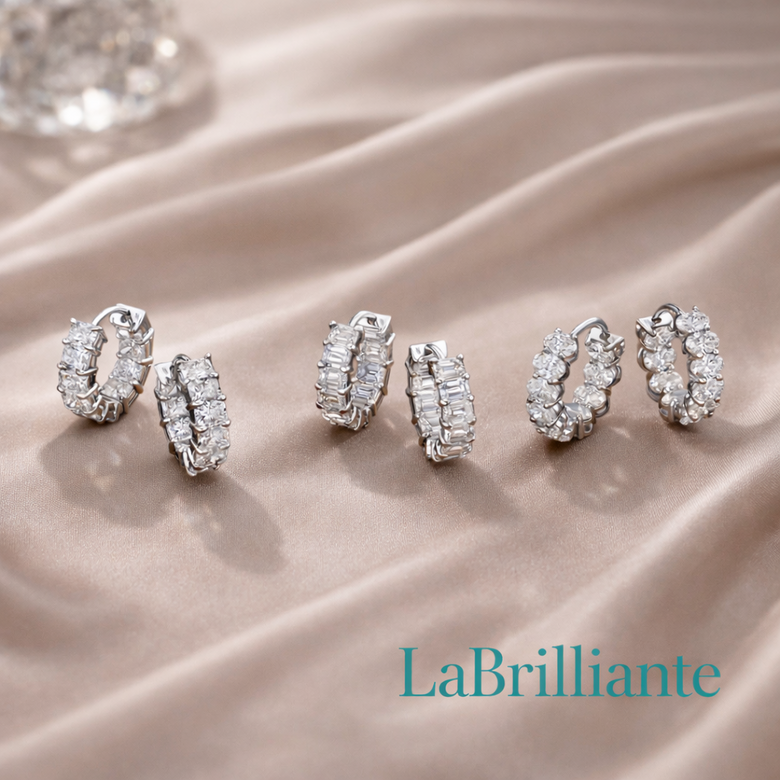
Explore Popular Lab Diamond Huggie Styles and Sizes
Huggie sizing follows a simple principle: diameter determines visual impact and comfort. Three versatile options dominate. 10mm, 12mm, and 14mm suit different ear anatomies and style preferences.
Setting styles create distinct personalities. Pavé, bezel, and inside-out configurations influence cost and maintenance requirements. Each serves different lifestyle needs.
10mm vs 12mm vs 14mm Diameter Guide
10mm creates "petite huggie" proportions, sitting close to the earlobe. This accommodates 0.15-0.22 ctw in pavé settings. Perfect for minimalist aesthetics. Trade-off? Reduced visual impact compared to larger sizes.
12mm occupies the versatile middle ground. It extends 2mm beyond typical earlobes while maintaining everyday wearability. This allows 0.25-0.4 ctw coverage and represents the most popular size across demographics.
14mm enters statement territory. Creates noticeable presence while staying business-appropriate. These accommodate 0.4-0.65 ctw and produce superior scintillation through increased surface area. Consider ear anatomy—larger huggies may feel heavy or interfere with phone use.
| Diameter Size | Carat Weight Capacity (ctw) | Comfort Level | Visual Impact Score | Lifestyle Suitability |
|---|---|---|---|---|
| 10mm (Petite) | 0.15-0.22 ctw | Excellent - Sits close to earlobe, minimal weight, ideal for extended wear and side sleeping | 6/10 - Subtle elegance with understated presence | Minimalist aesthetics, professional settings, all-day comfort, active lifestyles, first-time huggie wearers |
| 12mm (Classic) | 0.25-0.4 ctw | Very Good - Extends 2mm beyond earlobe, balanced weight distribution, comfortable for 12+ hour wear | 8/10 - Noticeable sparkle with versatile appeal | Everyday wear, office-to-evening transition, most ear anatomies, balanced style preference, most popular choice |
| 14mm (Statement) | 0.4-0.65 ctw | Good - Noticeable presence, may feel heavy after 8-10 hours, potential phone interference | 10/10 - Maximum scintillation and commanding visual impact | Special occasions, fashion-forward styling, larger ear anatomy, statement jewelry preference, photography/events |
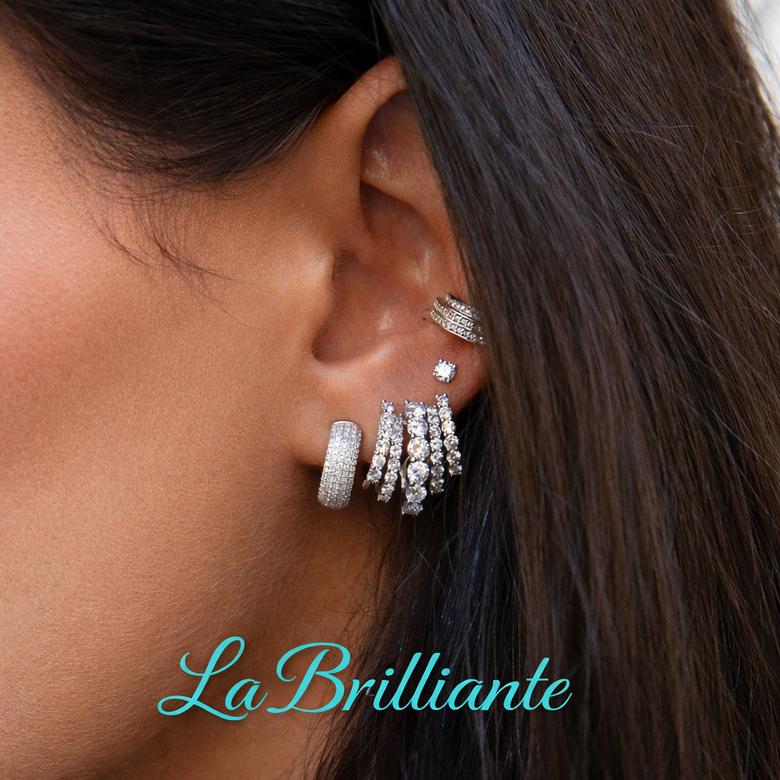
Pavé, Bezel, and Inside-Out Setting Options
Pavé maximizes diamond coverage through closely-spaced small stones. Minimal metal prongs create continuous sparkle. Modern pavé uses 1.2-1.8mm diamonds in micro-prong settings. Result? Intense scintillation. But requires careful maintenance to prevent stone loss.
Bezel settings surround each diamond with thin metal rims. Superior security at the expense of reduced light entry. This suits active lifestyles where durability trumps maximum sparkle. Bezel-set huggies show 40% lower stone loss rates compared to pavé.
Inside-out designs feature diamonds on both interior and exterior surfaces. Creates 360-degree sparkle visible from all angles. This doubles diamond requirements and costs while producing unmatched brilliance. Trade-offs include increased cleaning complexity and potential ear contact issues.
Stackable and Ear Stack Styling Techniques
Ear stacking transforms individual huggies into curated compositions. Multiple diameters create graduated effects. Mixed metals add sophistication. Key principle? Vary sizes and textures rather than identical repetition.
Successful combinations feature 2-3 pieces per ear with 2-4mm size differences. Popular configuration: 10mm, 12mm, and 14mm in graduated positioning from cartilage to lobe. Mixed metals require careful coordination to avoid clashing.
Consider anatomy, lifestyle, and maintenance. Multiple huggies increase daily wear time and cleaning complexity. Sleep comfort matters—multiple rigid hoops may cause side sleeping discomfort.
Evaluate EF/VS Type IIa Diamond Quality Specifications
Type IIa lab-grown diamonds represent the purest crystal structure achievable in laboratories. They contain virtually no nitrogen impurities. This creates superior optical properties compared to most natural diamonds.
Type IIa constitutes less than 2% of natural production but represents the standard for premium lab-grown diamonds. Controlled manufacturing enables this purity. CVD growth excels at Type IIa specifications through precise atmospheric control during formation.
"In the realm of lab-grown diamonds, Type IIa diamonds not only mirror the rarest natural forms but exceed them in optical quality due to their nitrogen-free composition. This purity allows for the crystal lattice to be virtually free of any disruptions, facilitating light to pass through unimpeded, which enhances both the 'fire' and 'brilliance' of these diamonds significantly. What's fascinating is that during the CVD process, maintaining a meticulously controlled environment devoid of nitrogen can manipulate the outcome to consistently produce these superior qualities, which is a stark contrast to the unpredictability associated with natural diamond formation."
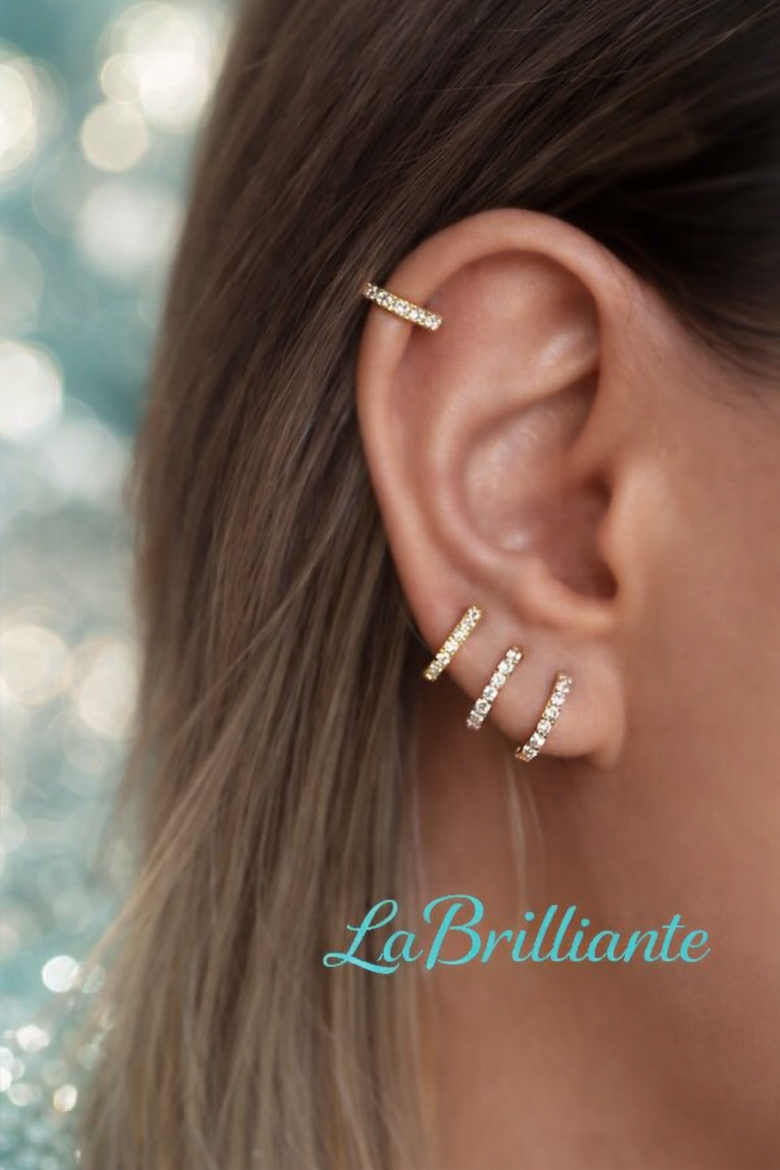
EF color grades represent finest near-colorless classifications. E shows absolutely no color to trained eyes. F displays minimal warmth only when compared directly to higher grades. In huggie applications, E versus F differences become virtually undetectable due to small stone sizes and movement during wear.
Trade-off for EF specifications? Approximately 15-25% higher costs versus G-H grades. G-H remain near-colorless but show subtle warmth in white gold. For yellow or rose gold huggies, G-H often provides better value since warm metals mask any tinting.
VS clarity encompasses VS1 and VS2 grades. Inclusions remain invisible to naked eyes but detectable under 10x magnification by trained graders. VS1 inclusions prove difficult to locate even under magnification. VS2 shows inclusions more readily to experienced gemologists but still undetectable during wear.
The practical reality? In huggie applications using sub-2mm diamonds, VS versus VVS differences become negligible. Inclusions shrink proportionally with stone size.
Choose Your 14K Gold Color and Metal Options
14K gold represents optimal balance between durability, affordability, and luxury appearance. Contains 58.3% pure gold alloyed with stronger metals. This achieves practical wearability for daily huggie wear.
White, yellow, and rose variations create distinct personalities while maintaining identical gold content. Each presents specific considerations for diamond coordination and maintenance requirements.
14K emerged from practical manufacturing needs. Sufficient gold content for luxury appeal. Enough alloy metals for durability. Huggie earrings particularly benefit from 14K due to continuous hinge stress from opening and closing.
| Gold Color | Maintenance Requirements | Durability & Scratch Resistance | Diamond Coordination | Long-Term Appearance Changes |
|---|---|---|---|---|
| White Gold (14K) | Rhodium replating every 18-24 months ($40-80 per pair). Requires professional maintenance to maintain bright white appearance. | Good durability for daily wear. Standard scratch resistance. Rhodium plating adds surface hardness but wears through hinge areas faster. | Optimal for D-F colorless lab diamonds. Creates maximum contrast enhancing brilliance. Ideal for showcasing colorless stones. | Reveals grayish-yellow undertone as rhodium wears. Patina develops at stress points first. Requires periodic replating to restore original appearance. |
| Yellow Gold (14K) | Minimal maintenance required. Periodic polishing ($25-40 per pair) removes surface scratches. No plating needed. | Good durability for daily wear. Scratches more visible due to color contrast but easily buffed out during routine cleaning. | Complements G-H-I near-colorless lab diamonds. Warm tone masks slight color tinting. Allows selection of lower color grades without visual compromise. | Develops natural patina over time, prized by collectors. Color remains stable indefinitely. No plating deterioration concerns. |
| Rose Gold (14K) | Low maintenance. No plating required. Occasional polishing ($25-40 per pair) maintains luster. Easiest long-term care. | Excellent durability. Copper content provides superior scratch resistance. Best choice for active lifestyles and continuous huggie wear. | Versatile with all lab diamond colors (D-J). Romantic pink tone complements both colorless and near-colorless stones. Suits vintage and contemporary styles. | Copper gradually deepens to richer pink-red tones over decades. Color evolution adds character. Stable composition with minimal maintenance needs. |
White Gold Considerations
14K white gold achieves color through palladium or nickel additions. Creates sophisticated backdrop enhancing diamond brilliance through contrast. Modern formulations favor palladium over nickel to minimize allergic reactions. Palladium increases costs 10-15%.
Primary consideration? Long-term maintenance requirements. Rhodium plating gradually wears through daily contact, revealing grayish underlying color. Professional replating costs $40-80 per pair but restores brightness. Recommended every 18-24 months.
Yellow Gold Benefits
Traditional luxury choice requiring no surface treatments. Develops subtle patina many collectors prize. Complements warmer diamond grades (G-H-I) by masking color tinting. This potentially allows lower color grade selection without visual compromise.
Main trade-off involves appearance conflicts with silver-toned jewelry. However, mixed metal wearing gained fashion acceptance. Yellow gold shows scratches more readily due to color contrast, though polishing removes marks during routine maintenance.
Rose Gold Appeal
Incorporates copper alloys achieving distinctive pink tones. Creates romantic associations with unique coordination possibilities. Complements all diamond color grades and suits contemporary and vintage aesthetics. Copper content provides exceptional durability and scratch resistance.
Considerations include potential color evolution as copper gradually darkens through oxidation. This occurs slowly over decades. Many owners appreciate deepening character. Copper allergic reactions remain uncommon but consider if you have known sensitivities.
Verify IGI Certification and Ethical Diamond Sourcing Standards
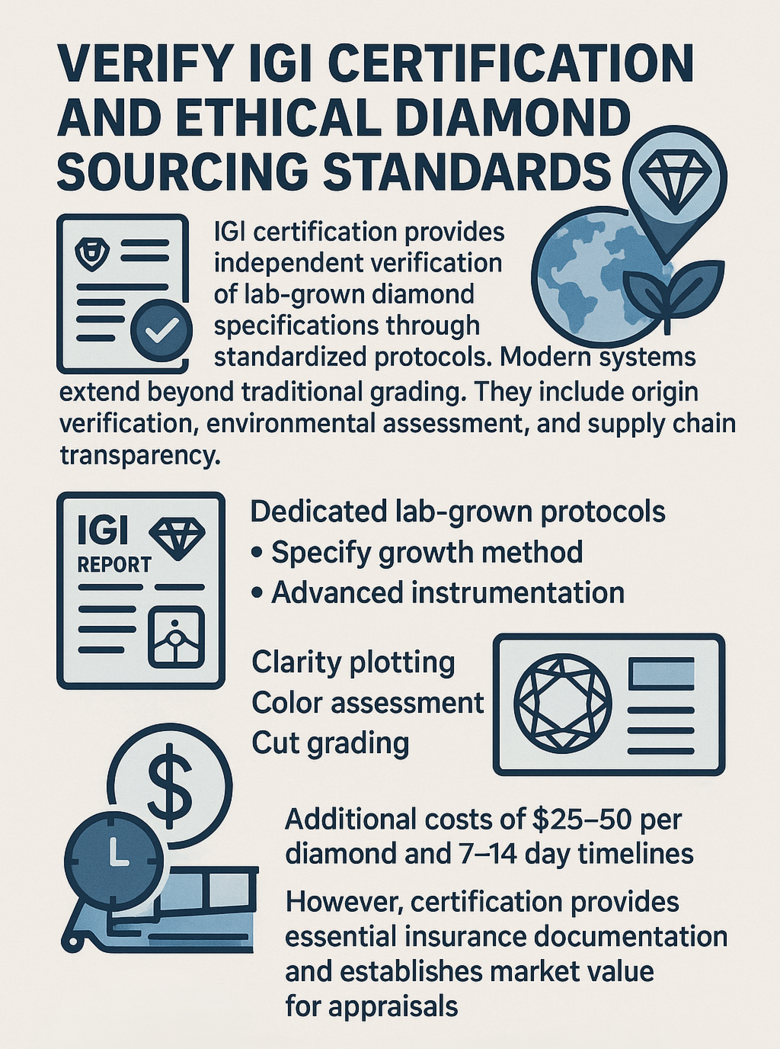
IGI certification provides independent verification of lab-grown diamond specifications through standardized protocols. Modern systems extend beyond traditional grading. They include origin verification, environmental assessment, and supply chain transparency.
The International Gemological Institute maintains dedicated lab-grown protocols differing from natural procedures. IGI reports specify growth method (CVD or HPHT), treatment history, and Type classification alongside 4C grading. Advanced instrumentation confirms laboratory origin while ruling out treated natural diamonds.
Certification documents include detailed clarity plotting mapping inclusion positions for precise earring pair matching. Color assessment uses master stone comparisons under standardized lighting. Cut grading evaluates proportions, symmetry, and polish quality.
Trade-offs for certification include additional costs of $25-50 per diamond and 7-14 day timelines. However, certification provides essential insurance documentation and establishes market value for appraisals. Uncertified diamonds create complications for resale or claims.
Ethical Sourcing Standards
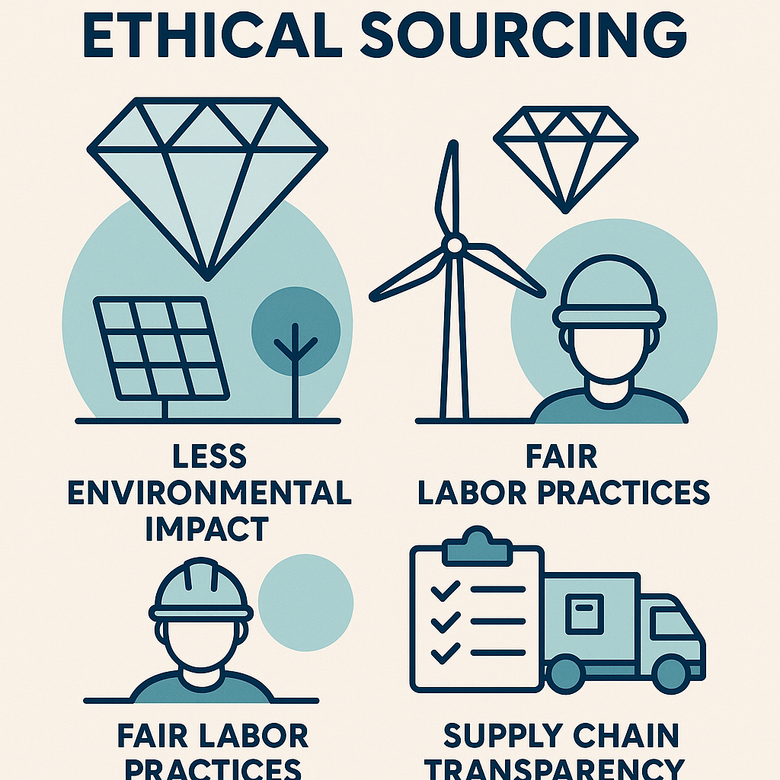
Ethical sourcing encompasses environmental impact, labor conditions, and supply chain transparency throughout manufacturing. SCS-007 certification evaluates operations across energy consumption, waste management, and carbon footprint metrics. Leading manufacturers increasingly utilize renewable energy sources.
Supply chain traceability begins with raw materials where seed diamonds and growth chamber materials require origin documentation. Laboratory conditions including temperature, pressure, and atmospheric composition are logged continuously, creating permanent growth records.
Labor standards ensure fair wages, safe working conditions, and ethical treatment throughout the chain. Unlike natural mining in questionable regions, lab-grown production occurs in controlled industrial environments subject to safety regulations. Regular audits verify compliance with international standards.
Comparison with natural sourcing reveals fundamental traceability advantages. Natural diamonds pass through multiple intermediaries across countries, making origin verification difficult. Conflict concerns persist despite Kimberley Process protocols, while environmental impact from mining includes habitat destruction and water contamination impossible to quantify.
Lock In Savings Before Market Corrections
Lab-grown diamond huggies offer unmatched combination of ethical sourcing, Type IIa purity, and 70-97% cost savings versus natural equivalents. Strategic choices in diameter, setting style, and metal color maximize your budget without compromising the sparkle or durability you expect from fine jewelry. IGI certification guarantees specifications while direct-from-manufacturer channels eliminate unnecessary markups.
Design Your Perfect Pair Today
Labrilliante's direct manufacturing model delivers EF/VS quality huggies at transparent pricing—no retail inflation, no supply chain games. Book your complimentary consultation to explore size options, review certified stones, and customize your ideal configuration. Your dream huggies cost less than you imagine. Start now.
Frequently Asked Questions
Lab-grown diamonds are chemically, physically, and optically identical to natural diamonds—both are pure carbon crystals. They're not diamond simulants like cubic zirconia or moissanite. Type IIa lab-grown diamonds often exceed the purity of most natural diamonds, containing virtually no nitrogen impurities.
Lab-grown diamond huggies last identically to natural diamond versions because the materials are the same—both are permanent. The durability depends on the setting type and metal choice rather than diamond origin. Bezel settings show 40% lower stone loss rates than pavé regardless of whether diamonds are lab-grown or natural.
The 70-97% price difference comes from supply chain efficiency and production costs, not quality differences. Direct-from-manufacturer channels eliminate markups from cutters, distributors, and retailers that add substantial costs to natural diamonds. Lab production also avoids mining expenses while creating diamonds with superior Type IIa specifications.
Rhodium plating on 14K white gold huggies gradually wears through daily contact, revealing the grayish underlying color after 18-24 months of regular wear. Professional replating costs $40-80 per pair and restores the bright white appearance. This maintenance requirement applies to all white gold jewelry regardless of diamond type.
No, lab-grown and natural diamonds are visually identical—even professional gemologists cannot distinguish them without specialized equipment. In huggie earrings using small 1.2-1.8mm diamonds, any theoretical differences become even more impossible to detect during wear. Only laboratory testing with advanced instrumentation can identify growth origin.
Consider your earlobe size and lifestyle needs—10mm sits close for minimalist looks, 12mm offers versatile everyday wear extending 2mm beyond typical earlobes, and 14mm creates statement presence. Test comfort for side sleeping and phone use, especially with larger sizes. The 12mm diameter represents the most universally flattering option across different ear anatomies.
Use warm water with mild dish soap and a soft-bristled toothbrush, gently cleaning around prongs rather than scrubbing directly over stones. Avoid ultrasonic cleaners for pavé settings as vibrations can loosen micro-prongs. Inspect prongs monthly for signs of wear and have a jeweler check settings annually, since pavé requires more maintenance than bezel settings.
Choose natural diamonds if you're purchasing jewelry as an investment asset, planning to resell within 5-10 years, or creating family heirlooms where tradition and rarity matter financially. Natural diamonds retain 40-60% of purchase value versus 10-25% for lab-grown. However, for personal enjoyment and daily wear—the primary purpose of huggies—lab-grown delivers superior value through identical beauty at accessible prices.