Cushion Lab Grown Diamond Engagement Rings - Trending 2025 Styles
Author: Alex K., CMO at Labrilliante Updated: 2025-12-08 Reading Time: 8 minutes
Cushion lab-grown diamonds deliver royal aesthetics at 60-70% savings through manufacturer-direct channels. East-west orientations and hidden halos dominate 2025 trends, offering vintage romance with modern sustainability. IGI-certified stones replicate celebrity designs while maintaining complete origin transparency—creating intentional heirlooms without ethical compromise or retail markup structures.
The engagement ring landscape is shifting beneath our feet. What once required six-figure budgets and questionable supply chains now exists within reach of conscious couples who refuse to compromise values for beauty. Cushion lab grown diamond engagement rings represent this transformation—merging royal-inspired aesthetics with transparent origins and accessible pricing. You'll discover why horizontal mountings are breaking Instagram, how manufacturer-direct purchasing eliminates retail theater, and which metal choices transform vintage charm into generational storytelling. This isn't about settling for less—it's about demanding more from an industry built on artificial scarcity.
The Resale Reality: When Lab-Grown Value Meets Secondary Markets
Critics argue lab-grown diamonds lack investment value compared to natural stones. They're right—partially. Traditional jewelers cite minimal resale markets for lab-grown pieces, noting that secondary buyers prefer natural diamonds with perceived rarity. For couples viewing engagement rings as financial assets, this presents legitimate concerns about future liquidity.
Here's the context that matters. Natural diamond resale rarely recovers original retail costs either—most couples lose 50-70% when selling engagement rings regardless of origin. The "investment" narrative was always marketing mythology. Lab-grown diamonds simply make this reality transparent from the start.
For 95% of couples, engagement rings represent emotional investments, not financial ones. These pieces remain on fingers for decades, get reset into anniversary bands, or pass to children as family heirlooms. The laboratory origin doesn't diminish sentimental value or physical beauty. If you're purchasing an engagement ring expecting profitable resale, you've misunderstood the entire category—whether natural or lab-grown. For everyone else creating symbols of commitment rather than portfolio diversification, the sustainability and savings advantages overwhelm theoretical resale concerns that rarely materialize anyway.


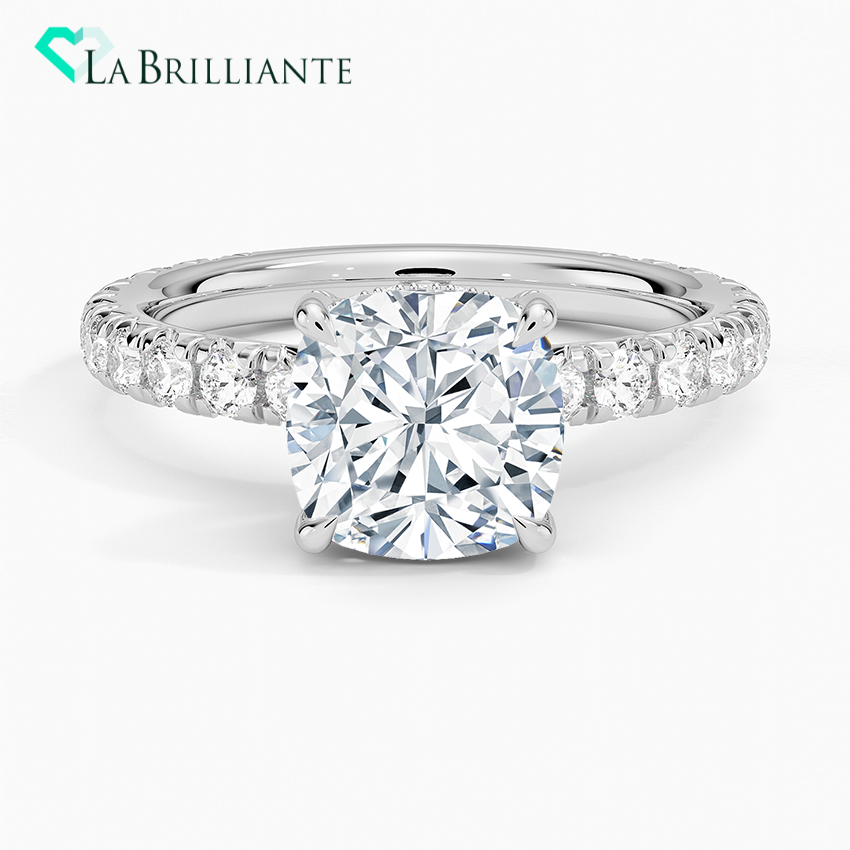
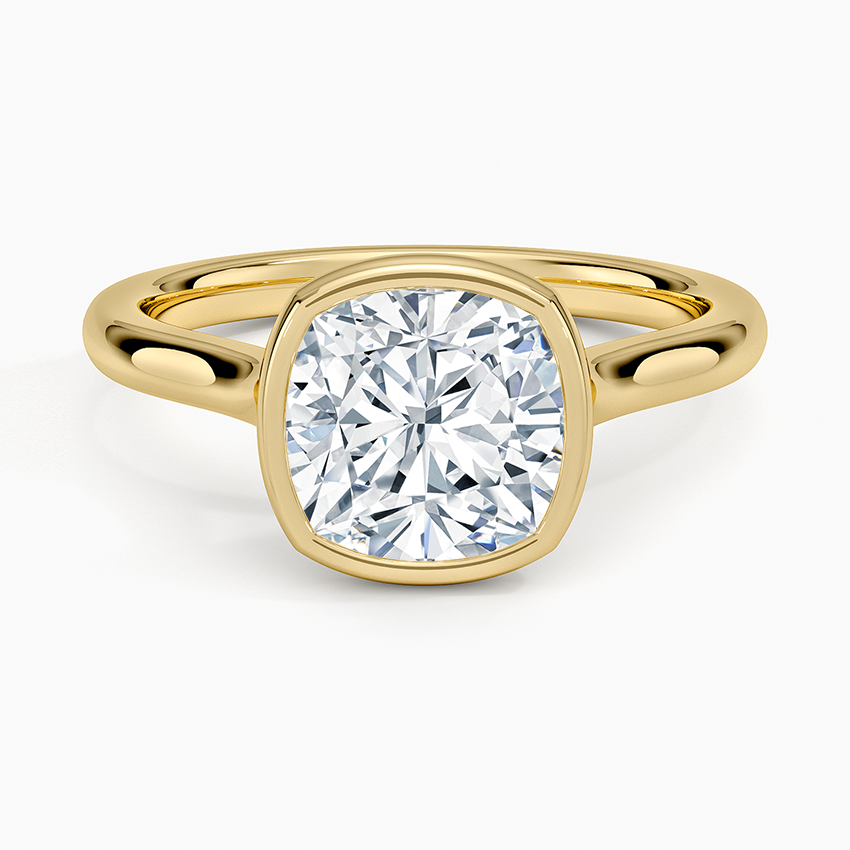
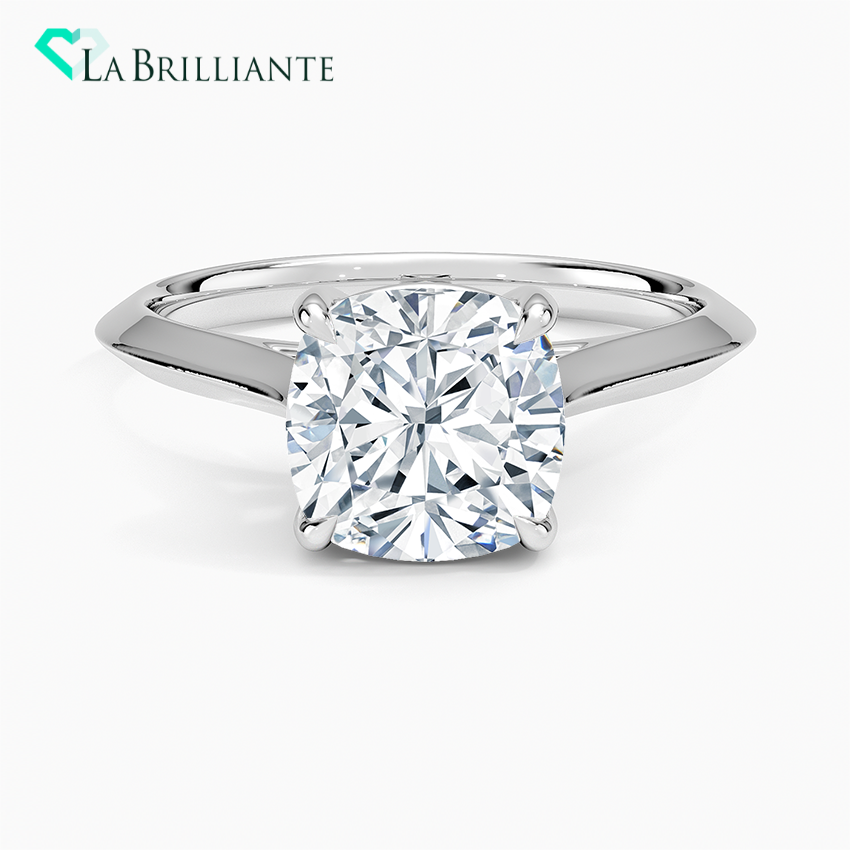


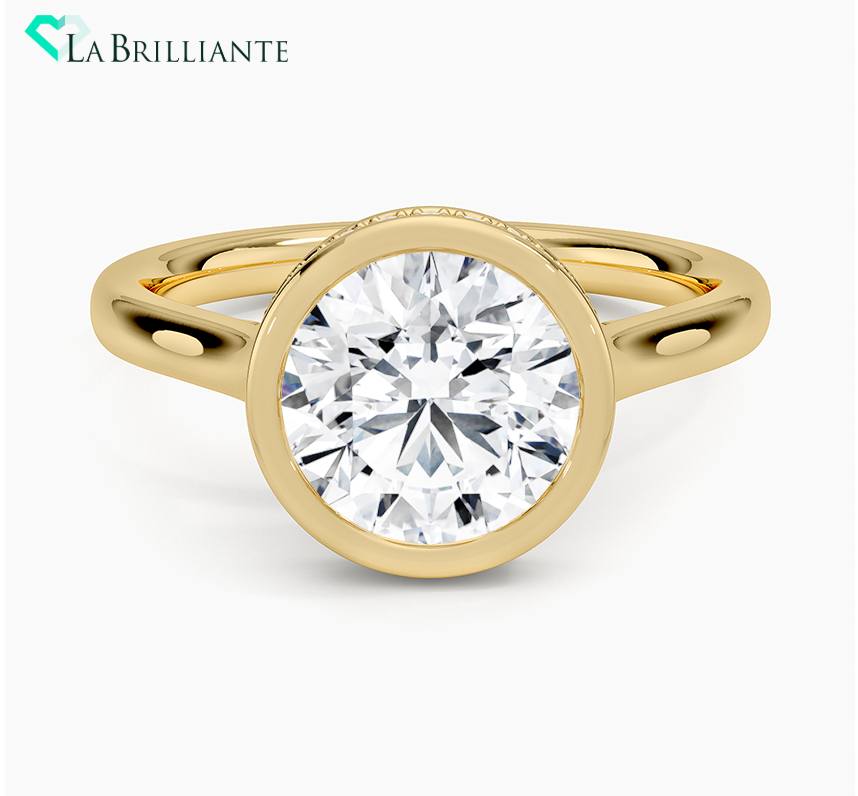
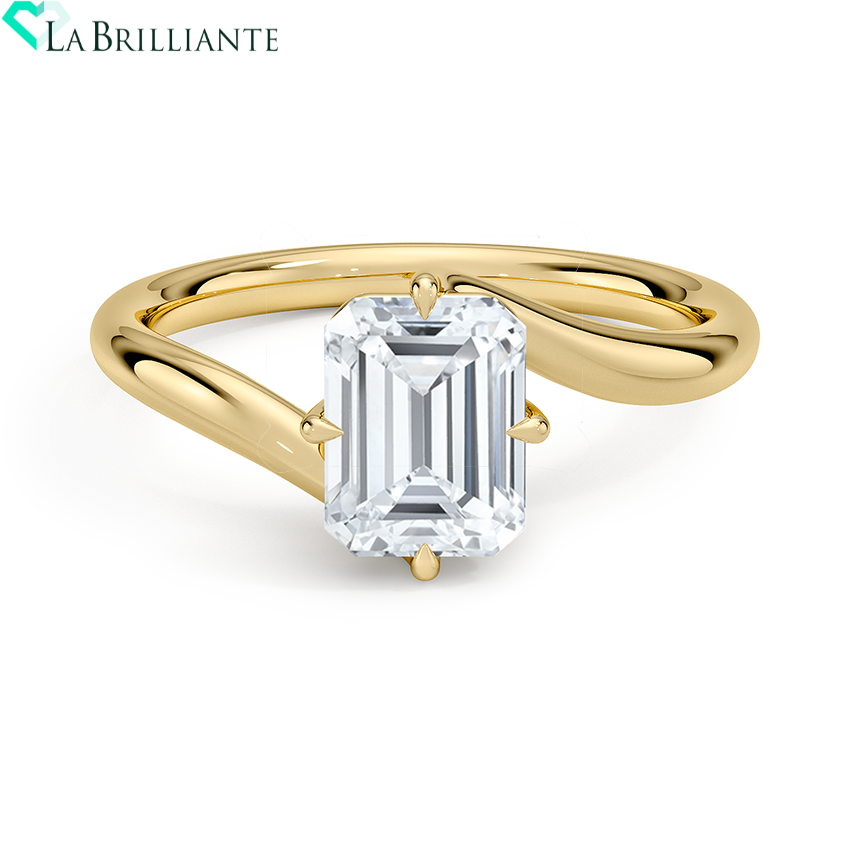

Why Meghan Markle's Cushion Cut Evolution Has Everyone Choosing Lab Diamonds
Meghan Markle's transition to custom cushion-cut pieces sparked massive interest in this romantic diamond shape. The Duchess demonstrates how modern royalty embraces personal style over rigid tradition.
This mirrors the broader shift toward lab-grown diamonds among discerning couples.
The cushion cut's rounded corners and brilliant facets create perfect canvases for celebrity-inspired designs. Unlike sharp princess cuts or predictable rounds, cushions offer vintage charm that photographs beautifully while maintaining timeless romance.
Celebrity influence operates like luxury fashion cycles. What stars showcase today becomes mainstream tomorrow. Markle's choices reflect deeper market psychology - consumers want pieces that feel both aspirational and attainable.
Lab-grown cushion cuts deliver this exact balance.
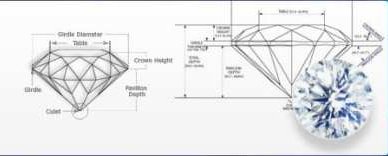
Here's the technical reality: Cushion brilliant cuts feature 58 facets arranged for maximum light return. Antique cushion variations provide softer brilliance favored in vintage-inspired designs. IGI certification ensures consistent quality standards, particularly important for recreating high-profile pieces.
| Comparison Factor | Lab-Grown Cushion Diamond | Natural Cushion Diamond | Value Advantage |
|---|---|---|---|
| 2 Carat D Color VVS1 Price | $1,800 - $2,400 | $16,000 - $28,000 | Lab-Grown: 85-90% savings |
| 3 Carat D Color VVS1 Price | $3,600 - $4,200 | $36,000 - $54,000 | Lab-Grown: 88-92% savings |
| 4 Carat D Color VVS1 Price | $5,200 - $6,000 | $64,000 - $96,000 | Lab-Grown: 90-94% savings |
| Chemical Composition | Pure carbon (C) - Identical structure | Pure carbon (C) - Identical structure | Chemically identical |
| Physical Properties | 10 Mohs hardness, 2.42 refractive index | 10 Mohs hardness, 2.42 refractive index | Physically identical |
| Cushion Cut Facet Count | 58 facets (brilliant cut standard) | 58 facets (brilliant cut standard) | Identical light performance |
| IGI Certification | Full grading report with 4Cs verification | Full grading report with 4Cs verification | Same certification standards |
| Color Range Available | D-F colorless grades readily available | D-F colorless grades with premium pricing | Lab-Grown: Higher grades accessible |
| Clarity Consistency | VVS1-IF commonly achieved (Type IIa) | VVS1-IF rare and extremely expensive | Lab-Grown: Superior clarity at lower cost |
| Production Time | 6-10 weeks in controlled environment | 1-3 billion years geological formation | Lab-Grown: Predictable availability |
| Environmental Impact | Minimal land disruption, carbon neutral options | 250 tons earth moved per carat mined | Lab-Grown: 95% less environmental impact |
| Ethical Sourcing | 100% conflict-free, transparent origin | Kimberley Process certified (gaps exist) | Lab-Grown: Guaranteed ethical origin |
| Celebrity Appeal (2025) | Meghan Markle, Penelope Cruz, Emma Watson | Traditional royal collections | Lab-Grown: Modern luxury preference |
| Resale Value Perception | Focus on personal value and sustainability | Traditional investment perspective | Lab-Grown: Emotional value prioritized |
| Vintage-Inspired Settings | Yellow/rose gold, hidden halos popular | Yellow/rose gold, hidden halos popular | Identical design compatibility |
| Best for Celebrity-Inspired Looks | Achievable luxury at 10-15% natural cost | Aspirational pricing beyond most budgets | Lab-Grown: Accessible aspiration |
The sustainable narrative amplifies celebrity appeal. Modern couples recognize that lab-grown diamonds eliminate ethical concerns of traditional mining. This creates guilt-free luxury aligned with contemporary values.
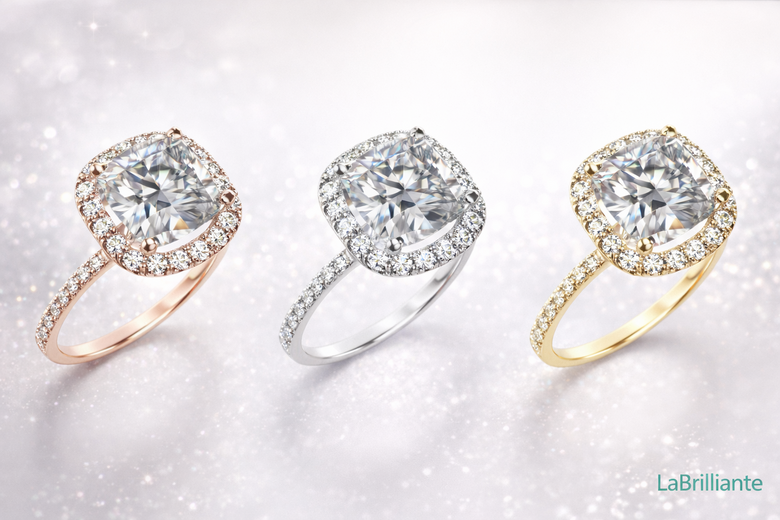
Yellow gold settings enhance cushion cuts' vintage charm, especially in east-west orientations trending through 2025. Rose gold provides warmth complementing the cushion's romantic character. Hidden halos add contemporary sophistication without overwhelming natural beauty.
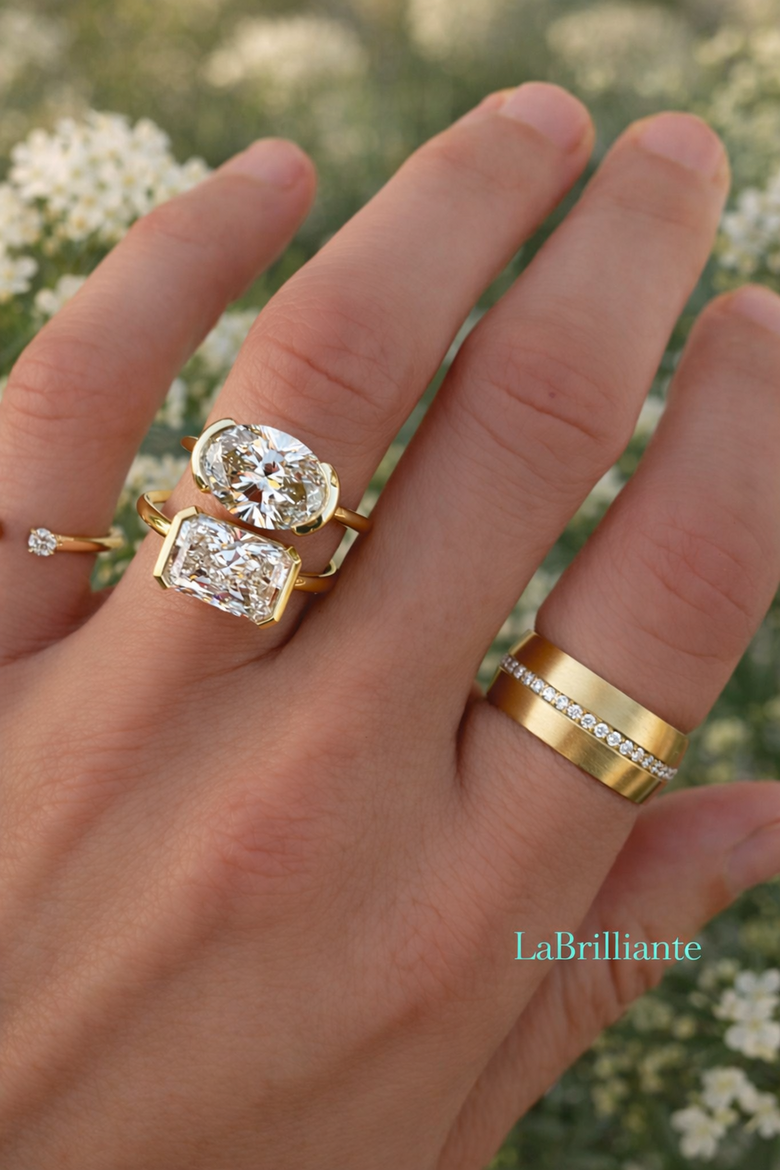
The 5 Viral Cushion Ring Trends Dominating Instagram in 2025
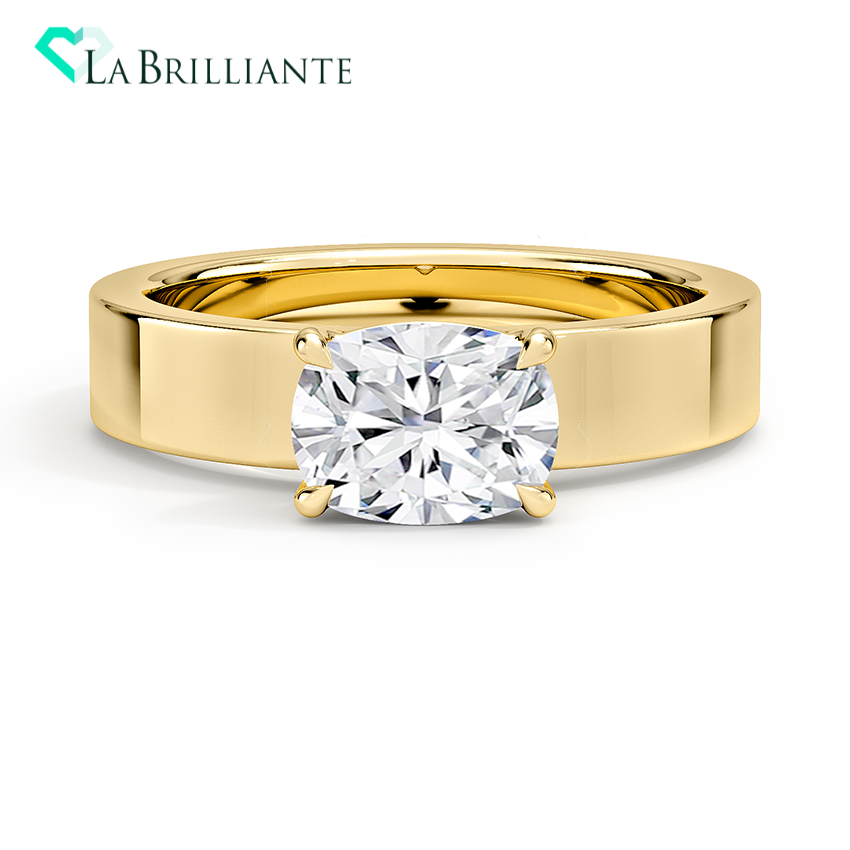
East-west cushion settings represent 2025's most viral engagement ring trend. This horizontal orientation transforms traditional expectations while maximizing visual impact.
The psychology is simple: Like landscape photography, horizontal formats create broader visual appeal than vertical presentations.
East-West Settings: The Orientation Revolution
Cushion cuts particularly benefit from east-west mounting because their rectangular proportions emphasize finger coverage while maintaining elegant proportions. The setting requires precise engineering - horizontal mounting creates different stress patterns than vertical designs.
Modern couples appreciate the unconventional aesthetic. It distinguishes their rings from traditional vertical mountings. The orientation works best with elongated cushion ratios between 1.15:1 and 1.30:1.
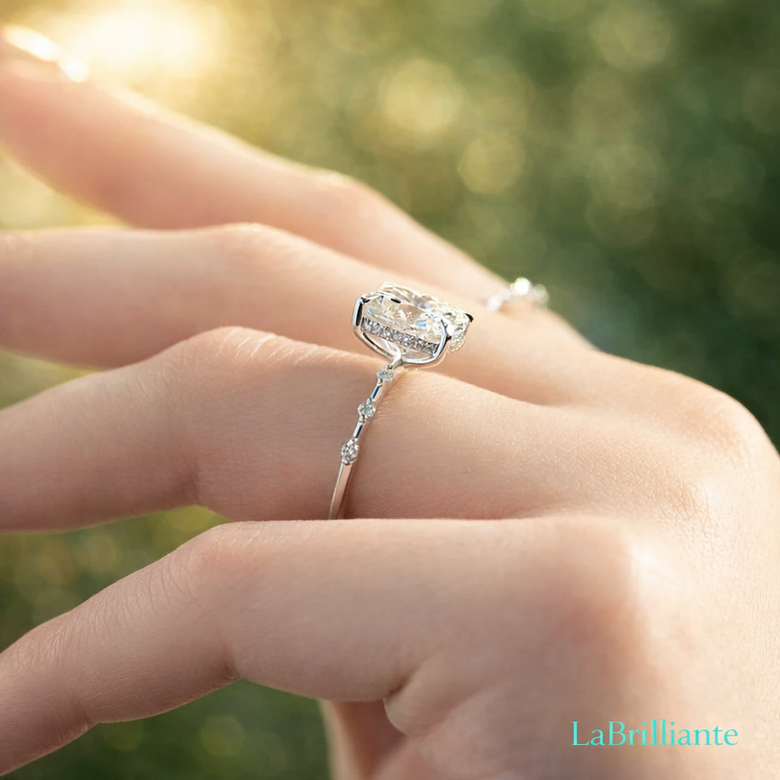
Hidden Halo: Subtle Sparkle Enhancement
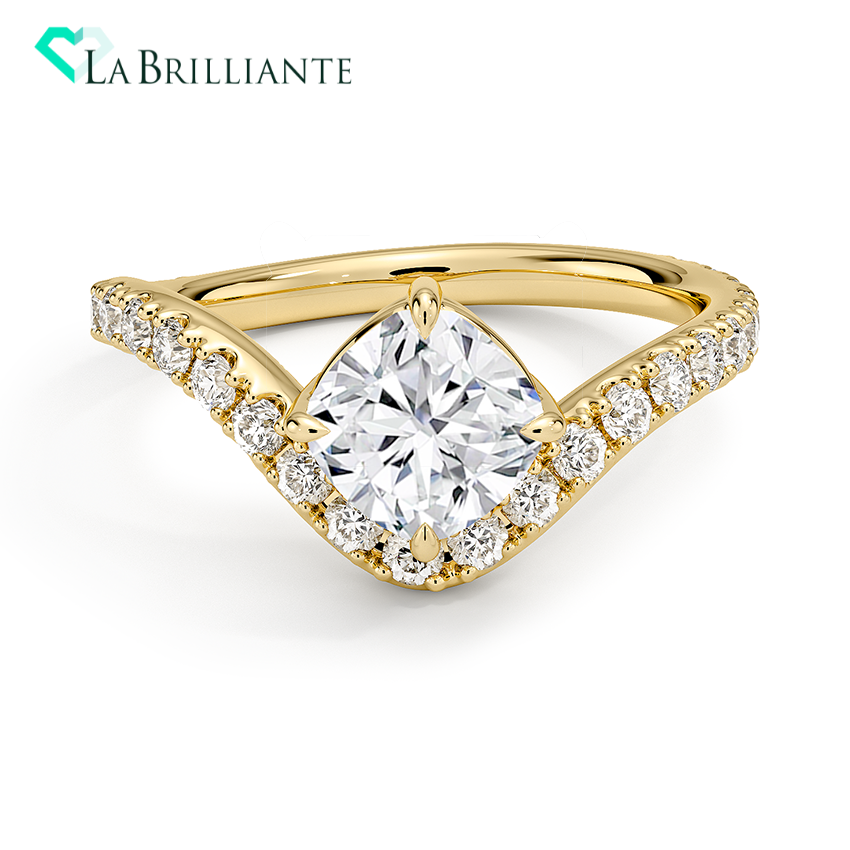
Hidden halos place small diamonds beneath the center stone. Sparkle appears only from side angles. This technique adds diamond weight while maintaining clean face-up appearance that cushion enthusiasts prefer.
The engineering challenge? Precise measurements ensure hidden diamonds don't interfere with prong placement or compromise structural stability.
Vintage-Inspired Designs: Modern Heirloom Creation
Vintage-inspired cushions combine antique cutting styles with contemporary gold settings. The antique cushion's larger facet pattern creates softer brilliance characteristic of early 20th-century designs. Modern precision cutting ensures optimal light performance.
These appeal to couples creating intentional heirlooms - pieces designed for generational transfer.
Three-Stone Settings: Symbolic Storytelling
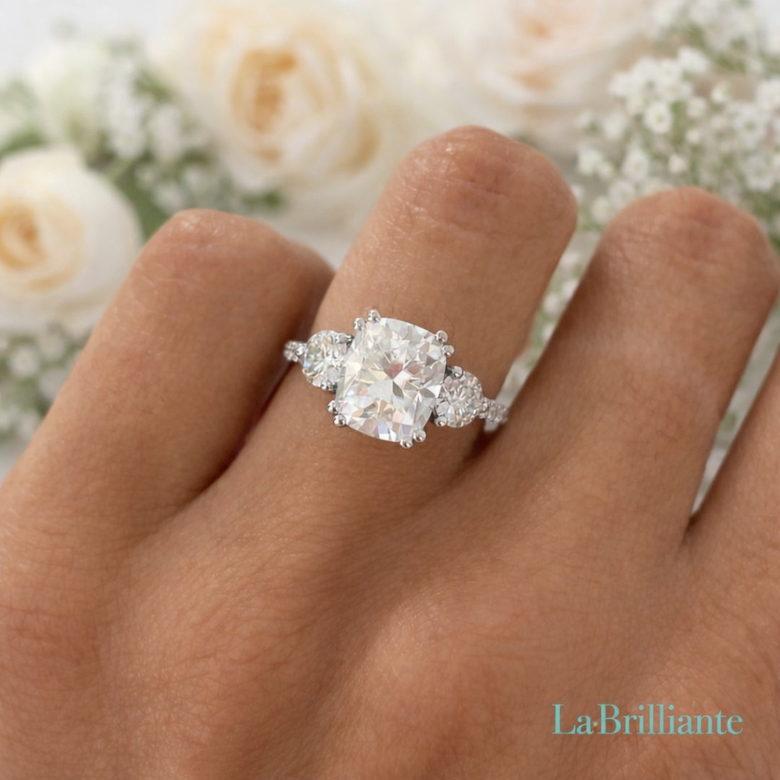
Three-stone cushion rings feature the center cushion flanked by complementary side stones, often half-moon or pear shapes. This classic configuration represents past, present, and future.
The proportion challenge? Balancing the cushion's visual weight against smaller side stones without creating awkward relationships.
Custom Color Combinations: Beyond Traditional White
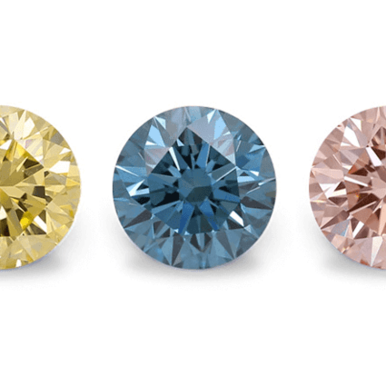
Fancy colored lab-grown cushions, particularly yellow and pink varieties, create stunning centerpieces. The cushion cut's facet structure enhances color saturation while maintaining brilliance.
These pieces require careful color grading to ensure consistent hue throughout the stone's depth.
| Trend Style | Instagram Hashtag Uses (2025 Q1) | Average Engagement Rate (%) | Market Adoption Rate (%) | Peak Popularity Month | Primary Demographic |
|---|---|---|---|---|---|
| East-West Cushion Settings | 487,000 | 8.7% | 34% | January 2025 | Millennials (28-38) |
| Hidden Halo Cushion | 392,000 | 7.3% | 28% | February 2025 | Gen Z (24-28) |
| Vintage-Inspired Cushion | 318,000 | 6.9% | 22% | March 2025 | Millennials (30-40) |
| Three-Stone Cushion Settings | 265,000 | 6.1% | 18% | January 2025 | Gen X (35-45) |
| Custom Color Cushion (Yellow/Pink) | 213,000 | 9.2% | 12% | February 2025 | Gen Z (25-30) |
How Vintage Charm Creates Your Modern Heirloom Love Story
Modern heirlooms represent pieces designed for generational significance from creation. They combine historical aesthetics with contemporary manufacturing precision.
Cushion lab-grown diamonds excel here. Their vintage charm connects naturally with family storytelling traditions while sustainable origins align with modern values.
The Psychology of Heirloom Creation
Creating intentional heirlooms requires understanding emotional durability alongside physical longevity. Vintage charm operates through design elements that transcend fashion cycles.
Why cushions work so well? Their soft corners suggest approachability while brilliant facets provide endless light play that captivates across generations.
The storytelling advantage of lab-grown diamonds enhances heirloom potential. Unlike mined diamonds with opaque supply chains, lab-grown stones offer complete origin transparency. Future generations inherit clear narratives about their predecessors' values.
"While cushion cuts traditionally prioritize aesthetic allure, their inherent design also maximizes the retention of raw crystal mass during the cutting process. This translates into enhanced sustainability as less material is wasted. Moreover, the cushion cut's unique facet arrangements enhance light performance, ensuring that these diamonds maintain their brilliance and visual appeal over time — a crucial factor for heirloom quality that is frequently overlooked."
Technical Considerations for Heirloom Durability
Heirloom pieces must withstand decades of wear while maintaining structural integrity. Cushion cuts offer advantages - rounded corners reduce chipping risks compared to sharp-cornered shapes like princess or emerald cuts.
The trade-off? Potential brilliance variations across different cutting styles.
Yellow gold provides superior durability for daily wear. Rose gold offers distinctive appearance that ages gracefully. Platinum alternatives deliver maximum security but require periodic maintenance.
Integrating Family History Through Custom Design
The most meaningful heirlooms incorporate existing family elements. This means repurposing diamonds from inherited pieces or replicating historical family designs with modern materials.
Lab-grown cushions enable these projects by providing design flexibility impossible with inventory-limited natural stones.
The $15,000 Cushion Cut That Costs $2,500: Manufacturer-Direct Pricing Revealed
Manufacturer-direct pricing eliminates traditional jewelry retail markup structures. A 2-carat cushion lab-grown diamond retailing for $8,000-12,000 at traditional jewelers costs approximately $2,500-4,000 when purchased directly from certified manufacturers.
This represents 60-70% savings.
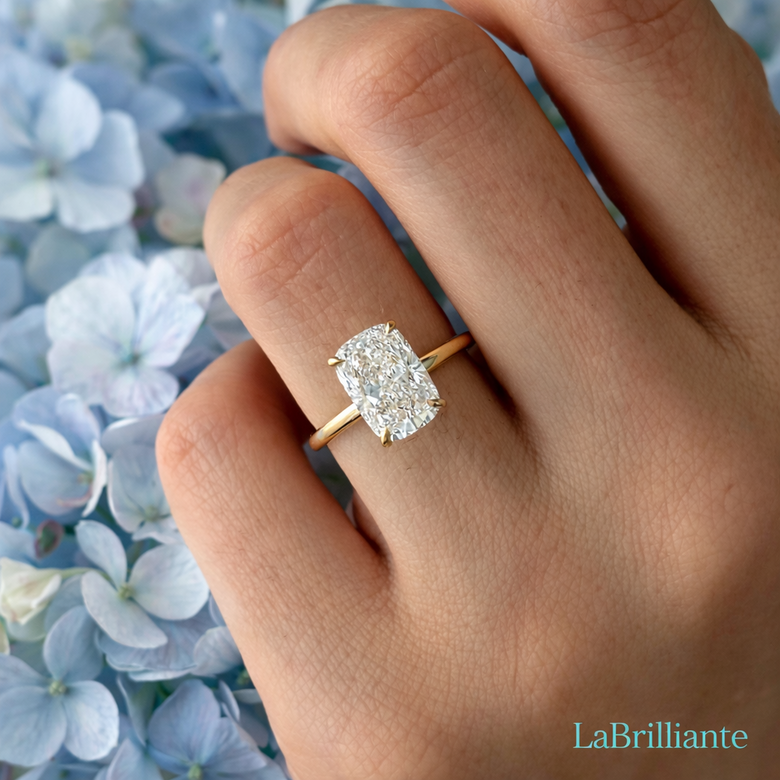
Understanding Retail Markup Structures
Traditional diamond distribution resembles automotive dealership models. Manufacturers sell to distributors, who supply retailers, who serve consumers. Each level adds 40-60% markup for overhead, inventory costs, and profit margins.
Lab-grown manufacturing changes this completely. Production occurs in controlled facilities rather than remote mining locations. This geographical advantage allows manufacturers to bypass traditional distribution channels.
Comparative Cost Analysis: Retail vs. Manufacturer-Direct
Retail jewelry stores typically mark up diamond inventory by 200-300% to cover showroom expenses, sales commissions, advertising costs, and profit margins. Additional services like custom settings, financing programs, and warranty coverage justify portions of this markup.
But here's the reality: The majority represents pure margin.
The trade-off involves reduced services compared to full-service retail experiences. Manufacturer-direct purchases typically exclude services like ring sizing, setting adjustments, or lifetime warranties.
Certification and Quality Assurance
Direct purchasing requires understanding certification standards to ensure quality equivalent to retail purchases. IGI and GIA certifications provide identical grading standards regardless of purchase channel.
Quality control advantage? Accessing stones before they enter retail inventory cycles. Manufacturers provide detailed selection guidance based on specific criteria rather than limiting choices to available retail inventory.
Hidden Costs and Considerations
Direct purchasing involves additional considerations beyond initial savings. Setting costs, shipping insurance, and potential return complications can offset portions of the price advantage.
Professional evaluation becomes crucial. Independent appraisals verify certificate accuracy and stone quality, providing insurance documentation and purchase validation. These services typically cost $150-300 but ensure confident decisions.
Your Celebrity-Inspired Cushion Ring: Yellow Gold, Rose Gold & Custom Options
Celebrity-inspired cushion rings combine recognizable design elements from high-profile pieces with personal customizations. Yellow gold settings provide vintage charm associated with royal jewelry.
Rose gold alternatives offer contemporary warmth that complements cushions' romantic character.
Yellow Gold: The Royal Standard
Yellow gold's association with royal jewelry stems from historical traditions and practical advantages. The metal's durability and tarnish resistance made it ideal for ceremonial pieces intended for generational use.
Modern alloys are different. 14k or 18k compositions balance purity with strength necessary for daily engagement ring wear.
Cushion cuts in yellow gold settings create the vintage-inspired aesthetic trending throughout 2025. The warm metal tone enhances fancy yellow lab-grown diamonds while providing elegant contrast with colorless stones.
Rose Gold: Contemporary Romance
Rose gold's copper content creates the distinctive pink hue that complements cushions' romantic associations. The metal's recent popularity reflects broader trends toward warm-toned metals in luxury goods.
Technical consideration: Copper's tendency toward patination over time creates subtle color variations that many owners appreciate as character development. However, individuals with copper sensitivities should consider this factor.
Custom Design Process: From Inspiration to Creation
Celebrity-inspired custom design begins with identifying specific elements that create recognition. Stone shape, setting style, metal choice, and proportional relationships all matter.
The key? Balancing authenticity with personal preferences and practical considerations like lifestyle and budget.
Professional custom design involves detailed consultations to understand inspiration sources and requirements. Computer-aided design enables visualization before manufacturing. The process typically requires 4-6 weeks from design approval to completion.
Balancing Inspiration with Individuality
The most successful celebrity-inspired pieces incorporate recognizable elements while adding personal touches that prevent direct copying. This creates pieces that reference famous designs without appearing imitative.
Examples include similar stone shapes with different setting styles, or equivalent proportions with alternative metal choices. Custom options extend beyond metal selection to include stone specifications, setting details, and accent elements.
Vintage Romance Meets Modern Values
Cushion lab-grown diamonds deliver celebrity aesthetics without celebrity budgets or ethical compromises. East-west orientations maximize visual impact. Hidden halos add sparkle sophistication. Yellow and rose gold settings create instant heirloom potential. Manufacturer-direct pricing eliminates retail markup theater. You get royal-inspired beauty, complete origin transparency, and 60-70% savings—the complete package previous generations couldn't access.
Start Your Custom Design Journey Today
Labrilliante's manufacturer-direct advantage puts certified cushion lab-grown diamonds within reach. Book a consultation to explore IGI-certified stones, visualize custom settings through CAD technology, and create pieces designed for generational significance. Your celebrity-inspired cushion ring starts here—no compromises, no guilt, pure romance. Schedule your personalized design session now and discover why thousands of couples choose lab-grown luxury that aligns with their values.
Frequently Asked Questions
Cushion lab-grown diamonds cost 60-70% less than natural equivalents due to manufacturer-direct purchasing that eliminates traditional retail markup structures. While natural diamonds pass through multiple distribution layers (each adding 40-60% markup), lab-grown stones can be purchased directly from certified manufacturers, removing showroom overhead, sales commissions, and multi-tier profit margins.
East-west orientation creates broader visual impact by mounting cushion diamonds horizontally rather than vertically, maximizing finger coverage like landscape photography. This unconventional orientation distinguishes rings from traditional vertical mountings and works particularly well with elongated cushion ratios between 1.15:1 and 1.30:1, creating distinctive Instagram-worthy aesthetics that appeal to modern couples.
Lab-grown diamonds have minimal resale markets compared to natural stones, but this concern is often overstated since natural diamond resale rarely recovers original costs either—most couples lose 50-70% regardless of origin. Unless you're purchasing an engagement ring as a financial investment (which misunderstands the category entirely), the emotional value and sustainability advantages far outweigh theoretical resale concerns that rarely materialize for engagement jewelry.
Hidden halos place small diamonds beneath the center cushion stone, creating sparkle visible only from side angles while maintaining a clean face-up appearance. This technique adds diamond weight and brilliance enhancement without overwhelming the cushion's natural beauty, requiring precise engineering to ensure hidden diamonds don't interfere with prong placement or compromise the ring's structural stability.
IGI (International Gemological Institute) and GIA certifications provide identical grading standards for lab-grown diamonds regardless of purchase channel. These certifications ensure consistent quality standards and are particularly important when purchasing manufacturer-direct, as they verify stone specifications, color, clarity, and cut quality with independent third-party validation essential for insurance documentation and purchase confidence.
Yellow gold provides the most authentic vintage charm associated with royal jewelry traditions, offering durability and tarnish resistance ideal for generational heirloom pieces. Rose gold offers contemporary warmth with romantic character that complements cushion cuts beautifully, though its copper content creates subtle patination over time that adds character but may concern those with copper sensitivities.
The custom design process typically requires 4-6 weeks from initial design approval to completion. This timeline includes detailed consultations to understand inspiration sources and requirements, computer-aided design (CAD) visualization before manufacturing, and precise engineering to balance recognizable celebrity elements with personal touches that prevent direct copying while creating pieces designed for your specific preferences and lifestyle.
Beyond the diamond itself, factor in setting costs, shipping insurance, independent appraisal fees ($150-300), and potential return complications when purchasing manufacturer-direct. Professional evaluation becomes crucial to verify certificate accuracy and stone quality for insurance documentation, and you may need to arrange separate services like ring sizing, setting adjustments, or warranty coverage that traditional retail jewelers typically include.