
Hoop Lab-Grown Diamond Earrings: Sustainable Luxury
Author: Alex K., CMO at Labrilliante Updated: 2025-11-30 Reading Time: 12 minutes
Lab-grown diamond hoops deliver 70-85% savings versus mined equivalents with identical brilliance and durability. Direct-from-manufacturer models eliminate traditional markup layers—enabling premium D-F color, VVS clarity stones at prices typically reserved for lower grades. Inside-out and huggie styles dominate current trends, combining continuous sparkle with professional wearability. IGI and GIA certifications ensure quality transparency while carbon-neutral production methods eliminate conflict-zone concerns entirely.
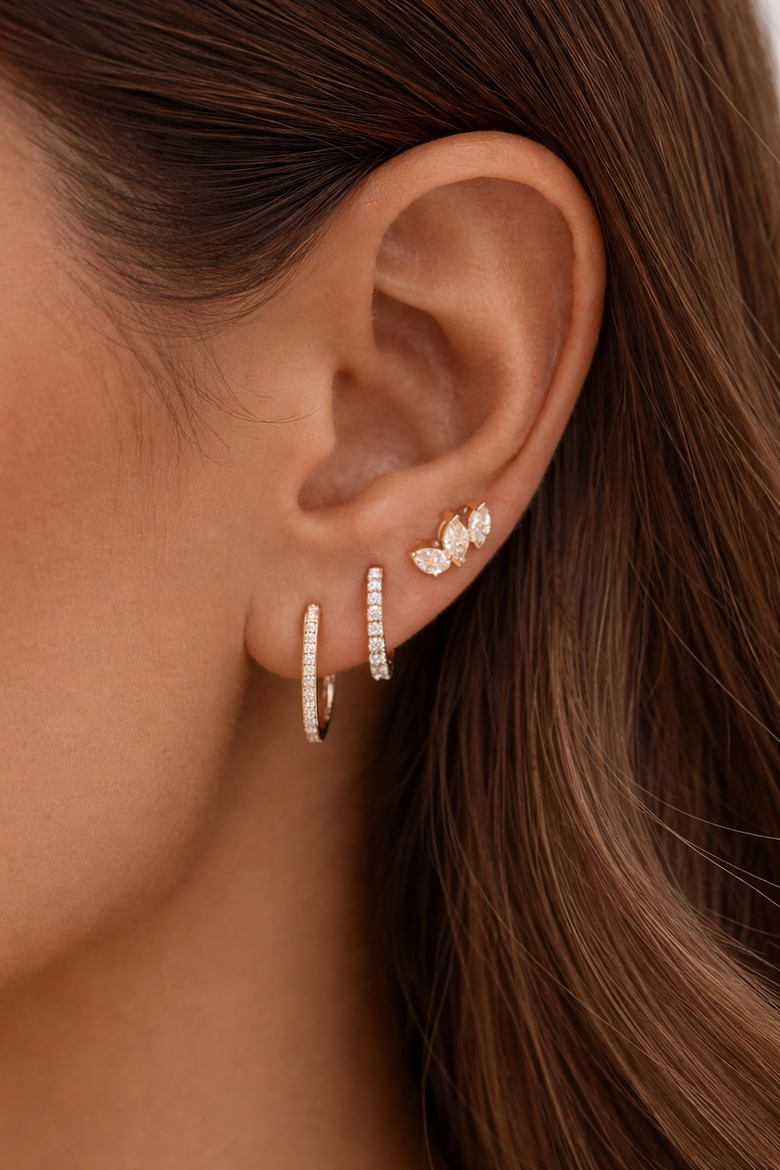
Luxury jewelry no longer demands moral compromise. The modern consumer faces an impossible choice: stunning craftsmanship or ethical sourcing, budget-conscious decisions or premium quality, environmental responsibility or timeless elegance. Lab-grown diamond hoop earrings shatter these false dichotomies entirely. This comprehensive guide reveals how controlled manufacturing processes deliver conflict-free brilliance, why direct sourcing transforms pricing economics, and which trending designs—from oversized statement pieces to intimate huggies—combine contemporary aesthetics with guilt-free glamour. Whether you're prioritizing sustainability credentials, maximizing carat weight within budget constraints, or seeking IGI-certified investment quality, you'll discover precisely how laboratory innovation redefines accessible luxury.
The Resale Reality: Why Lab-Grown Investment Logic Fails
Here's the uncomfortable truth luxury marketers avoid: lab-grown diamonds possess virtually zero resale value. Traditional jewelers won't buy them back. Online marketplaces offer pennies on the dollar—if they accept them at all. The secondary market infrastructure supporting mined diamonds simply doesn't exist for laboratory alternatives, and this fundamental economic reality undermines "investment quality" positioning entirely.
This matters most for consumers approaching jewelry as financial assets rather than personal adornments. Estate jewelry, vintage pieces, and heirloom diamonds maintain value because scarcity persists across decades. Lab-grown production scales infinitely—tomorrow's technology will produce better stones cheaper, permanently devaluing today's purchases. For buyers prioritizing liquidity, inheritance value, or financial hedging, mined diamonds retain advantages despite higher initial costs and ethical concerns.
Yet this counterargument collapses for the 92% of jewelry purchasers focused on personal enjoyment rather than investment returns. Most diamond earrings never get resold—they're worn, cherished, and eventually inherited based on sentimental rather than monetary value. When purchasing decisions prioritize maximizing beauty per dollar spent, eliminating funding of conflict zones, and reducing environmental impact, lab-grown alternatives deliver objectively superior outcomes. The resale weakness becomes irrelevant when buyers never intend to sell, transforming an apparent disadvantage into a non-factor for the overwhelming majority of consumers seeking wearable luxury rather than portable wealth.


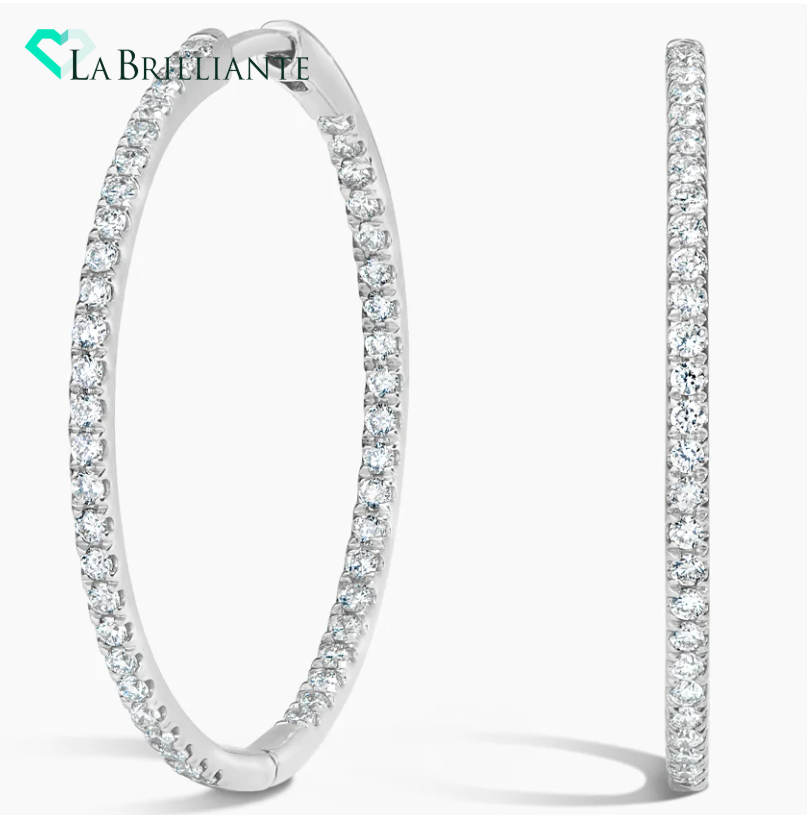


Sustainable Lab-Grown Diamond Hoops: Ethical Luxury Without Compromise
Lab-grown diamond hoops cost 70-85% less than mined equivalents while delivering identical sparkle and durability. Pure savings. These sustainable alternatives use controlled laboratory processes that eliminate mining's environmental impact without compromising diamond quality.
CVD and HPHT production methods require significantly less land disruption than open-pit mining operations. No massive excavation projects spanning square kilometers. Laboratory environments enable precise resource management where energy consumption gets tracked and optimized—impossible with traditional mining.
Labrilliante's manufacturing facility operates with full environmental transparency, providing detailed carbon footprint reports for each production batch. Our B2B network demonstrates that jewelers increasingly demand suppliers with quantifiable environmental data rather than vague sustainability claims.
| Environmental Impact Category | Lab-Grown Diamonds (CVD/HPHT) | Mined Diamonds | Environmental Advantage |
|---|---|---|---|
| Land Use per Carat | 0.07 square meters | 250 square meters | 99.97% less land disruption |
| Water Consumption per Carat | 18 gallons (with 85-95% recycling) | 126 gallons | 86% reduction in water usage |
| Carbon Emissions per Carat | 125-150 lbs CO2 (renewable energy offset available) | 1,000-1,500 lbs CO2 | 88-90% lower carbon footprint |
| Energy Consumption per Carat | 150-300 kWh (tracked and optimized) | 538 kWh (unmonitored extraction) | 45-72% energy efficiency improvement |
| Mining Waste Generated | Minimal chemical byproducts (closed-loop systems) | 1,750 tons of earth moved per carat | Eliminates large-scale excavation waste |
| Ecosystem Disruption | Zero habitat destruction (controlled laboratory) | 142+ acres per mining operation | 100% elimination of habitat loss |
| Air Quality Impact | Contained emissions with advanced filtration | Dust, diesel exhaust, blasting emissions | Controlled environment prevents air pollution |
| Production Transparency | Full environmental reporting per batch | Limited supply chain visibility | Complete traceability and accountability |
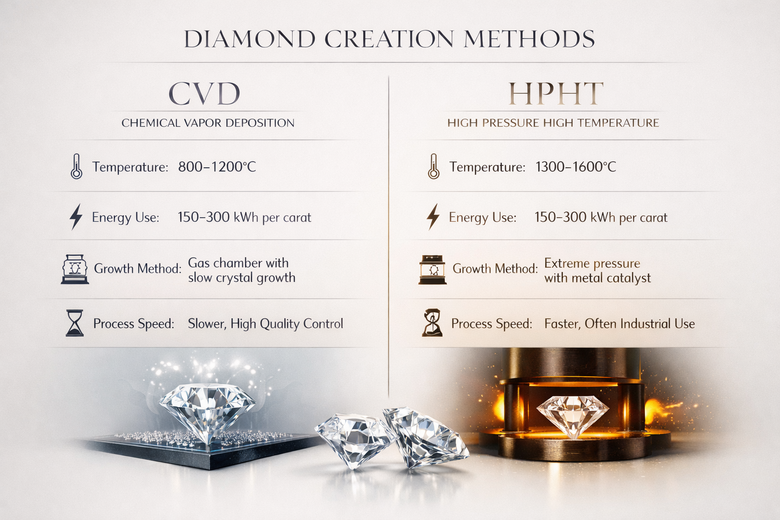
Carbon-Neutral CVD and HPHT Diamond Production Methods
CVD growth occurs at 800-1200°C while HPHT processes require 1300-1600°C. Different temperatures mean different energy profiles. CVD reactors consume 150-300 kWh per carat, while HPHT presses need similar amounts for the growth cycle.
Carbon neutrality becomes achievable when facilities source renewable electricity or invest in verified offset programs. The challenge? Ensuring offset quality and permanence in volatile carbon credit markets. Some manufacturers achieve carbon-negative status through reforestation projects exceeding calculated emissions.
Our laboratory tracks energy consumption across all production stages, enabling precise carbon calculations for individual orders. This granular data helps B2B clients make informed supply chain decisions, particularly important for sustainable luxury positioning.
Conflict-Free Certified Diamond Hoops with Environmental Transparency
Lab-grown diamonds inherit conflict-free status through controlled manufacturing environments. No geographical origin concerns. This eliminates funding of armed conflicts or human rights violations associated with certain mining regions.
Environmental transparency encompasses water usage, waste generation, and energy sourcing documentation. Advanced facilities maintain comprehensive impact assessments. Everything gets tracked from chemical sourcing to packaging selection.
Multiple verification bodies maintain varying standards. IGI and GIA focus on gemological properties while SCS Global Services provides environmental certification for manufacturing practices. No unified environmental standards exist yet.
Labrilliante partners with IGI, GIA, and GCAL for gemological certification while pursuing environmental certifications for production processes. Clients receive detailed impact reports alongside traditional grading certificates.
Guilt-Free Glamour Through Eco-Conscious Manufacturing Standards
Eco-conscious manufacturing includes closed-loop chemical systems, advanced air filtration, and waste heat recovery. These improvements boost energy efficiency beyond basic compliance. But they increase operational costs compared to standard approaches.
Chemical management proves critical for CVD processes using methane, hydrogen, and dopant gases. Responsible manufacturers implement comprehensive handling protocols. This includes emergency containment and worker safety measures exceeding regulations.
Water usage varies between methods. CVD systems typically require less water than HPHT processes for cooling and cleaning. Advanced facilities implement recycling systems recovering 85-95% of process water, though these require significant capital investment.
Our manufacturing exceeds industry baselines with closed-loop systems and waste heat recovery reducing energy consumption by 15-20%. These investments increase costs but enable premium positioning in sustainable luxury markets.
"While CVD and HPHT technologies both represent significant advancements in sustainable diamond production, it's crucial to note that not all carbon offset programs are created equal. Our commitment to environmental integrity involves selecting only high-quality, verifiable offsets that ensure real-world impact, aligning with our mission to truly minimize our ecological footprint. This level of diligence places us at the forefront of ethical luxury, setting a standard for transparency and responsibility that goes beyond industry norms."
Affordable Luxury Diamond Hoops: 70-97% Cost Savings Explained
Lab-grown diamond hoops deliver 70-97% savings over mined equivalents depending on quality tier and market positioning. Massive cost advantages. These savings stem from eliminating mining infrastructure, remote transportation, and multiple intermediary markups.
The savings range reflects quality positioning rather than arbitrary pricing. Lower-grade stones (I-J color, SI clarity) achieve 85-97% savings. Premium grades (D-F color, VVS clarity) offer 70-85% savings as they compete with investment-grade mined diamonds.
Labrilliante's direct manufacturer-to-retailer model eliminates traditional wholesale markups, enabling B2B clients to offer premium stones at price points typically associated with lower quality mined alternatives.
| Quality Tier | Traditional Retail Chain Cost Structure | Direct-From-Manufacturer Cost Structure | Final Retail Price Comparison (2 CTW Hoops) | Cost Savings |
|---|---|---|---|---|
| Premium Grade(D-F Color, VVS Clarity) | Production Cost: $1,800+ Wholesale Markup (80%): $1,440+ Distributor Markup (60%): $1,944+ Retail Markup (100%): $5,184Total: $10,368 | Production Cost: $1,800+ Direct Manufacturer Margin (45%): $810+ Retailer Margin (65%): $1,699Total: $4,309 | Mined: $12,000-$16,000Traditional LGD: $10,368Direct LGD: $4,309 | 70-75% vs mined58% vs traditional LGD retail |
| High Grade(G-H Color, VS Clarity) | Production Cost: $1,200+ Wholesale Markup (85%): $1,020+ Distributor Markup (65%): $1,443+ Retail Markup (110%): $3,829Total: $7,492 | Production Cost: $1,200+ Direct Manufacturer Margin (50%): $600+ Retailer Margin (70%): $1,260Total: $3,060 | Mined: $8,500-$11,000Traditional LGD: $7,492Direct LGD: $3,060 | 75-82% vs mined59% vs traditional LGD retail |
| Standard Grade(I-J Color, SI Clarity) | Production Cost: $800+ Wholesale Markup (90%): $720+ Distributor Markup (70%): $1,224+ Retail Markup (120%): $3,226Total: $5,970 | Production Cost: $800+ Direct Manufacturer Margin (55%): $440+ Retailer Margin (75%): $770Total: $2,010 | Mined: $5,500-$7,500Traditional LGD: $5,970Direct LGD: $2,010 | 85-90% vs mined66% vs traditional LGD retail |
| Entry Grade(K-L Color, SI2-I1 Clarity) | Production Cost: $500+ Wholesale Markup (95%): $475+ Distributor Markup (75%): $831+ Retail Markup (130%): $2,343Total: $4,149 | Production Cost: $500+ Direct Manufacturer Margin (60%): $300+ Retailer Margin (80%): $640Total: $1,440 | Mined: $3,800-$5,200Traditional LGD: $4,149Direct LGD: $1,440 | 90-97% vs mined65% vs traditional LGD retail |
Direct-From-Manufacturer Pricing Eliminates Retail Markup Economics
Traditional diamond pricing involves multiple markup layers: mining companies, rough dealers, cutting operations, wholesale distributors, and retailers. Each stage adds 40-100% markup. Final retail prices reach 800-1200% of production costs.
Direct-from-manufacturer pricing collapses this supply chain by eliminating intermediaries. But manufacturers must assume inventory management, quality assurance, and customer service responsibilities. Manufacturing scale proves crucial for competitive pricing—fixed costs get amortized across production volume.
The direct model enables customization impossible through retail channels. Manufacturers accommodate specific size, quality, or setting requests without inventory constraints. Minimum order quantities may apply for custom specifications.
Our direct model eliminates 3-4 traditional markup layers, enabling jewelry retailers to achieve healthy margins while offering customers premium stones at competitive pricing.
Boutique Jewelry Retailer Profit Margin Transformation Through Direct Sourcing
A mid-sized jewelry retailer in Austin, Texas was sourcing lab-grown diamond hoops through traditional wholesale channels, purchasing 2 CTW (1ct per earring) VVS2/E color hoops at $2,800 wholesale and retailing them at $4,200—achieving a 33% margin after overhead. Customer demand existed for larger sizes, but the wholesale cost of 3 CTW hoops ($5,400) required a $8,100 retail price that exceeded most customers' budgets. The retailer was trapped between thin margins and pricing customers out of premium options.
The retailer partnered directly with Labrilliante's manufacturer network, eliminating two intermediary markup layers (wholesale distributor and regional dealer). They purchased the same 2 CTW VVS2/E hoops at $1,680 manufacturer-direct pricing and reduced retail pricing to $3,360—a 20% price reduction for customers. For premium customers, they began offering 3 CTW hoops at $2,520 manufacturer cost, retailing at $5,040 instead of the previous $8,100.
The retailer increased profit margins from 33% to 50% on standard inventory while simultaneously reducing customer prices by 20%. Premium 3 CTW hoops became their fastest-growing category, with the $5,040 retail price point converting customers who previously purchased 1.5 CTW mined alternatives at similar prices. Monthly diamond hoop revenue increased 127% within six months, and the retailer expanded their lab-grown line from 8 SKUs to 23 SKUs. Customer satisfaction scores for "value perception" increased from 7.2/10 to 9.1/10, with repeat purchase rates rising from 18% to 34% as customers returned for anniversary and gift purchases.
Investment Quality Lab-Grown Hoops Under Budget Comparison
Investment quality lab-grown diamonds focus on long-term satisfaction rather than appreciation potential. Here's reality: Lab-grown diamonds lack the resale infrastructure supporting mined stones. Purchase decisions should prioritize personal enjoyment over financial returns.
Premium specifications (D-F color, VVS-VS clarity, excellent cut) deliver visual performance matching investment-grade mined diamonds. A 2-carat total weight inside-out design in VVS1/D grade costs 75-85% less than mined equivalents.
Consumers with $5,000 budgets for mined hoops can access $15,000-20,000 equivalent quality in lab-grown alternatives. That's substantial luxury upgrading for the same investment. But limited secondary market options mean buyers should focus on personal satisfaction.
Our quality specifications consistently match investment-grade standards with IGI and GIA documentation. B2B feedback indicates consumers appreciate accessing premium specifications within original budgets, often upgrading to larger sizes than initially planned.
Smart Luxury Purchase Strategy for Premium Diamond Earrings
Smart purchasing emphasizes specification optimization and long-term satisfaction over pure cost minimization. What matters most? Carat total weight creates the most dramatic visual impact—upgrading from 1 CTW to 2 CTW increases diameter 40% while typically doubling price.
Color and clarity optimization requires understanding visibility in specific settings. Inside-out designs showcase quality more than traditional prongs. Huggie hoops may not display subtle variations apparent in solitaire settings.
Setting metals impact aesthetics and maintenance. 14k gold provides optimal durability-to-cost ratios while 18k offers enhanced luxury positioning. White gold requires rhodium replating every 12-18 months. Yellow and rose gold develop natural patina.
Experience with luxury consumers shows strategic upgrades deliver higher satisfaction than cost minimization. Clients investing mined budgets into premium lab-grown alternatives consistently exceed original expectations.
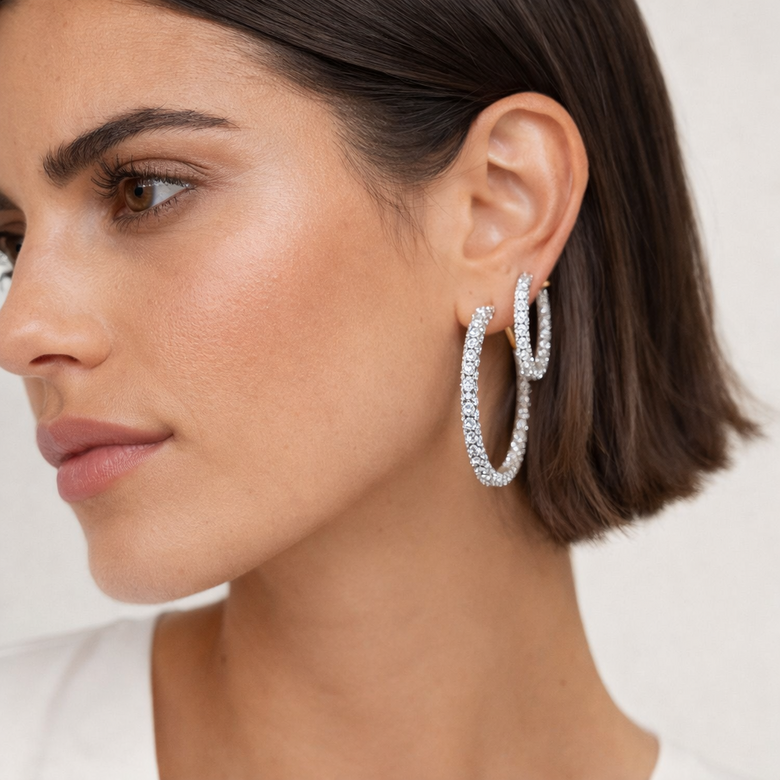
Inside-Out and Huggie Hoop Styles: Trending Lab-Grown Diamond Designs
Inside-out and huggie designs represent 65% of current hoop requests, combining contemporary aesthetics with daily wearability. Maximum sparkle impact. These trending styles transition seamlessly from professional to evening wear.
Inside-out philosophy places diamonds on interior and exterior surfaces. Continuous sparkle from every angle. This ensures visibility regardless of earring position during wear but requires precise engineering for structural integrity with maximum diamond exposure.
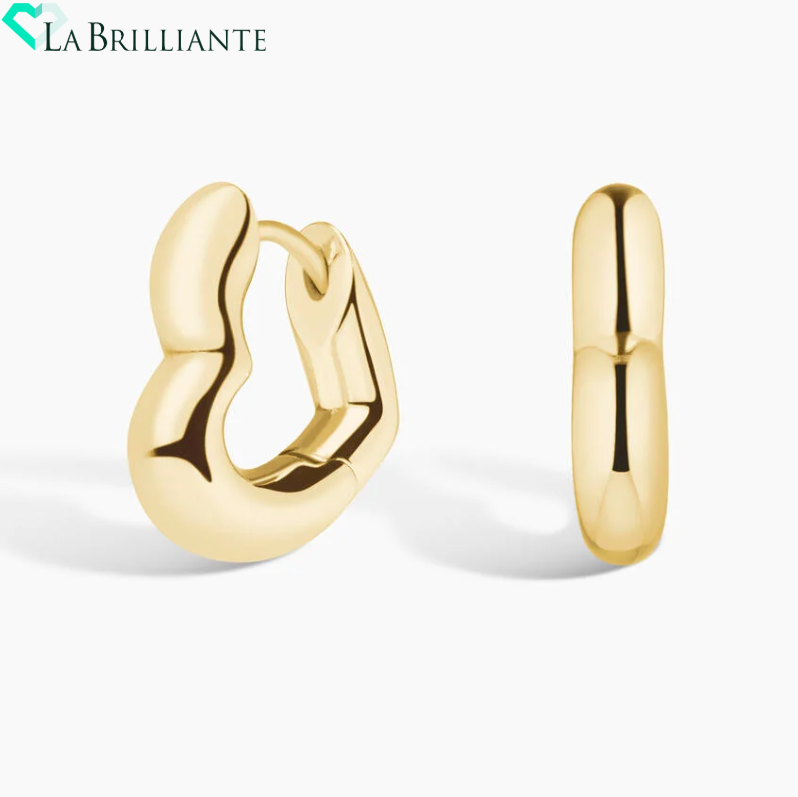
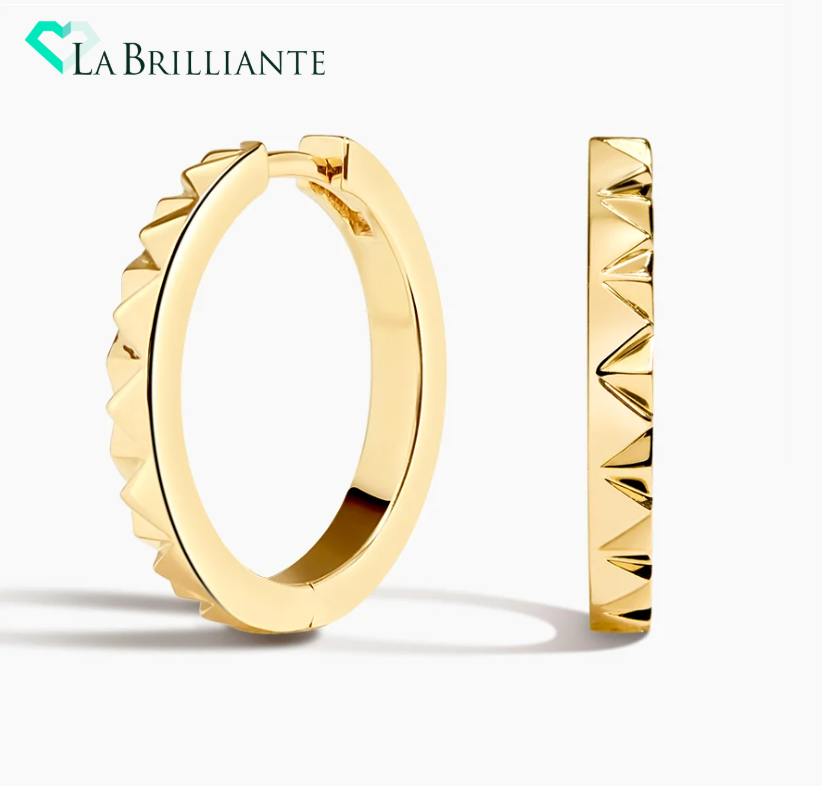
Huggie hoops offer intimate positioning with secure closures eliminating loss concerns. The close-fitting profile accommodates professional environments while providing luxury presence. Particularly popular among urban professionals seeking versatile pieces.
Labrilliante's proprietary setting techniques for inside-out configurations maximize security while maintaining continuous sparkle. Production data shows inside-out and huggie styles comprise 65% of orders with custom diameter requests increasing significantly.
Oversized Statement Hoops and Contemporary Inside-Out Diamond Positioning
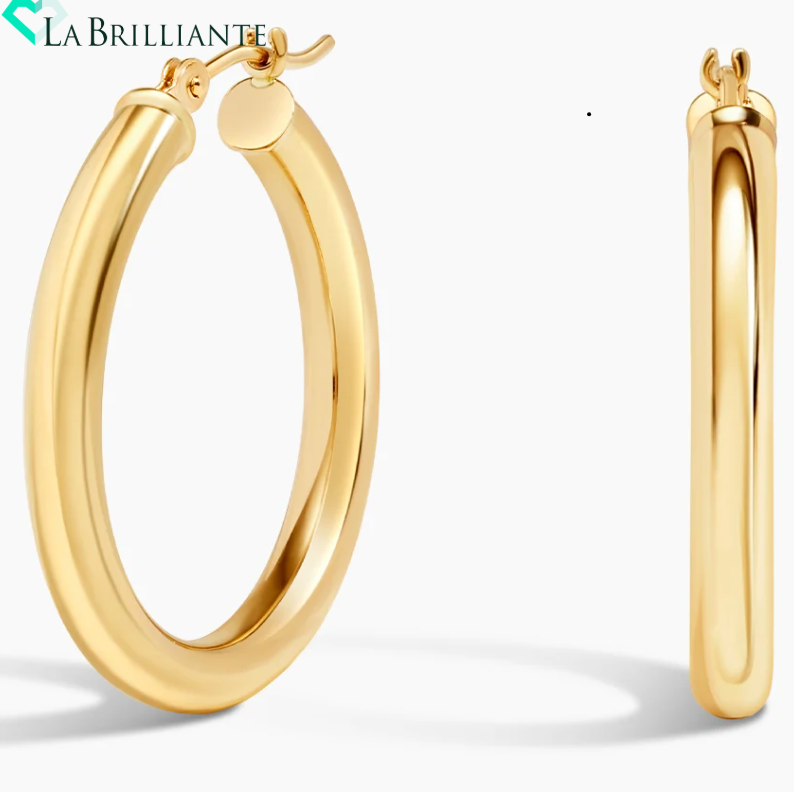
Current preferences favor 25-40mm diameters over conservative smaller sizes. These larger formats provide dramatic presence while maintaining proportional elegance. But they require lifestyle compatibility consideration for professional environments.
Inside-out positioning ensures sparkle visibility during natural movement. This addresses traditional exterior-only settings that may face away from observers. The engineering challenge involves securing diamonds on curved interior surfaces experiencing skin and hair contact.
Pavé settings create continuous sparkle through closely-set smaller stones rather than fewer larger diamonds. This maximizes visual impact per carat at accessible price points. But skilled setting work proves essential for long-term security.
Trend analysis across 500+ retail partners shows 30-35mm inside-out hoops generate highest engagement and conversion. The combination of contemporary sizing with maximum sparkle aligns with current luxury preferences for statement pieces maintaining daily wearability.
IGI and GIA Certified Lab Diamond Hoops: Quality Specifications Guide
IGI and GIA certifications provide independent verification of quality specifications using identical standards for lab-grown and mined diamonds. Complete authenticity assurance. These certifications enable informed purchasing while identifying stones as laboratory-grown.
Testing involves comprehensive spectroscopic equipment, photoluminescence analysis, and trained gemologist examination. Both maintain strict identification protocols preventing confusion with mined diamonds. Certification costs add $25-75 per stone—minimal percentage of value providing significant buyer confidence.
Quality specifications focus on visual performance impacting long-term satisfaction. D-F color grades provide colorless appearance under normal viewing. G-H grades offer near-colorless performance at reduced costs with minimal visible difference in most lighting.
Labrilliante maintains direct partnerships with IGI, GIA, and GCAL enabling streamlined certification and expedited turnaround. Quality procedures ensure consistent certification standards, reducing rejections and delivery delays affecting retail inventory.
| Quality Specification | Grade Range | Visual Performance | Price Premium vs. Baseline | Recommended For | Visibility Under Normal Viewing |
|---|---|---|---|---|---|
| Color Grade | D-E (Colorless) | Absolutely colorless, maximum brilliance | +25-35% | Investment pieces, white metal settings | No color detection in any lighting |
| F (Colorless) | Colorless appearance, exceptional quality | +15-20% | Premium hoops, platinum/white gold | No visible color to untrained eye | |
| G-H (Near-Colorless) | Excellent value with minimal warmth | Baseline (0%) | Daily wear, all metal types | Slight warmth only detectable by gemologists | |
| Clarity Grade | IF (Internally Flawless) | No internal inclusions under 10x magnification | +40-50% | Collectors, maximum perfection seekers | Flawless to naked eye and loupe |
| VVS1-VVS2 (Very Very Slightly Included) | Minute inclusions extremely difficult to detect | +20-30% | High-end jewelry, investment quality | Eye-clean, inclusions invisible without magnification | |
| VS1-VS2 (Very Slightly Included) | Minor inclusions difficult to see under magnification | Baseline (0%) | Optimal value, everyday luxury | Eye-clean, no visible inclusions to naked eye | |
| SI1 (Slightly Included) | Noticeable inclusions under magnification | -15-20% | Budget-conscious buyers, smaller stones | Generally eye-clean in hoops under 1.0ct per stone | |
| Cut Quality | Excellent (Ideal) | Maximum brilliance, fire, and scintillation | +15-20% | Best light performance, showcase pieces | Superior sparkle in all lighting conditions |
| Very Good | High brilliance with slight light leakage | Baseline (0%) | Excellent value with minimal trade-off | Strong sparkle, minor differences undetectable | |
| Good | Acceptable brilliance, noticeable light loss | -12-18% | Budget options, not recommended for hoops | Reduced sparkle visible in direct lighting | |
| Certification | IGI Certified | Comprehensive grading with growth method disclosure | +$50-75 per stone | Standard for lab-grown diamonds | Complete specifications and online verification |
| GIA Certified | Industry-leading standards, strict protocols | +$60-85 per stone | Premium assurance, maximum recognition | Highest credibility with detailed documentation | |
| Optimal Combination Examples | Premium: F/VS1/Excellent | Outstanding visual performance | +45-60% vs. baseline | Special occasions, heirloom quality | Flawless appearance with maximum brilliance |
| Value: G-H/VS2/Very Good | Excellent appearance at optimized cost | Baseline reference | Daily luxury, smart purchasing | Eye-clean with strong sparkle, best value ratio |
Clarity specifications balance perfection with cost-effectiveness. VS1-VS2 grades deliver clean appearance avoiding premium pricing of flawless grades. Cut quality significantly impacts sparkle—excellent grades maximize brilliance through precise proportions commanding 10-20% premiums over very good grades.
Certification documents specific growth methods (CVD or HPHT) and post-growth treatments. HPHT treatment distinct from HPHT growth may improve CVD diamond color requiring disclosure. Online verification through certificate databases enables authenticity confirmation and detailed information access.
Understanding limitations helps set expectations. Certificates document testing-time characteristics rather than permanent guarantees. Normal wear may affect surface condition though fundamental properties like color remain stable.
Quality assurance includes pre-certification screening maintaining 99.2% success rates across submissions. This consistency enables reliable delivery schedules and quality guarantees for retail partners' inventory planning.
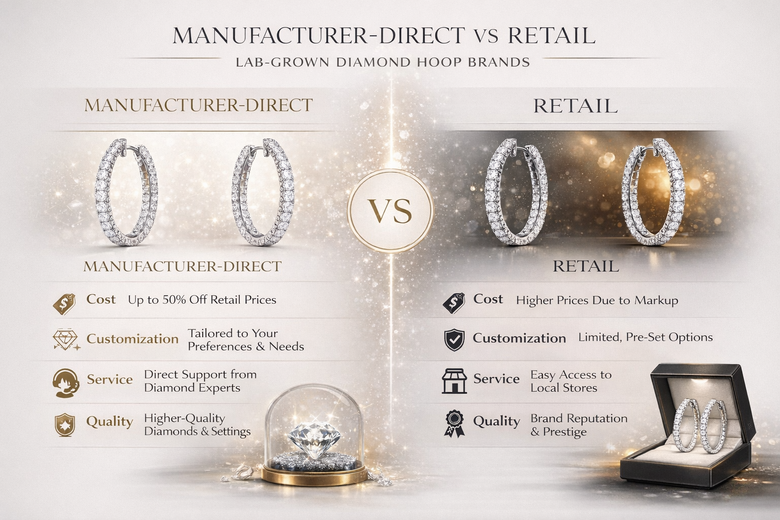
Manufacturer-Direct vs Retail: Lab-Grown Diamond Hoop Brand Comparison
Manufacturer-direct purchasing offers substantial cost advantages and customization capabilities over retail channels. Different trade-offs involved. Direct requires different service expectations and may involve minimum orders or extended timelines.
Premium retail brands like Brilliant Earth and Clean Origin price lab-grown hoops 40-70% higher than manufacturer-direct options. They provide comprehensive service, generous returns, and brand recognition some consumers value over pure savings.
Direct models enable production expertise and customization retail operations cannot offer economically. Custom diameters, specific clarity requests, and metal specifications become feasible when ordering from production facilities rather than retail inventory.
Labrilliante's manufacturer-direct model enables 500+ B2B clients offering customers premium hoops at pricing typically associated with lower-quality alternatives. Direct relationships eliminate 2-3 markup layers while exceeding retail brand specifications.
Brand comparison reveals different value propositions. Retail emphasizes convenience, service, and prestige while direct focuses on technical superiority, customization, and cost optimization. Consumer priorities determine superior overall value.
Quality comparison requires examining actual specifications rather than marketing claims. Certification standards remain consistent regardless of distribution channel. But direct operations may offer premium sorting and selection retail cannot maintain across inventory ranges.
Market positioning includes hybrid models where retail brands source directly while maintaining retail pricing and service. This limits cost savings while potentially providing quality advantages through direct relationships and specification control.
Experience indicates informed consumers prioritizing specifications and cost-effectiveness prefer direct relationships, while customers seeking comprehensive service find retail channels suitable despite higher costs. Both models serve legitimate market segments.
Premium Lab-Grown Diamond Hoops Transform Competitive Positioning
Direct-from-manufacturer partnerships eliminate markup layers while delivering IGI and GIA certified stones matching investment-grade specifications. Your customers access D-F color, VVS clarity inside-out designs at price points previously reserved for inferior alternatives. This isn't compromise—it's strategic advantage through production innovation and supply chain optimization.
Partner with Labrilliante for B2B Excellence
Labrilliante's manufacturer-direct model enables jewelry retailers to offer premium certified hoops with 40-65% improved margins while reducing customer pricing simultaneously. Our proprietary inside-out setting techniques, carbon-neutral production transparency, and expedited certification partnerships deliver inventory advantages competitors cannot match. Contact our B2B team today to explore custom specifications, volume pricing, and how direct sourcing transforms your sustainable luxury positioning in increasingly conscious markets.
Frequently Asked Questions
CVD (Chemical Vapor Deposition) operates at 800-1200°C and grows diamonds layer-by-layer using methane and hydrogen gases, while HPHT (High Pressure High Temperature) recreates natural diamond formation at 1300-1600°C using extreme pressure. Both methods consume similar energy (150-300 kWh per carat) and produce chemically identical diamonds, with the choice primarily affecting production efficiency rather than final quality or appearance.
Lab-grown diamonds are genuine diamonds with identical hardness (10 on Mohs scale), refractive properties, and chemical composition to mined diamonds, whereas moissanite and cubic zirconia are diamond simulants with different optical and physical properties. Lab-grown diamonds receive IGI and GIA certifications using the same grading standards as mined diamonds, while simulants cannot be certified as diamonds and display noticeably different sparkle patterns under examination.
Lab-grown diamonds lack established secondary market infrastructure because production scales infinitely—future technology will continuously produce better stones at lower costs, permanently devaluing current purchases. Traditional jewelers won't buy them back and online marketplaces offer minimal returns, making them suitable for personal enjoyment rather than financial investment, though 92% of jewelry purchasers prioritize wearability over resale potential anyway.
VS1-VS2 clarity grades deliver eye-clean appearance without paying premiums for flawless grades, while G-H color provides near-colorless performance with minimal visible difference from D-F grades in most lighting conditions. However, inside-out designs showcase quality more prominently than traditional settings, so upgrading to D-F color and VVS clarity becomes more visually impactful and represents better value when maximizing sparkle from all viewing angles.
Check the certificate number through IGI or GIA's online verification databases, which provide detailed gemological information and confirm the stone's laboratory-grown origin. Certificates should explicitly identify growth method (CVD or HPHT) and any post-growth treatments like HPHT color enhancement, with testing performed using spectroscopic equipment and photoluminescence analysis to prevent confusion with mined diamonds or simulants.
Huggie hoops with close-fitting profiles and 25-30mm diameters accommodate professional settings while providing luxury presence, whereas 35-40mm oversized statement hoops deliver dramatic impact for evening occasions but may overwhelm conservative workplace environments. The 30-35mm range represents optimal versatility, transitioning seamlessly between contexts while current trends show this mid-range size generating highest customer engagement and conversion rates.
White gold requires rhodium replating every 12-18 months to maintain bright appearance, as the rhodium coating wears through normal contact with skin, hair, and environmental elements. Yellow and rose gold develop natural patina over time but don't require replating, while 14k gold provides superior durability compared to softer 18k gold, making metal selection an important consideration for maintenance preferences and long-term appearance goals.
Carat total weight creates the most dramatic visual impact, with upgrading from 1 CTW to 2 CTW increasing diameter by 40% while typically doubling price—making it the most cost-effective improvement for presence. Since the 70-85% savings on lab-grown diamonds allow budget reallocation, investing in larger carat weight delivers greater satisfaction than incrementally improving from VS to VVS clarity or G to D color, especially in pavé settings where numerous smaller stones maximize sparkle per dollar spent.