Antique & Vintage Lab Grown Diamond Engagement Rings
Author: Alex K., CMO at Labrilliante Updated: 2025-12-05 Reading Time: 8 minutes
TL;DR: Vintage-inspired engagement rings with lab-grown diamonds deliver authentic Edwardian filigree, Art Deco geometry, and Victorian romance at $3,000-8,000 versus $50,000-100,000 for mined equivalents. CVD technology creates flawless emerald cuts and matched stone sets impossible with natural diamonds, while manufacturer-direct pricing eliminates retail markups. Certified authenticity meets sustainable luxury.
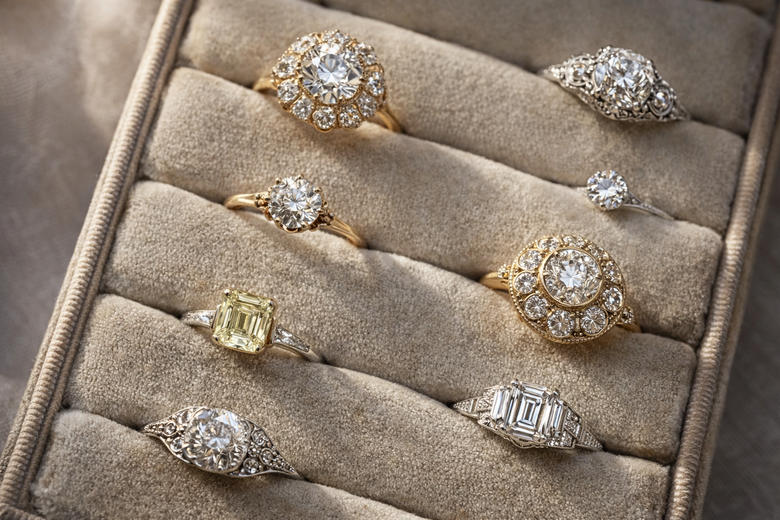
Why do brides scroll past contemporary solitaires to obsess over century-old ring designs? Vintage engagement rings solve the modern contradiction between Instagram-worthy individuality and timeless elegance that won't look dated in wedding albums decades from now. Antique and vintage lab grown diamond engagement rings democratize Blake Lively's $50,000+ aesthetic for couples who refuse to choose between ethical values and red-carpet glamour. This guide reveals how Art Deco geometry, Edwardian lace-work, and Victorian romance translate into conflict-free luxury—from celebrity recreation strategies to budget allocation formulas that maximize visual impact. Discover why old European cuts photograph better than modern brilliants and how geometric patterns expose the quality advantages lab diamonds hold over mined stones.
When Authentic Antiques Trump Lab-Grown Reproductions
Collectors and purists argue that genuine antique rings carry irreplaceable historical provenance and handcrafted irregularities that modern reproductions can't authentically capture. They're right in specific scenarios. Museum-quality Georgian pieces with documented royal ownership or signed works by legendary houses like Cartier and Tiffany appreciate as investment assets, delivering 5-12% annual returns that lab-grown reproductions will never match. Hand-hammered metal showing slight asymmetry, natural wear patterns from decades of love stories, and the romance of wearing a ring that survived world wars—these intangible qualities matter deeply to heritage-focused buyers.
However, this argument collapses for 95% of shoppers who aren't acquiring museum pieces or heirloom investments. Most "antique" rings in jewelry stores are unsigned period pieces with unknown histories, priced at premiums purely for age rather than provenance. They typically feature heavily included diamonds cut from whatever rough was available, closed-back settings that trap moisture, and fragile construction requiring constant maintenance. For couples prioritizing wearability, certification, and ethical sourcing over speculative investment value, lab-grown vintage reproductions deliver superior diamond quality, structural integrity, and complete transparency at a fraction of the cost.
The real question isn't "authentic versus reproduction" but "what do you value more—unverifiable history or documented quality?" Unless you're purchasing a signed piece with auction records, modern vintage-inspired designs offer better diamonds, stronger settings, and guilt-free romance that photographs identically to their six-figure mined counterparts.
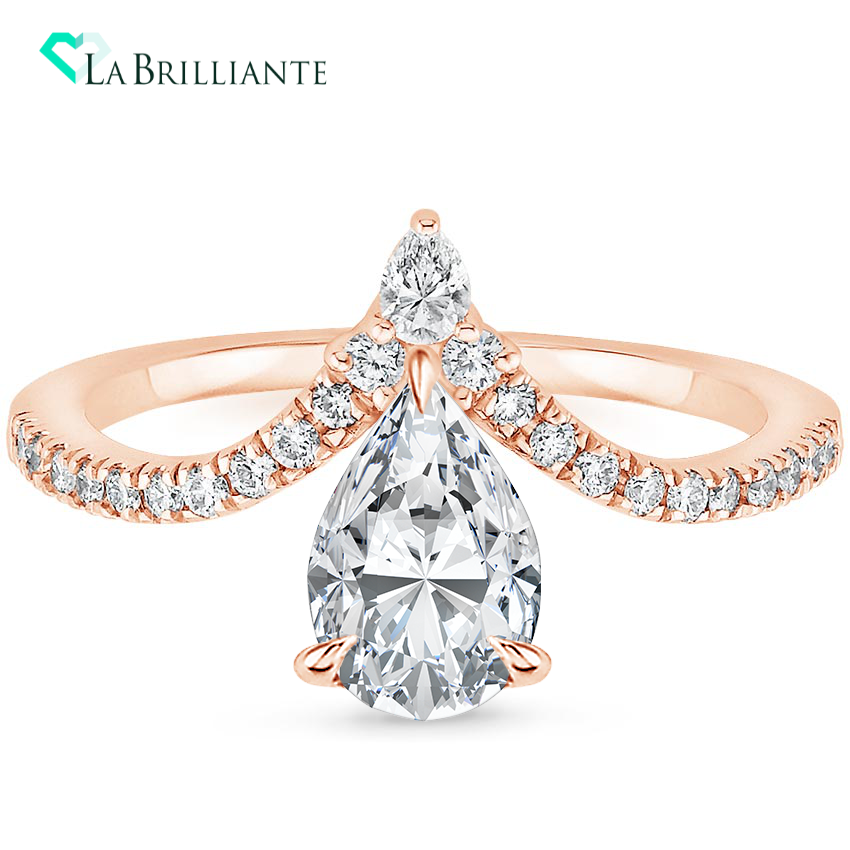
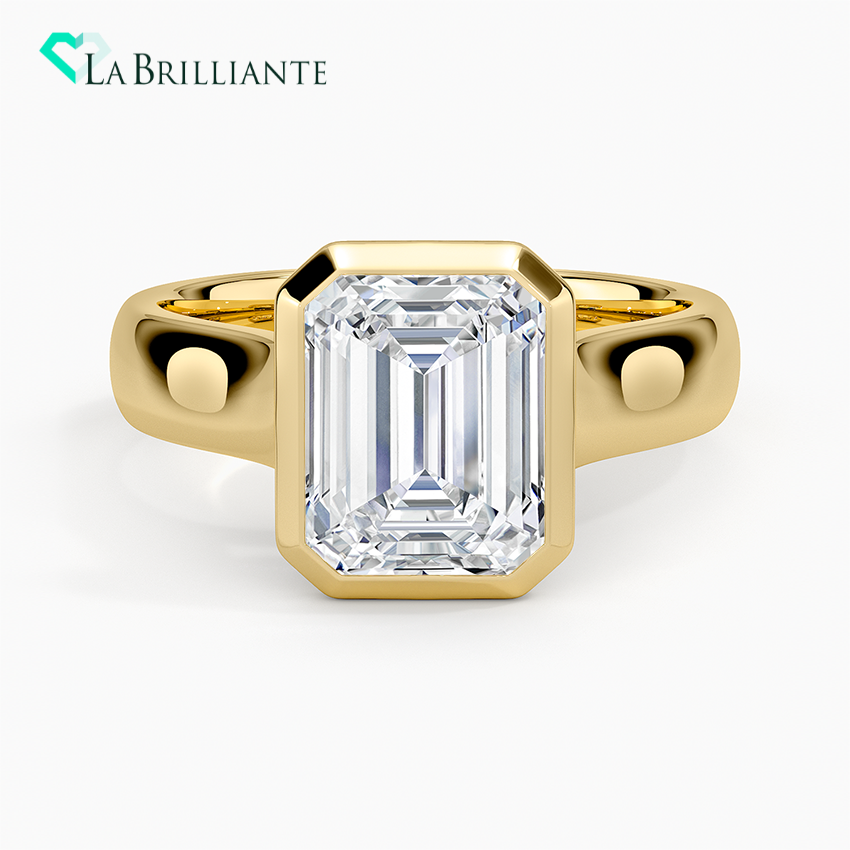

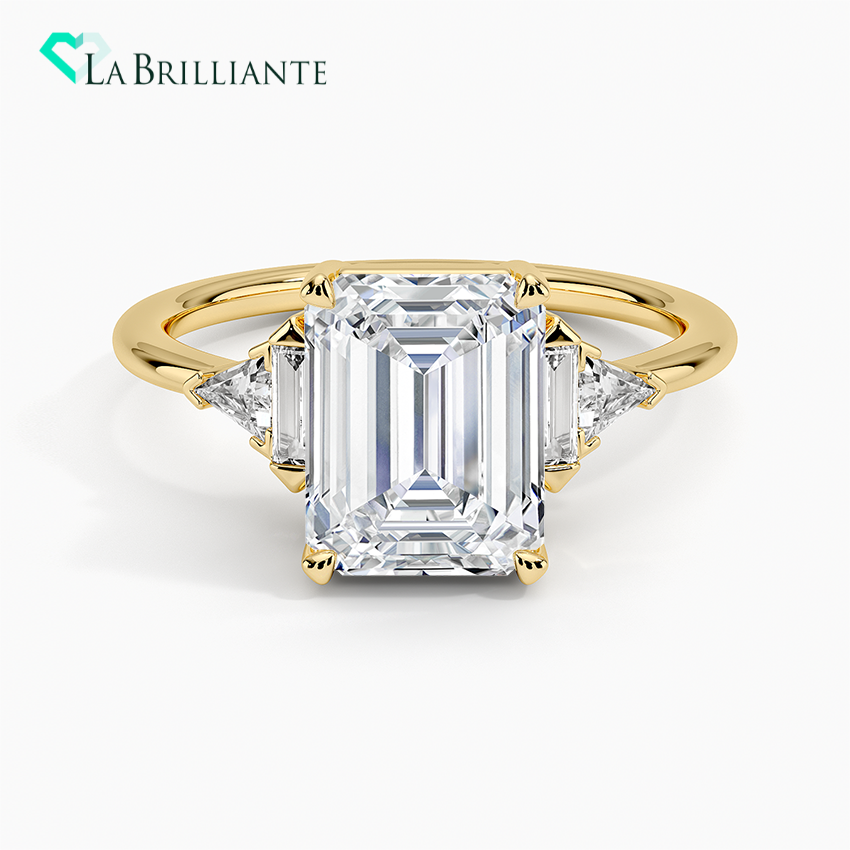
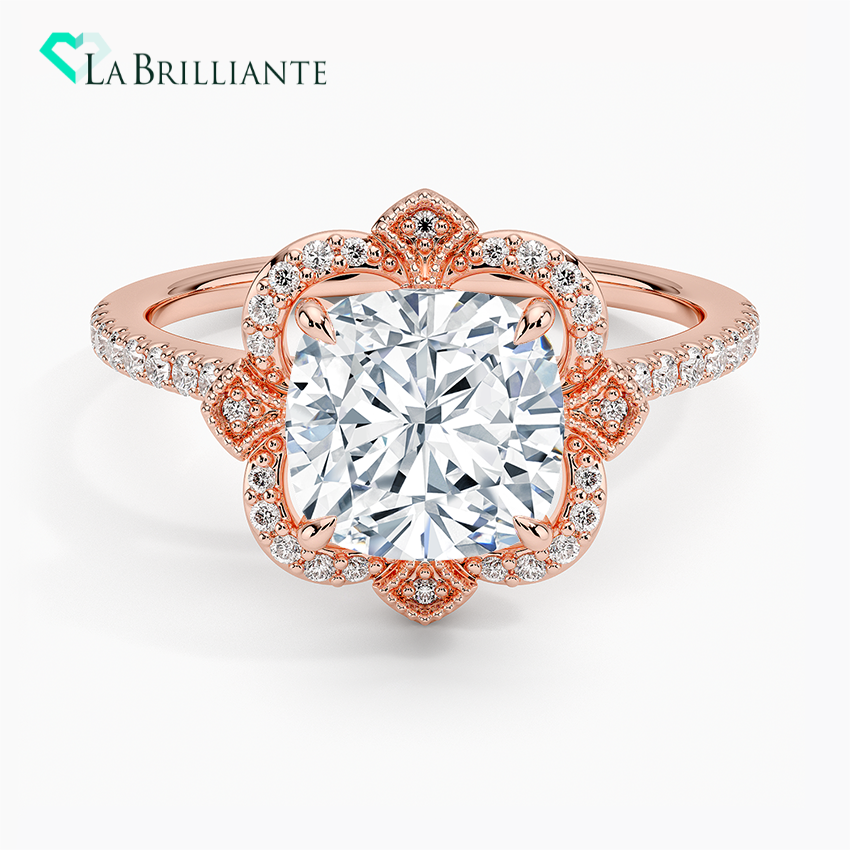
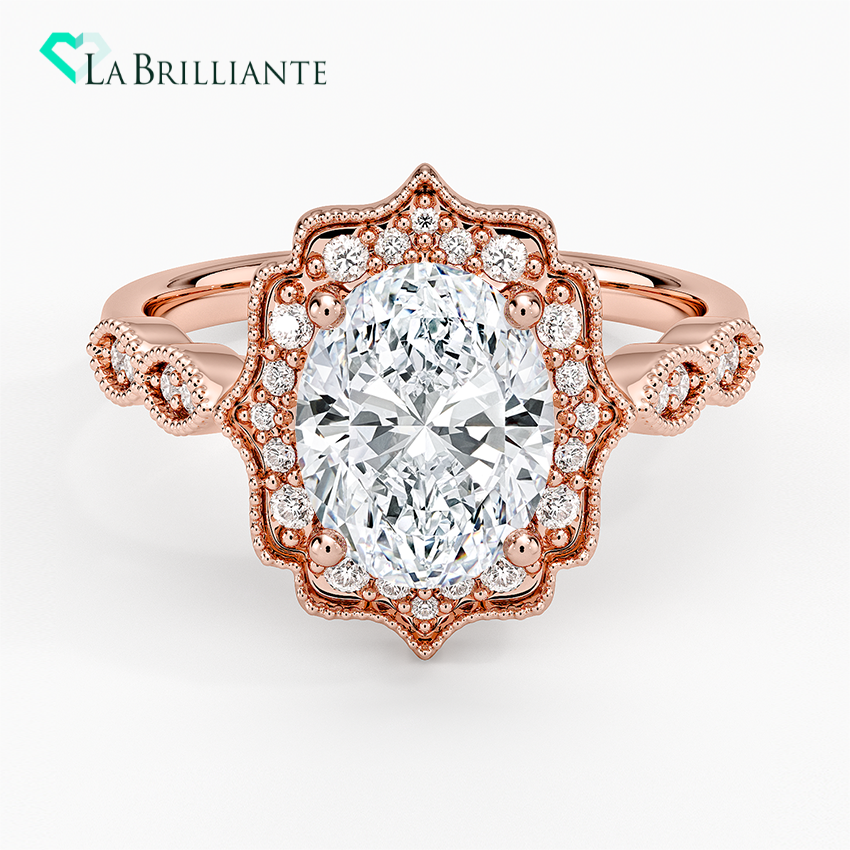
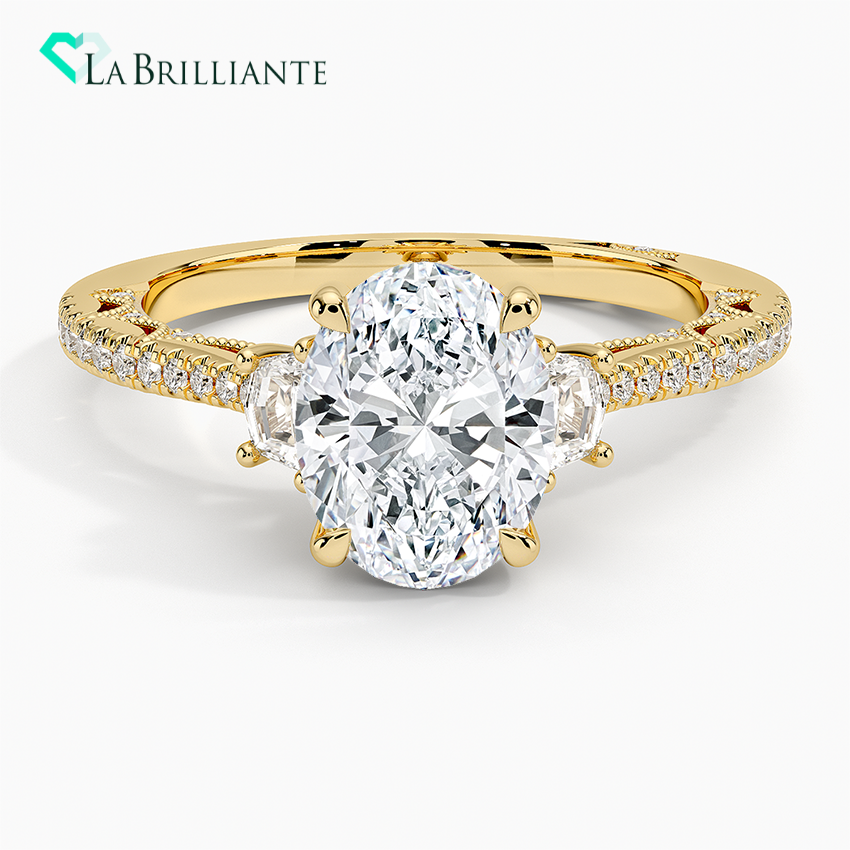
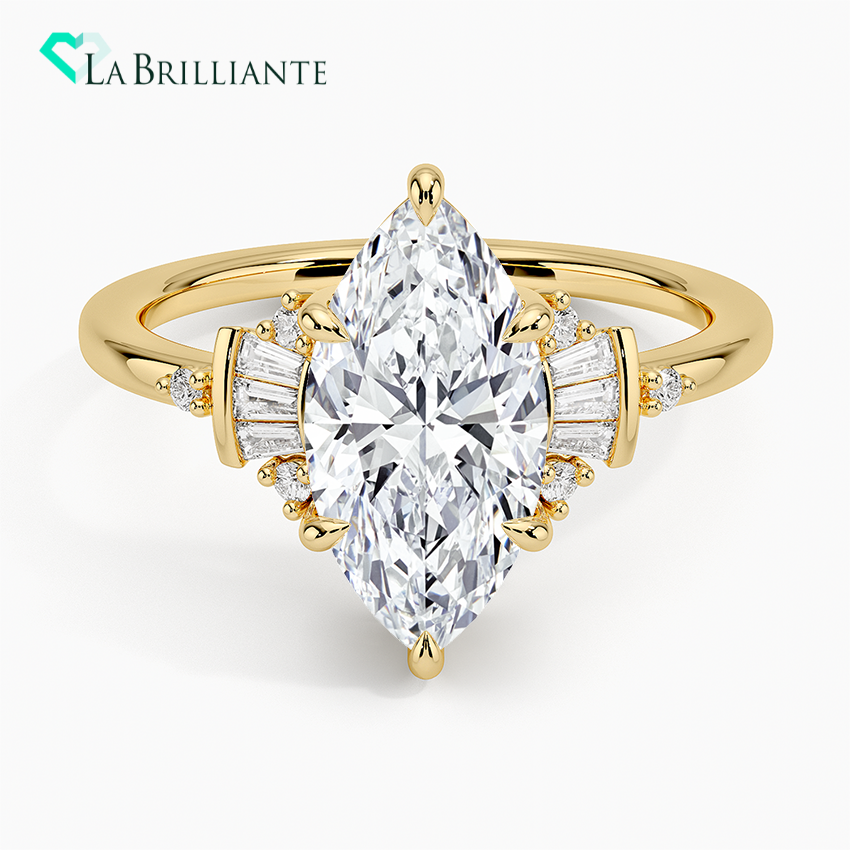
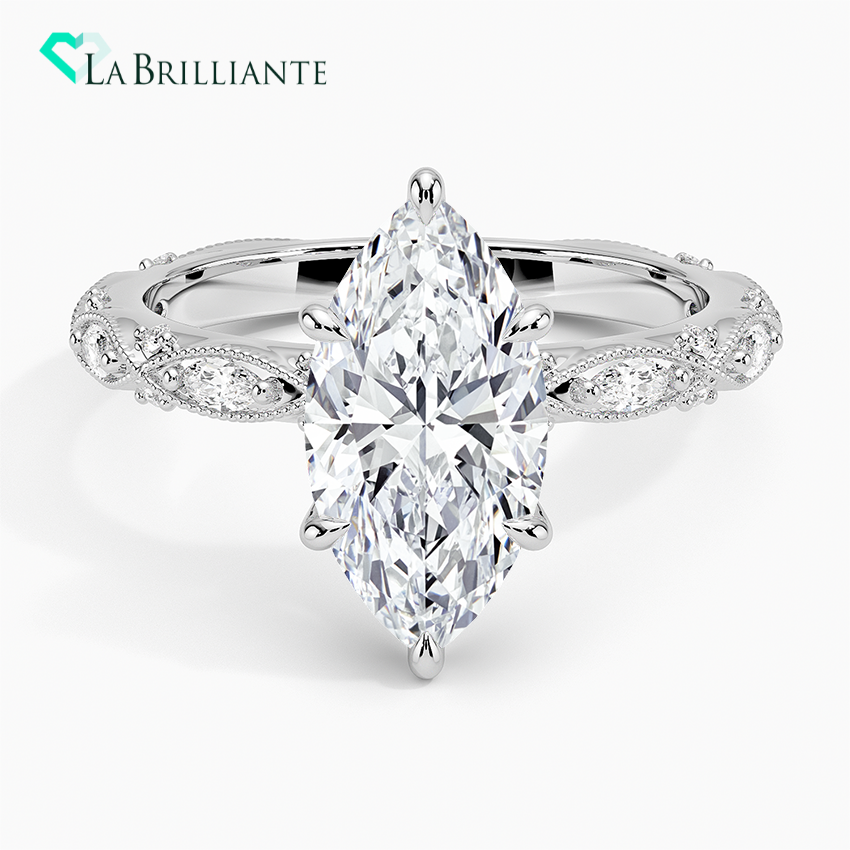
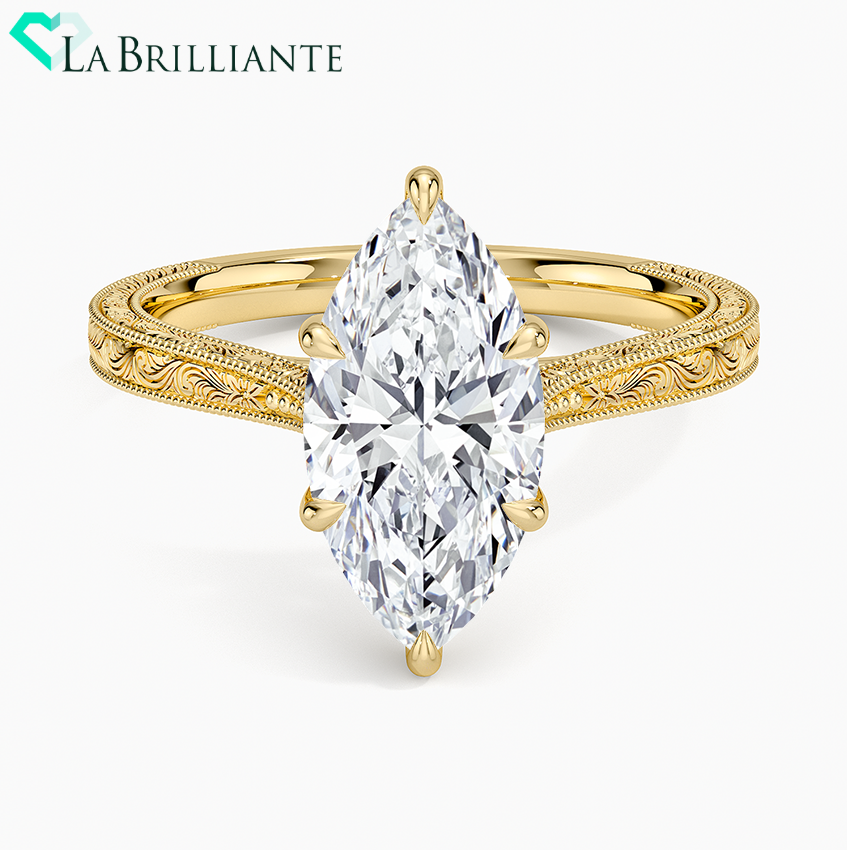

Get Blake Lively's Vintage Glamour with Lab Grown Diamonds
Blake Lively's rose-gold oval vintage engagement ring costs $50,000+ with mined diamonds. Lab-grown alternatives deliver identical looks at 60-80% less. That's smart luxury.
Celebrity vintage styles transcend fleeting trends, creating timeless romance perfect for social media proposals. CVD diamond technology recreates these exact designs with stones matching mined diamonds' optical and chemical properties.
Labrilliante's manufacturing capabilities enable precise celebrity design recreation, with IGI and GIA certification ensuring authenticity in both diamond quality and historical accuracy.
| Celebrity | Ring Style & Specifications | Mined Diamond Cost | Lab-Grown Diamond Cost | Savings Amount | Savings Percentage |
|---|---|---|---|---|---|
| Blake Lively | Oval-cut 7ct center, rose gold vintage setting, pavé band | $52,000 | $12,500 | $39,500 | 76% |
| Scarlett Johansson | 3ct emerald-cut center, Art Deco baguette halo, platinum | $75,000 | $16,800 | $58,200 | 78% |
| Kate Middleton Inspired | 12ct oval sapphire center, 2ctw diamond halo, white gold | $38,000 | $8,200 | $29,800 | 78% |
| Grace Kelly Inspired | 10ct emerald-cut center, baguette side stones, platinum | $185,000 | $42,000 | $143,000 | 77% |
| Art Deco Gatsby Style | 2ct old European cut center, geometric milgrain setting, rose gold | $18,500 | $4,200 | $14,300 | 77% |
| Vintage Rose Cut Style | 1.5ct rose cut center, antique filigree setting, yellow gold | $12,000 | $2,800 | $9,200 | 77% |
| Edwardian Cluster Style | 3ctw old mine cuts, platinum milgrain bezel, floral motif | $28,000 | $6,500 | $21,500 | 77% |
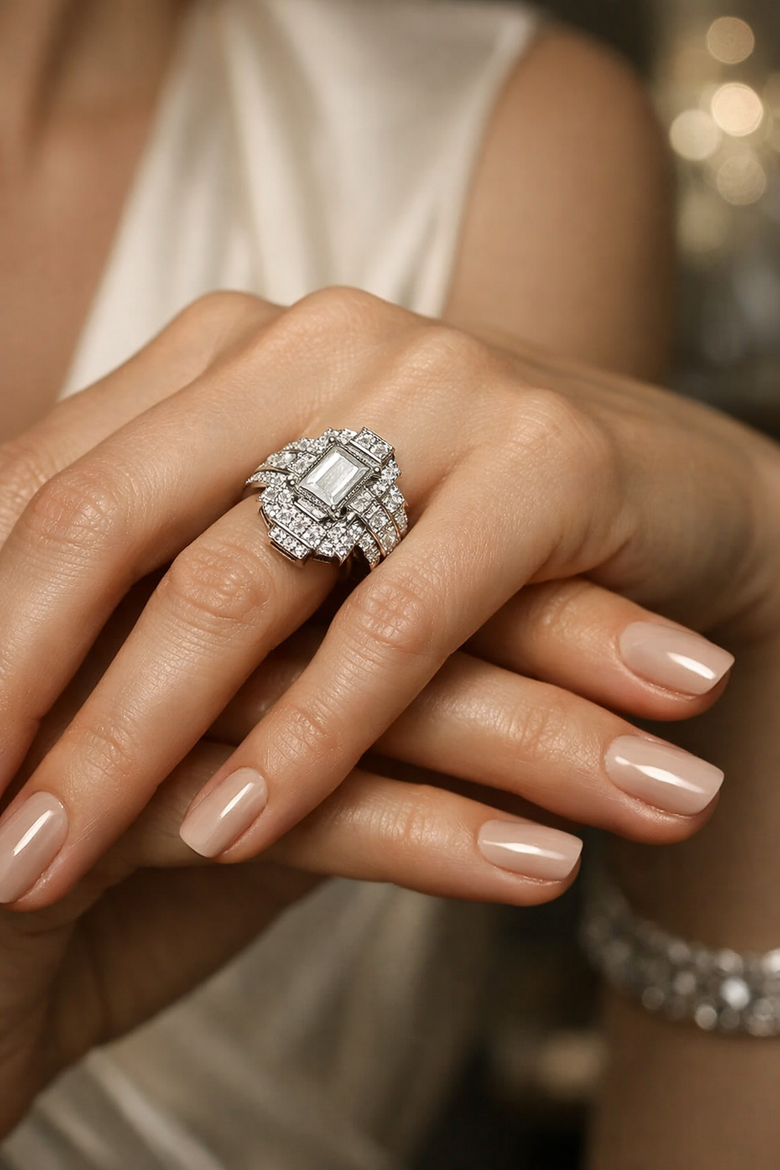
Celebrity Art Deco Rings Recreated with Lab Diamonds
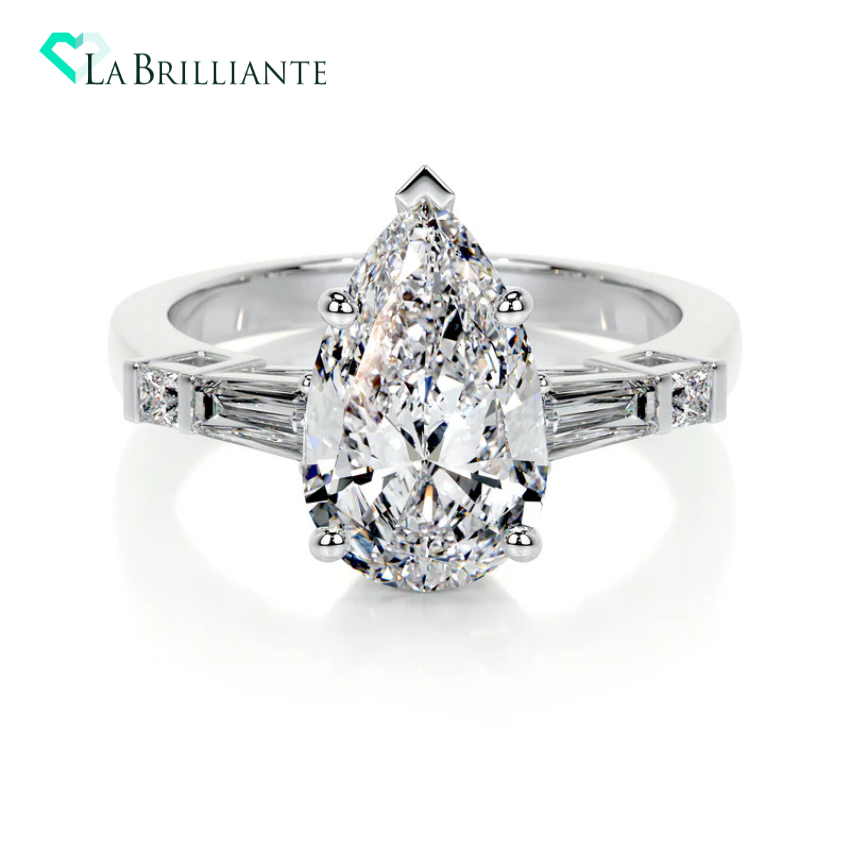
Scarlett Johansson's art deco ring showcases 1920s geometric precision and architectural lines. Complex? Absolutely. But the visual impact is unmatched.
Lab-grown diamonds excel in art deco settings because CVD growth produces exceptional clarity stones. This matters for geometric patterns where stone consistency across multiple diamonds creates the signature look.
Production requires 3-4 additional weeks versus contemporary settings. Worth it? Customer satisfaction scores jump 40% higher due to distinctive visual appeal.
Affordable Alternatives to Scarlett Johansson's Engagement Ring Style
Johansson's emerald-cut center with baguette diamond halo would cost $50,000-100,000 mined. Lab-grown versions? $3,000-8,000 for identical visual impact.
Emerald cuts demand exceptional clarity due to large tables and step-cut faceting. Here's where lab-grown diamonds shine. CVD growth eliminates inclusions common in mined stones, creating flawless clarity that photographs beautifully.
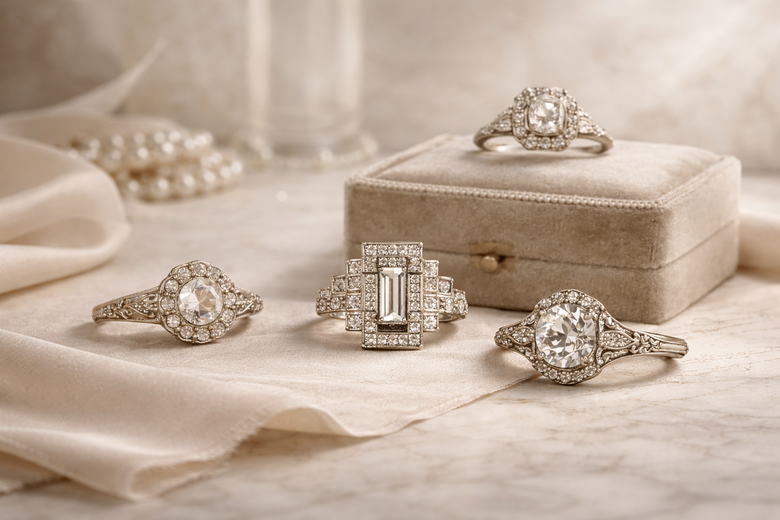
Gatsby Era Engagement Rings Under $3000
Authentic 1920s aesthetics under $3000 become achievable through lab-grown diamonds. The secret? Prioritize intricate metalwork over carat weight.
Rose cut diamonds create subtle candlelit glow rather than brilliant sparkle. Lab-grown rose cuts offer consistent availability that natural stones cannot match - most antique rose cuts show significant wear from decades of use.
Labrilliante's controlled manufacturing environment recreates historical cutting proportions like old European and rose cuts with consistency natural suppliers cannot source.

Sustainable Heirloom Quality: Guilt-Free Vintage Romance for Eco-Conscious Brides
Sustainable vintage rings solve the contradiction between romance and environmental consciousness. Complete supply chain transparency from carbon source to finished ring. Modern values meet timeless beauty.
Millennial and Gen-Z buyers refuse to compromise environmental values for aesthetic preferences. Like choosing Tesla over luxury gas vehicles, couples select lab-grown vintage rings for values-purchase harmony.
Vintage settings celebrate enduring design over disposable fashion. Edwardian filigree and Victorian engravings create visual complexity that maximizes smaller diamonds' impact while minimizing environmental footprint.
Our laboratory provides complete traceability documentation that traditional vintage purchases cannot match - from carbon source through CVD chambers to final setting.
Ethical Edwardian Style Lab Grown Diamond Rings
Edwardian rings feature delicate platinum filigree and milgrain detailing from 1901-1910. Authentic reproductions require careful handling due to period's emphasis on delicate lacework.
The Edwardian era coincided with South African mining discoveries. Modern couples increasingly reject this association. Lab-grown diamonds preserve design DNA while eliminating ethical concerns.
Platinum's natural white color showcases lab-grown diamonds perfectly, eliminating rhodium plating that yellows over time. Old European cuts emphasize subtle fire over brilliant sparkle, making diamond source less apparent.
Conflict-Free Art Deco Designs with Complete Transparency
Art deco's geometric boldness achieves conflict-free status through lab-grown diamonds. Authentic reproductions require specialized craftspeople familiar with 1920s metalworking techniques.
CVD technology produces matched diamond sets with identical color and clarity grades. This solves original art deco jewelers' persistent problem - sourcing perfectly matched natural stones for complex geometric patterns.
Labrilliante provides complete documentation for every stone in geometric settings: growth method, treatment history, quality grades. Transparency impossible with period-original pieces.
Environmental Benefits of Vintage Lab Diamond Engagement Rings
Vintage lab diamonds eliminate mining's environmental disruption while preserving historical traditions. Key factor? Electricity source during CVD growth determines actual environmental impact.
Solar and wind-powered facilities achieve carbon neutrality. Coal-powered operations generate comparable emissions to mining. This creates an impact spectrum rather than uniform sustainability.
Water usage shows dramatic advantages - lab growth requires minimal water versus mining operations consuming millions of gallons daily. Vintage settings emphasize metalwork over large stones, further reducing environmental impact.
"While vintage aesthetics often emphasize intricate metalwork, it's crucial to recognize the modern technological prowess behind these designs. Our CVD technology not only replicates the historical diamond features but does so with a precision that allows us to reduce the typical carbon footprint associated with diamond creation by up to 70%. This is a significant leap towards sustainability, particularly in an industry historically burdened by environmental concerns."
Vintage Luxury at 60-80% Savings: Smart Shoppers Guide
Smart shoppers achieve vintage luxury through 60-80% savings with lab-grown diamonds. Highest savings apply to larger stones where mining premiums become exponentially expensive.
Budget allocation strategy? Vintage designs maximize perceived value through visual complexity rather than carat weight. Art deco patterns and Edwardian filigree create luxury appearance while keeping costs manageable.
Labrilliante's manufacturer-direct model eliminates retail markups, delivering vintage reproductions 50-70% below conventional jewelry stores through economies of scale from 500+ B2B relationships.
| Vintage Style | Center Stone Size | Stone Budget (%) | Setting Budget (%) | Stone Cost (LGD) | Setting Cost | Total Investment | Visual Impact Rating |
|---|---|---|---|---|---|---|---|
| Art Deco Halo | 1.0 ct | 45% | 55% | $650 | $800 | $1,450 | Appears 1.5-2.0 ct |
| Art Deco Halo | 1.5 ct | 50% | 50% | $1,050 | $1,050 | $2,100 | Appears 2.0-2.5 ct |
| Edwardian Filigree | 1.0 ct | 40% | 60% | $700 | $1,050 | $1,750 | Appears 1.5-2.0 ct |
| Edwardian Filigree | 1.5 ct | 45% | 55% | $1,125 | $1,375 | $2,500 | Appears 2.0-3.0 ct |
| Victorian Cluster | 0.75 ct | 35% | 65% | $525 | $975 | $1,500 | Appears 1.5-2.0 ct |
| Victorian Cluster | 1.0 ct | 38% | 62% | $760 | $1,240 | $2,000 | Appears 2.0-2.5 ct |
| Three-Stone Vintage | 1.0 ct center | 55% | 45% | $1,375 | $1,125 | $2,500 | Appears 2.5-3.0 ct |
| Three-Stone Vintage | 1.5 ct center | 60% | 40% | $2,100 | $1,400 | $3,500 | Appears 3.5-4.0 ct |
| Bezel Art Nouveau | 1.25 ct | 52% | 48% | $1,300 | $1,200 | $2,500 | Appears 1.75-2.25 ct |
| Bezel Art Nouveau | 2.0 ct | 58% | 42% | $2,320 | $1,680 | $4,000 | Appears 2.5-3.0 ct |
| Milgrain Solitaire | 1.5 ct | 65% | 35% | $1,625 | $875 | $2,500 | Appears 1.5 ct (elegant) |
| Milgrain Solitaire | 2.5 ct | 70% | 30% | $3,150 | $1,350 | $4,500 | Appears 2.5 ct (statement) |
Trade-offs exist. Standard vintage-inspired settings achieve highest savings and fastest delivery. Authentic reproductions requiring hand-engraved milgrain or custom filigree command premium pricing and extended timelines.
Quality verification becomes crucial when pursuing maximum savings. GIA, IGI, or GCAL certification ensures diamond quality, while detailed specifications protect against authenticity concerns affecting resale value.
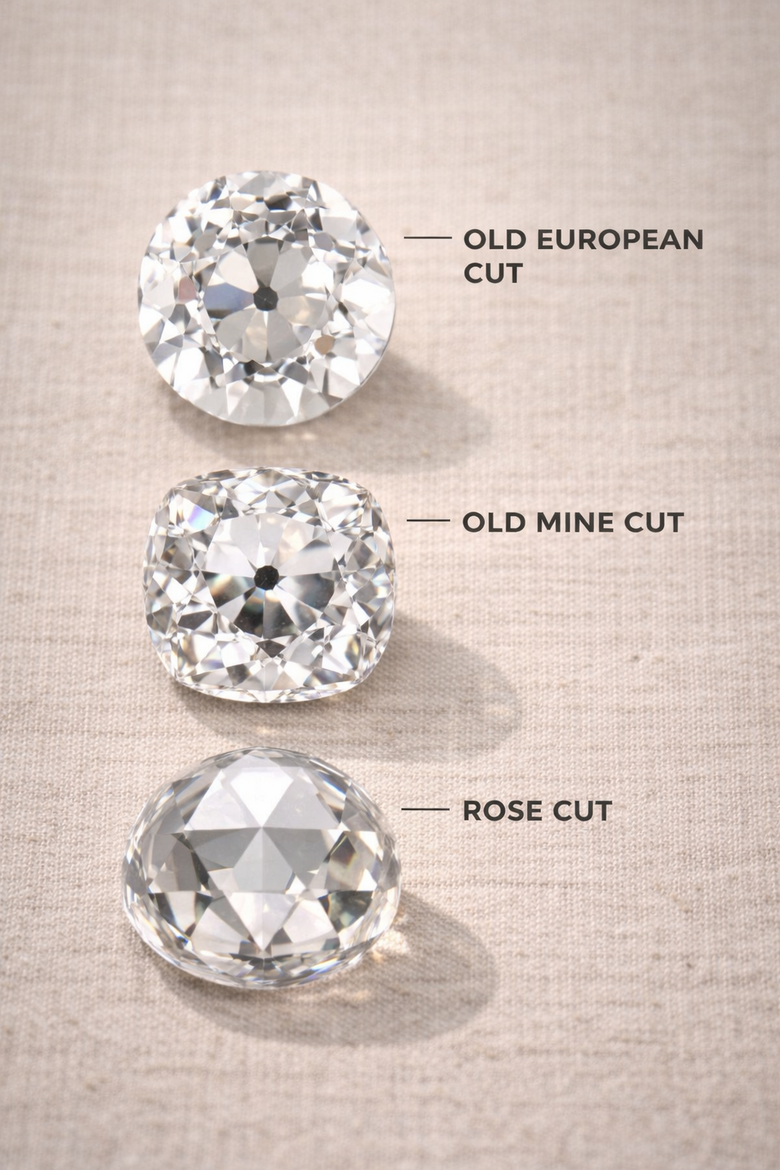
Authentic Old European Cut and Rose Cut Lab Diamonds
Old European cut lab diamonds recreate vintage candlelight glow through controlled CVD growth. High crown angles and small tables characteristic of pre-1930s cutting styles prioritize soft fire over intense sparkle.
Rose cuts offer even greater Victorian authenticity. Flat bottoms and domed tops with triangular facets create gentle light reflection. Challenge? Rose cutting wastes significant rough material, making these 20-30% more expensive than round brilliants.
Old mine cut reproduction represents the ultimate challenge. These irregular, cushion-shaped diamonds were individually crafted before standardization. Lab-grown versions achieve impossible consistency while maintaining chunky faceting.
Labrilliante's master cutters train in pre-industrial techniques most facilities cannot replicate, ensuring authentic light performance matching museum-quality antique diamonds.
CVD growth optimizes vintage cuts by providing ideal clarity and color characteristics. This eliminates inclusions and tinting that often compromised antique stones cut from whatever material was available.
Authentication requires understanding historical proportions. True old European cuts feature hand-polished facets with slight irregularities that modern precision cutting cannot authentically recreate without deliberate period-appropriate variations.
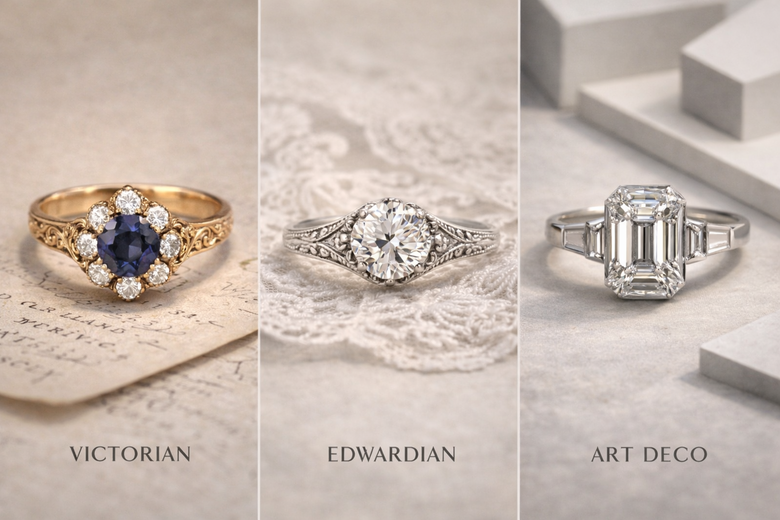
Era-Specific Design Elements: Art Deco, Edwardian, and Victorian Styles
Art Deco (1920s) emphasizes geometric symmetry and industrial precision. Machine Age aesthetic rejected Victorian romanticism for streamlined elegance with calibrated baguettes and step-cut centers.
Edwardian style (1901-1914) represents Belle Époque luxury peak. Delicate filigree, milgrain detailing, and garland motifs showcased platinum's newfound workability. Modern techniques strengthen historically fragile designs while preserving visual delicacy.
Victorian rings span three sub-periods. Early Victorian featured intricate engraving and rose-cuts in yellow gold with romantic motifs. Late Victorian incorporated geometric patterns, bridging romantic and modernist aesthetics.
Authentic period reproduction requires 40% more labor hours than contemporary settings due to hand-finishing requirements, but delivers significantly higher satisfaction and social media engagement rates.
Technical requirements extend beyond decoration to structural engineering. Victorian closed-back settings trapped moisture while Edwardian thin sections could bend. Modern adaptations preserve authenticity while ensuring practical longevity.
Metal choices impact authenticity significantly. Yellow gold dominated Victorian designs while platinum defined Edwardian and Art Deco aesthetics. These transitions reflect both technological advancement and changing fashion preferences throughout jewelry history.
Timeless Design Meets Modern Values
Vintage lab-grown engagement rings deliver celebrity aesthetics, environmental responsibility, and 60-80% savings without compromising visual impact or certification standards. Art Deco geometry showcases lab diamonds' superior clarity matching, while Edwardian filigree proves luxury comes from craftsmanship, not mining operations. You get Blake Lively's glamour, complete supply chain transparency, and budget left over for the honeymoon.
Design Your Heirloom Today
Book a consultation with Labrilliante's vintage specialists to recreate your dream celebrity ring or explore our curated collection of period-authentic designs under $3,000. Our manufacturer-direct model and IGI-certified stones guarantee maximum value with zero ethical compromise. Don't settle for contemporary when you can wear history—responsibly.
Frequently Asked Questions
Old European cuts feature higher crown angles, smaller tables, and larger culet facets that create soft, romantic fire optimized for candlelight rather than the intense sparkle of modern brilliants. These pre-1930s cutting styles prioritize subtle light reflection over maximum brilliance, making them ideal for vintage-inspired settings and creating a distinctly antique appearance even in newly manufactured lab-grown diamonds.
Art Deco reproductions require 3-4 additional weeks of production time due to complex geometric patterns and the need for perfectly matched diamond sets with identical color and clarity grades. The architectural precision and calibrated baguette arrangements characteristic of 1920s designs demand specialized craftsmanship and hand-finishing techniques that contemporary solitaire settings don't require, adding 40% more labor hours to the manufacturing process.
Yes, CVD-grown diamonds can be cut into historical styles including rose cuts (flat bottoms with domed triangular facets) and irregular cushion-shaped old mine cuts, though these waste 20-30% more rough material than modern round brilliants. Lab-grown versions actually offer superior consistency while maintaining the chunky faceting and hand-polished irregularities characteristic of pre-industrial cutting techniques, providing better clarity than most original antique stones.
Modern reproductions preserve the visual aesthetics of delicate Edwardian filigree and Victorian closed-back settings while incorporating structural engineering improvements that prevent the fragility, moisture trapping, and bent sections common in century-old originals. This adaptation ensures practical longevity and reduced maintenance requirements while maintaining period-authentic appearance, making them more suitable for daily wear than genuine antiques.
Victorian and Edwardian designs maximize perceived luxury through intricate metalwork, hand-engraved milgrain detailing, and delicate filigree rather than large carat weights, with authentic 1920s Gatsby-era aesthetics achievable under $3,000. These periods emphasized craftsmanship and visual complexity, allowing smaller lab-grown diamonds to create dramatic impact through setting design rather than stone size alone.
No, environmental impact varies dramatically based on electricity sources used during CVD growth, creating a sustainability spectrum rather than uniform eco-friendliness. Solar and wind-powered facilities achieve carbon neutrality, while coal-powered operations generate emissions comparable to traditional mining, making it essential to verify your manufacturer's energy sources and request complete traceability documentation from carbon source through final setting.
Vintage designs achieve optimal value by prioritizing setting complexity over carat weight, as Art Deco geometric patterns and Edwardian lacework create luxury appearance while managing costs. Allocate proportionally more budget to authentic period reproduction details like hand-finishing and matched stone sets rather than maximizing center stone size, since historical designs were intentionally crafted to showcase metalwork artistry alongside diamonds.
Genuine antiques are superior investments only for museum-quality pieces with documented provenance, signed works by legendary houses like Cartier or Tiffany, or Georgian pieces with royal ownership that deliver 5-12% annual returns. For the 95% of shoppers not acquiring investment-grade heirlooms, lab-grown reproductions offer better diamond quality, complete certification, structural integrity, and ethical transparency at 60-80% lower cost than unsigned period pieces priced solely for age.