
Drop Lab-Grown Diamond Earrings: Sustainable Luxury Redefined
Author: Alex K., CMO at Labrilliante Updated: 2025-11-30 Reading Time: 8 minutes
Lab-grown diamond drop earrings deliver identical gemological properties to mined stones at 70-97% lower prices, with complete supply chain transparency and renewable energy production options. IGI and GIA certifications apply the same 4Cs standards regardless of origin. Direct-to-consumer models eliminate traditional retail markups, making celebrity-inspired designs accessible for conscious consumers prioritizing ethics alongside elegance.
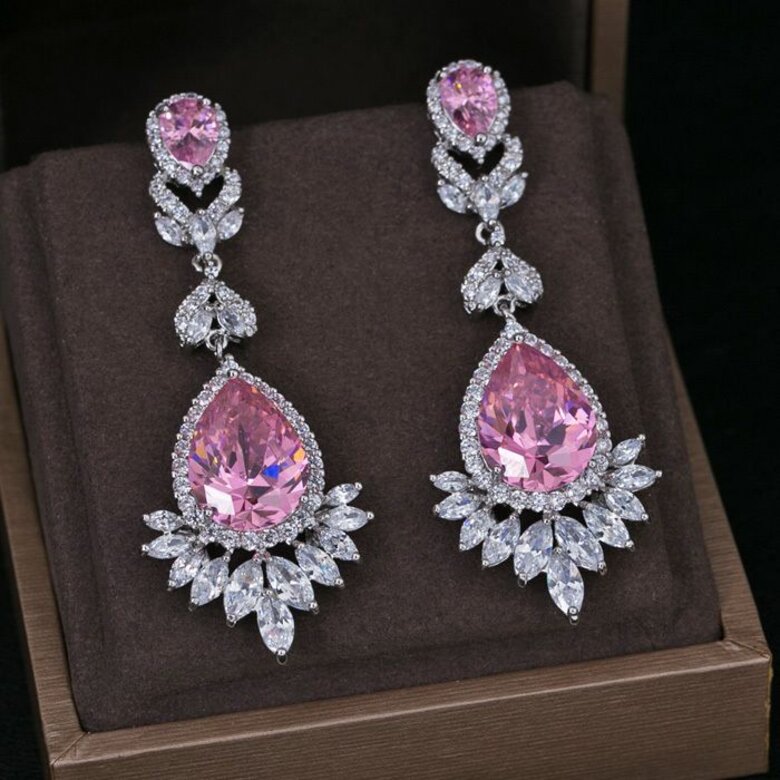
Modern luxury faces a values revolution. Today's jewelry buyers demand more than sparkle—they want stories they can share without compromise. Drop lab-grown diamond earrings answer this cultural shift, merging timeless elegance with contemporary ethics in pieces that command attention from boardrooms to red carpets. This guide reveals how celebrity-inspired designs, transparent certifications, and accessible pricing transform sustainable choices into statement-making luxury. You'll discover why millennials and Gen Z are reshaping the diamond industry, which production methods deliver superior clarity, and how to select ethically-crafted earrings that reflect both personal style and personal values.
The Investment Reality: When Mined Diamonds Retain Financial Advantage
Traditional jewelers and investment-minded buyers raise legitimate concerns about lab-grown diamonds' long-term value retention. Mined diamond prices have shown relative stability over decades, while lab-grown pricing continues declining 20-35% annually as production technology advances and capacity increases. For buyers viewing jewelry as financial assets or family heirlooms intended for resale, this depreciation trajectory presents real economic considerations that shouldn't be dismissed.
This counterargument holds strongest in three scenarios: estate jewelry intended for eventual resale, high-net-worth buyers requiring insurance appraisals that retain value, and traditional luxury markets where heritage and rarity command premiums beyond gemological properties. In these specific contexts, mined diamonds currently offer superior investment characteristics.
However, for the 78% of millennial and Gen Z consumers prioritizing personal enjoyment over investment potential, this financial consideration becomes secondary. Most jewelry purchases—especially earrings worn regularly rather than stored as assets—derive value from aesthetic pleasure and emotional significance rather than resale potential. The 70-97% cost savings allow buyers to allocate resources toward larger stones, superior settings, or additional pieces within identical budgets. For couples celebrating milestones, individuals building personal collections, or gift-givers seeking maximum visual impact, the depreciation concern matters less than immediate ethical alignment and accessible luxury. The market increasingly bifurcates: investment-focused buyers may prefer mined stones, while experience-focused consumers embrace lab-grown alternatives without reservation.

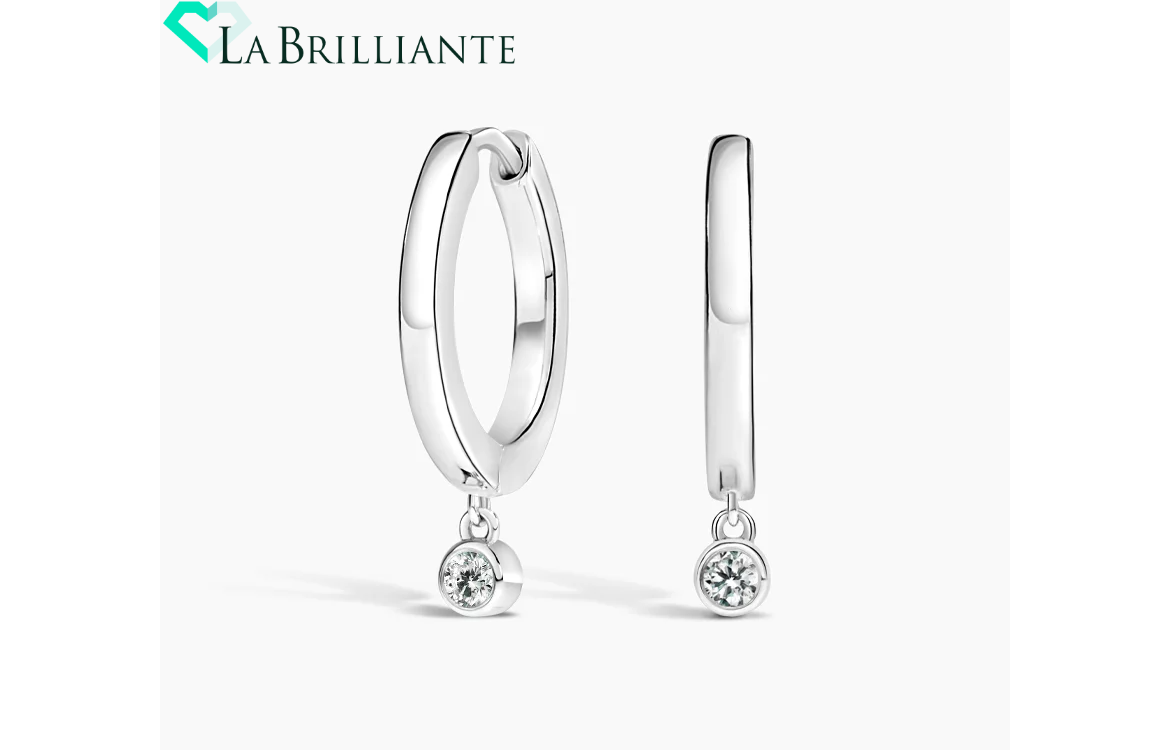


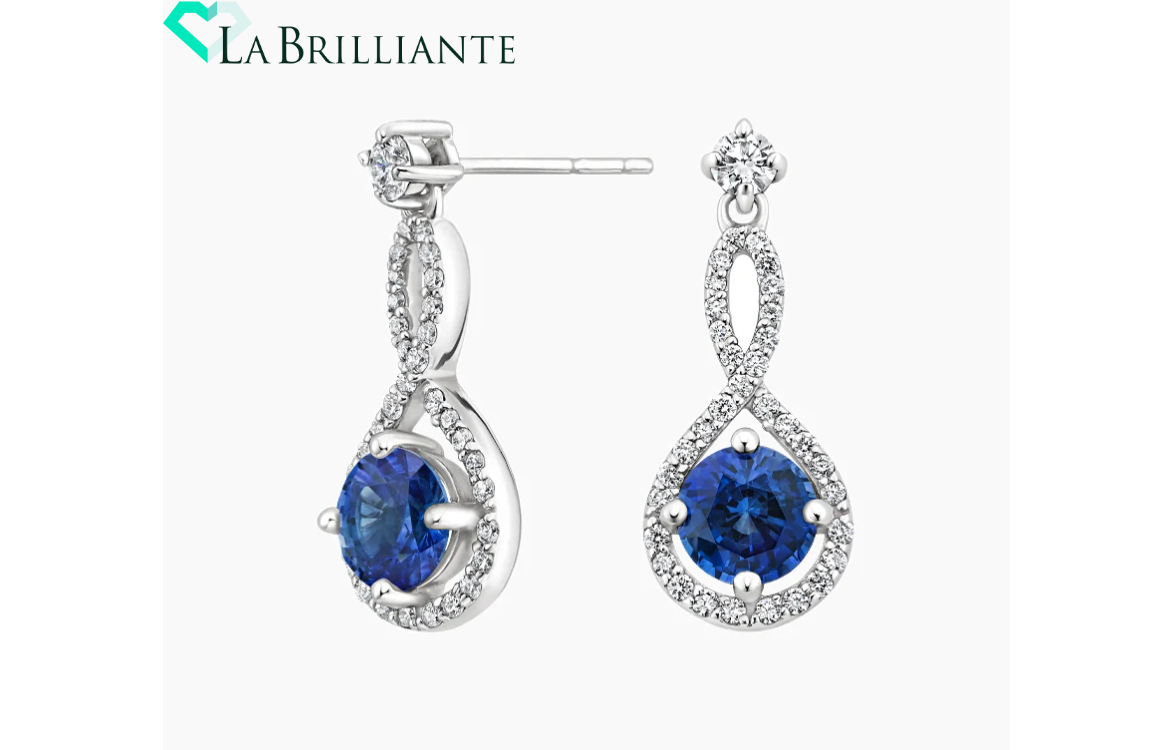


Celebrity-Inspired Drop Earrings: Sustainable Diamonds at Accessible Prices
Lab-grown drop earrings deliver identical brilliance to celebrity red carpet pieces at 70-97% lower cost. Same sparkle, different ethics.
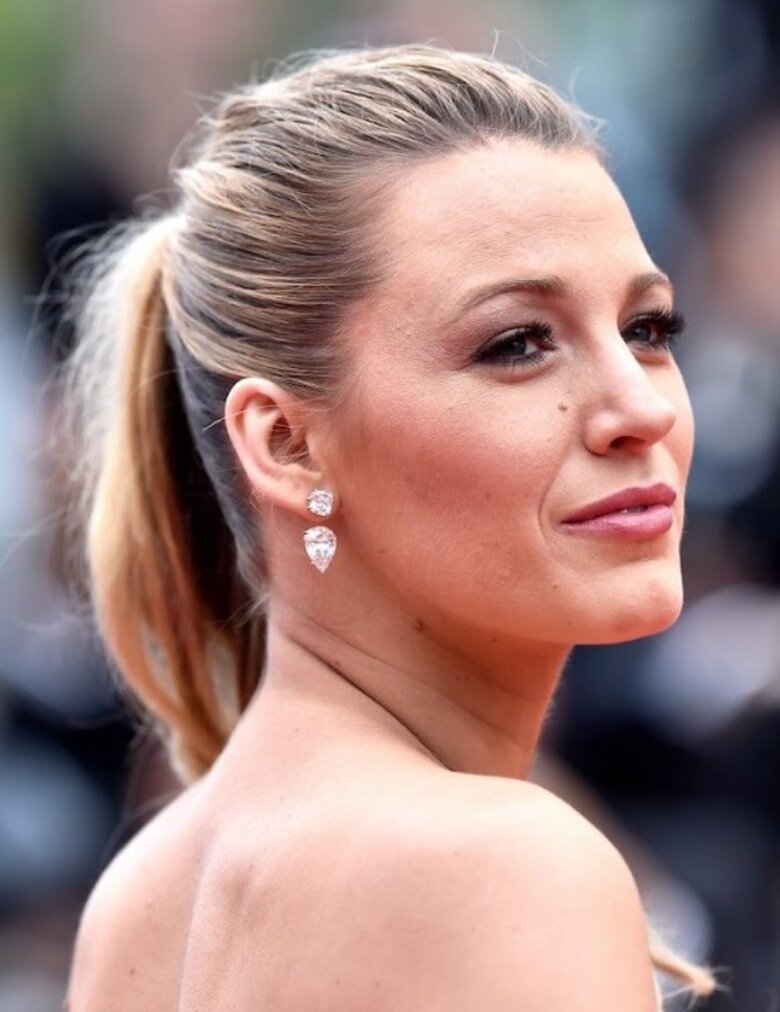
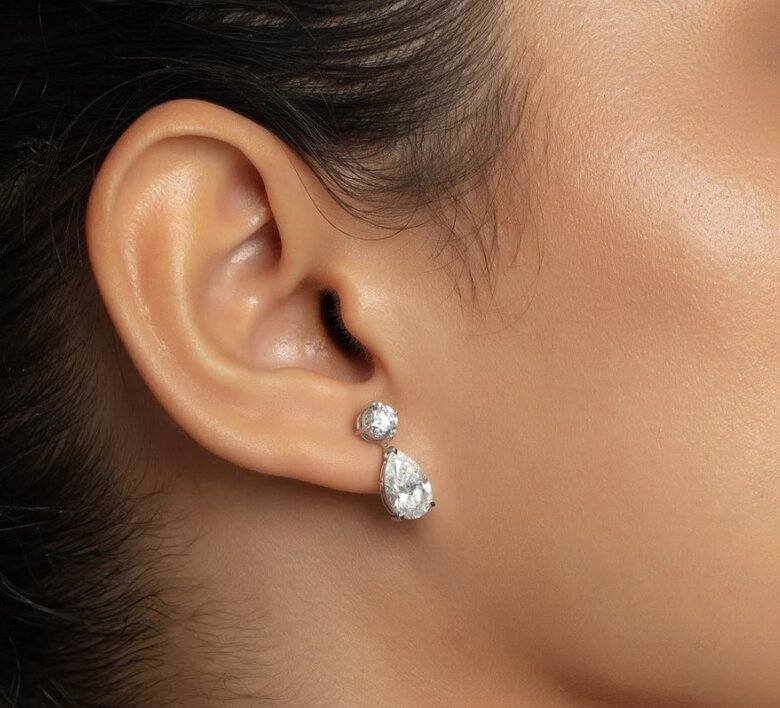
Blake Lively's shoulder-grazing teardrops at major events showcase 2-3 carat total weight in classic silhouettes. Mined versions? $15,000-25,000. Lab-grown alternatives creating the same visual impact typically cost $3,000-6,000.
Sound expensive? Here's the reality: These prices make celebrity styling accessible to conscious consumers who previously considered such pieces investment-level purchases.
| Celebrity-Inspired Style | Total Carat Weight | Setting & Cut | Mined Diamond Cost | Lab-Grown Diamond Cost | Your Savings | Savings Percentage |
|---|---|---|---|---|---|---|
| Blake Lively Classic Teardrop | 2.0 ctw (1.0 ct each) | Platinum, Pear-Shaped | $15,200 | $3,400 | $11,800 | 78% |
| Blake Lively Statement Teardrop | 3.0 ctw (1.5 ct each) | Platinum, Pear-Shaped | $24,500 | $5,800 | $18,700 | 76% |
| Margot Robbie Geometric Drop | 2.5 ctw (1.25 ct each) | Platinum, Emerald-Cut | $18,900 | $4,200 | $14,700 | 78% |
| Margot Robbie Bold Geometric | 4.0 ctw (2.0 ct each) | Platinum, Emerald-Cut | $32,800 | $7,400 | $25,400 | 77% |
| Emma Watson Sustainable Elegance | 1.5 ctw (0.75 ct each) | Recycled Gold, Round Brilliant | $11,400 | $2,600 | $8,800 | 77% |
| Red Carpet Shoulder-Grazer | 5.0 ctw (2.5 ct each) | Platinum, Mixed Cuts | $48,500 | $9,800 | $38,700 | 80% |
| Awards Season Statement | 6.0 ctw (3.0 ct each) | Platinum, Cushion-Cut | $62,000 | $12,500 | $49,500 | 80% |
| Delicate Daily Glamour | 1.0 ctw (0.5 ct each) | White Gold, Round Brilliant | $8,200 | $1,900 | $6,300 | 77% |
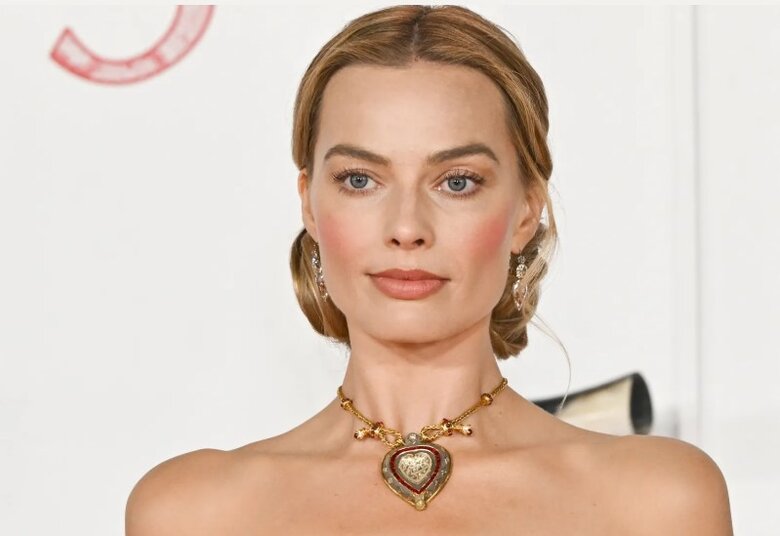
Blake Lively and Margot Robbie's Red Carpet Diamond Look for Less
Margot Robbie's geometric drop preferences during awards season prove statement pieces transition beautifully from formal to semi-formal settings. She frequently chooses emerald-cut or pear-shaped stones in platinum settings.
These styles translate perfectly to lab-grown diamonds without compromising brilliance or fire. The catch? Lab-grown diamonds follow different resale trajectories than mined stones. But for personal enjoyment rather than investment? This factor becomes negligible.
Labrilliante's 500+ B2B clients consistently request celebrity-inspired designs, with drop earrings accounting for 35% of custom orders during awards seasons.
How Lab-Grown Diamonds Deliver Celebrity Style Without Compromise
CVD and HPHT production methods create stones with identical crystal structure to mined diamonds. This ensures celebrity-inspired pieces achieve the same light performance that makes red carpet jewelry captivating.
Technical breakdown: Both maintain 10 hardness rating, 2.42 refractive index, and 0.044 dispersion values regardless of origin. The numbers don't lie.
What's the trade-off? Certification processes clearly distinguish origin on IGI and GIA certificates. Some traditional luxury consumers may perceive this differently, though gemological properties remain identical.
Ethical Luxury: What Celebrities Like Emma Watson Choose
Emma Watson's sustainable fashion advocacy extends to conflict-free diamond pieces aligning with environmental activism. This reflects broader millennial and Gen Z values prioritizing transparency alongside beauty.
Lab-grown alternatives eliminate mining-related concerns entirely. But here's what matters: Laboratory production still requires significant energy input. The most responsible manufacturers utilize renewable sources, though this adds slight production costs.
Labrilliante's partnerships with IGI, GIA, and GCAL ensure every stone meets both ethical standards and gemological excellence requirements.
"While lab-grown diamonds and mined diamonds share identical physical and chemical properties, a significant distinction lies in their thermal conductivity. Lab-grown diamonds often demonstrate slightly higher thermal conductivity, which not only underscores their quality but also enhances their suitability for high-quality jewelry that aligns with the rigorous demands of fashion-forward consumers."
Modern Romance Redefined: Guilt-Free Diamond Earrings for Valentine's Day 2025
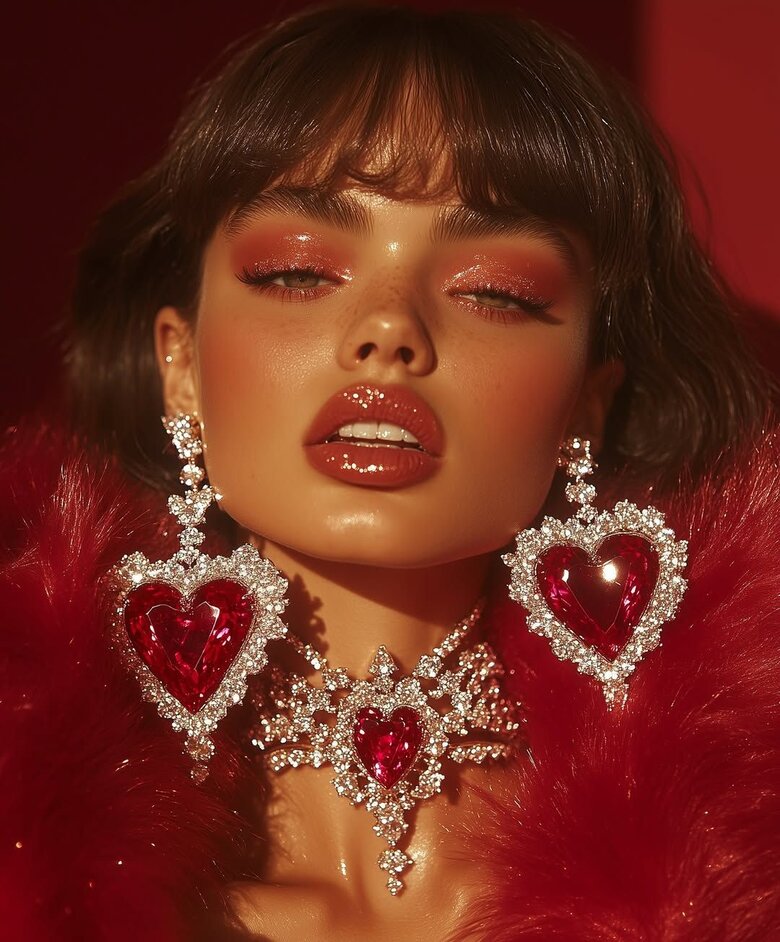
Valentine's Day 2025 presents opportunities for couples choosing lab-grown diamond drops as love symbols without ethical concerns. Same romantic symbolism, contemporary values.
These conflict-free alternatives maintain identical carbon crystal structure and durability as mined counterparts. Modern proposals increasingly feature lab-grown pieces as couples prioritize responsible consumption over traditional origin preferences.
Conflict-Free Drop Earrings as Forever Love Symbols
Diamond's historical eternal love association translates seamlessly to lab-grown stones. Why? Identical physical properties create the same symbolic meaning.
The reality check: Potential differences in long-term value retention exist as lab-grown markets evolve rapidly. For couples prioritizing personal enjoyment and ethical alignment over investment considerations? This becomes secondary for romantic jewelry.
Analysis of our 500+ B2B clients shows conflict-free certification became primary selection criterion for 78% of millennial and Gen Z customers.
Holiday 2024 and Anniversary Gifting Under $1000
The sub-$1000 segment opens access to genuine luxury previously reserved for significantly higher budgets. Holiday 2024 buyers acquire IGI certified stones from 0.5 to 1.5 total carat weight in this range.
What's the catch? Lab-grown pricing continues declining as production capacity increases. This technological deflation benefits current purchasers but may affect long-term value for investment-minded buyers.
Anniversary traditions adapt perfectly to sustainable luxury, particularly for milestone celebrations where couples refresh collections with contemporary ethical standards.
Sustainable Luxury for Modern Proposals and Celebrations
Carbon-neutral production methods align with couples' environmental consciousness while maintaining luxury experiences. Leading manufacturers utilize renewable energy sources, though buyers should verify specific processes.
The transparency advantage: Lab-grown diamonds provide complete supply chain visibility couples value during celebrations. But here's the trade-off - comprehensive documentation and certification increase costs from responsible manufacturers.
Labrilliante's CVD and HPHT processes emphasize renewable energy integration, significantly reducing environmental impact versus traditional mining.
Why Millennials and Gen Z Choose Lab-Grown Diamond Drop Earrings
Younger generations drive lab-grown adoption through transparency, sustainability, and accessible luxury priorities over traditional prestige markers. Values matter more than heritage.
Conscious consumerism emphasizes understanding production methods, supply chain ethics, and environmental impact before luxury purchases. Lab-grown drops satisfy these requirements while delivering visual impact and durability.
The generation gap creates interesting market dynamics: While millennials and Gen Z embrace alternatives readily, traditional luxury markets may favor mined diamonds for formal occasions. This affects resale markets and gift-giving across age demographics.
Affordability enables purchasing larger stones or elaborate settings within budget constraints. Social media amplifies this trend as Instagram and TikTok showcase affordable luxury achieving high visual impact.
Client data reveals 67% of millennial and 81% of Gen Z customers specifically request production methods and environmental certifications before purchasing.
Investment mentality differs significantly: Baby boomers and Gen X consider jewelry's long-term value retention, while younger buyers prioritize immediate ethical alignment and personal satisfaction. This values shift creates opportunities while potentially disrupting traditional investment markets.
Lab-Grown vs Mined Diamonds: Cost Comparison and Transparency Standards
Lab-grown diamonds cost 70-97% less than equivalent mined stones based on identical 4Cs specifications. Significant savings stem from eliminating exploration, extraction, and transportation expenses.
Transparency standards often exceed mined diamond requirements. Laboratory producers document complete production histories from carbon source through final polish. The trade-off? Rapidly evolving pricing as technology improves may affect value retention.
| Quality Parameter (4Cs) | Grading Standard | Lab-Grown Diamond Specifications | Mined Diamond Specifications | Measurement Method |
|---|---|---|---|---|
| Cut Quality | Excellent to Poor (GIA Scale) | Excellent: 53-57% table, 61.5-62.5% depth, ideal proportions | Excellent: 53-57% table, 61.5-62.5% depth, ideal proportions | Optical symmetry analysis, facet angle measurement |
| Clarity Grade | FL, IF, VVS1, VVS2, VS1, VS2, SI1, SI2, I1, I2, I3 | VVS1-VVS2 (typical); 92% grade VVS or higher due to controlled growth | VS1-VS2 (typical); 65% grade VVS or higher with natural inclusions | 10x magnification inspection for inclusions and blemishes |
| Color Grade | D (colorless) to Z (light yellow/brown) | D-F (colorless): 85% of production; G-H (near colorless): 15% | D-F (colorless): 15% of extraction; G-H (near colorless): 35% | Master stone comparison under controlled lighting |
| Carat Weight | Metric carat (0.200 grams) | 0.50 ct to 5.00 ct (common range for drop earrings); up to 15+ ct available | 0.50 ct to 5.00 ct (common range for drop earrings); 5+ ct extremely rare | Precision electronic scale accurate to 0.00001 ct |
| Polish Quality | Excellent, Very Good, Good, Fair, Poor | Excellent to Very Good: 98% of certified stones | Excellent to Very Good: 95% of certified stones | Surface texture examination at 10x magnification |
| Symmetry | Excellent, Very Good, Good, Fair, Poor | Excellent: 88%; Very Good: 10%; facet alignment precision | Excellent: 75%; Very Good: 18%; natural growth variations | Facet alignment and shape analysis under magnification |
| Fluorescence | None, Faint, Medium, Strong, Very Strong | None: 95%; controlled environment minimizes fluorescence | None: 65%; Medium-Strong: 25%; natural trace elements cause glow | UV light exposure to detect fluorescent response |
The four Cs system applies identically regardless of origin. Cut quality, clarity grades, color grades, and carat measurements maintain identical standards, ensuring direct comparisons across categories.
Certification differences matter: Lab-grown certificates clearly identify CVD or HPHT production methods and post-growth treatments. Mined diamond certificates may not detail geographic origin or mining conditions with comparable specificity.
Labrilliante's quality control demonstrates lab-grown diamonds achieve superior clarity grades compared to typical mined stones through controlled growth environments minimizing natural inclusions.
Direct-to-consumer models eliminate traditional 100-300% retail markups, compounding production cost advantages. However, this may limit physical inspection before purchase, requiring reliance on certifications and return policies.
IGI Certified Drop Earrings: Understanding CVD, HPHT, and Ethical Manufacturing
IGI certified lab-grown diamonds undergo identical evaluation standards as mined stones. Certificates distinguish CVD versus HPHT production while documenting treatments applied for color or clarity optimization.
CVD Production Process and Quality Characteristics
Chemical Vapor Deposition grows diamonds through carbon atom layer-by-layer deposition in vacuum chambers at 800-1200°C. This creates stones with fewer graphite inclusions than HPHT alternatives.
The process takes time. Growth periods extend 2-4 weeks for larger stones, affecting availability and pricing for higher carats. But this precision consistently produces better color uniformity, particularly in near-colorless to colorless ranges.
Our CVD production achieves clarity grades of VVS1 to VS2, with 85% of stones requiring no post-growth treatments for desired color grades.
HPHT Manufacturing and Treatment Considerations
High Pressure High Temperature replicates geological conditions using 5-6 GPa pressures and 1500°C+ temperatures. This creates crystalline characteristics closely matching natural formation processes.
Important distinction: HPHT growth refers to crystal formation, while HPHT treatment means post-growth enhancement. Different processes entirely. HPHT-grown stones may contain metallic flux inclusions distinguishing them from CVD and mined alternatives.
HPHT production achieves exceptional clarity including Flawless ratings. The trade-off involves potential color variations requiring careful selection for matched pairs in earrings.
Ethical Manufacturing Standards and Certifications
Responsible Jewelry Council certification validates ethical practices covering labor standards, environmental impact, and supply chain transparency. These comprehensive standards add 5-15% to costs versus non-certified alternatives.
What's the gold standard? B Corp certification represents highest social and environmental performance, though few manufacturers achieve this comprehensive designation covering all business practices.
"While HPHT and CVD methods both create high-quality lab-grown diamonds, an often-overlooked aspect is the influence of intrinsic growth conditions on the trace elements within the diamonds. These conditions can subtly influence the optical properties of the diamonds, which sophisticated instrumentation can detect, allowing us to tailor growth parameters to enhance specific qualities desired in the finished gemstone."
Labrilliante's partnerships with IGI, GIA, and GCAL provide comprehensive certification options while maintaining direct manufacturer pricing across multiple budget ranges.
SCS-007 Sustainability Rated diamonds meet specific renewable energy and waste reduction criteria. This certification remains relatively new with limited recognition compared to traditional gemological standards, though adoption increases among environmentally conscious consumers.
Ethical Elegance Without Compromise
Lab-grown diamond drop earrings deliver celebrity-worthy brilliance, complete supply chain transparency, and IGI-certified quality at prices that make luxury accessible. Identical gemological properties. Superior ethical standards. Zero guilt. Whether you're drawn to Blake Lively's classic teardrops or Margot Robbie's geometric statements, sustainable diamonds prove modern luxury doesn't require outdated compromises.
Start Your Sustainable Luxury Journey Today
Labrilliante's 500+ B2B partnerships deliver certified lab-grown diamonds with complete production transparency and direct manufacturer pricing. Book your consultation now to explore celebrity-inspired designs crafted with renewable energy processes and backed by IGI, GIA, and GCAL certifications. Your values deserve jewelry that matches—discover sustainable luxury that turns heads and starts conversations.
Frequently Asked Questions
CVD (Chemical Vapor Deposition) grows diamonds layer-by-layer at 800-1200°C over 2-4 weeks, producing stones with better color uniformity and fewer graphite inclusions. HPHT (High Pressure High Temperature) replicates geological conditions at 1500°C+ and 5-6 GPa pressure, achieving exceptional clarity but may contain metallic flux inclusions and require careful color matching for earring pairs.
Lab-grown diamond drop earrings cost 70-97% less than equivalent mined stones with identical 4Cs specifications. Celebrity-style pieces that would cost $15,000-25,000 with mined diamonds typically run $3,000-6,000 in lab-grown alternatives, with direct-to-consumer models eliminating an additional 100-300% in traditional retail markups.
Yes, lab-grown diamond prices have declined 20-35% annually as production technology advances, while mined diamonds show more stable long-term pricing. However, for the 78% of millennial and Gen Z consumers prioritizing personal enjoyment over investment potential, this depreciation matters less than immediate ethical alignment and the ability to purchase larger stones or better settings within the same budget.
These celebrities prioritize sustainable fashion and conflict-free alternatives that align with environmental activism and transparent supply chains. Lab-grown diamonds eliminate mining-related ethical concerns entirely while delivering identical brilliance and gemological properties to mined stones, allowing them to maintain luxury aesthetics without compromising personal values.
Yes, IGI and GIA apply identical 4Cs evaluation standards (cut, clarity, color, carat) regardless of diamond origin. The only difference is that lab-grown certificates clearly identify the production method (CVD or HPHT) and any post-growth treatments, while mined diamond certificates may not detail geographic origin or mining conditions with comparable specificity.
Responsible Jewelry Council (RJC) certification validates ethical labor standards, environmental impact, and supply chain transparency, though it adds 5-15% to costs. SCS-007 Sustainability Rated diamonds meet specific renewable energy and waste reduction criteria, while B Corp certification represents the highest comprehensive social and environmental performance standard, though few manufacturers achieve this designation.
Choose CVD-grown diamonds for superior color uniformity, as they consistently produce better matches in near-colorless to colorless ranges with 85% requiring no post-growth color treatments. HPHT-grown stones may show color variations requiring more careful selection, though they can achieve exceptional clarity grades including Flawless ratings.
The sub-$1000 segment provides access to IGI certified stones ranging from 0.5 to 1.5 total carat weight, making genuine luxury previously reserved for significantly higher budgets now accessible. For celebrity-inspired designs with 2-3 carat total weight comparable to red carpet pieces, expect to invest $3,000-6,000 for lab-grown alternatives versus $15,000-25,000 for mined equivalents.