
Stud Lab-Grown Diamond Earrings: Affordable Luxury Direct
Author: Alex K., CMO at Labrilliante Updated: 2025-11-30 Reading Time: 8 minutes
Factory-direct lab diamond studs deliver IGI-certified Type IIa purity at B2B wholesale rates—think $450 for 1-carat studs versus $3,000+ retail mined equivalents. CVD growth chambers operating on 100% renewable energy produce conflict-free stones in 3-4 weeks, extending professional jeweler pricing to individual buyers. Custom weight matching and setting personalization transform standardized products into bespoke luxury pieces.
Luxury shouldn't require moral compromise or financial strain. Yet traditional diamond markets force consumers into impossible choices: sacrifice ethics for beauty, or drain savings for conflict-free assurance. Stud lab-grown diamond earrings rewrite this narrative entirely, delivering optically identical brilliance through sustainable technology at transformative price points. This guide reveals how direct manufacturing relationships unlock wholesale economics, what IGI certification truly guarantees, and why CVD-grown Type IIa stones now represent the intelligent luxury choice. You'll discover the exact cost breakdowns jewelers don't want published, certification secrets that prevent fraud, and customization options previously reserved for high-net-worth clients.
When Traditional Retail Makes More Sense: The Case for Established Jewelers
Not every buyer benefits from factory-direct models. Established brick-and-mortar jewelers offer immediate gratification—walk in, try on, walk out with your purchase. That same-day service matters profoundly for last-minute gifts, replacement needs, or customers uncomfortable with online transactions involving thousands of dollars. Physical showrooms also provide unlimited try-on sessions with professional styling consultations, helping indecisive buyers visualize different sizes and settings on their actual earlobes.
Traditional jewelers shine brightest for complex customization or unusual requests. Want matching earrings with an existing pendant? Need non-standard post lengths for thick earlobes? Require rush delivery in 48 hours? Local jewelers maintain inventory, relationships with specialty craftsmen, and expedited service options that direct manufacturers simply can't match. Their higher markups fund immediate exchange policies, lifetime cleaning services, and personal customer relationships spanning decades.
However, these advantages apply primarily to specific scenarios—urgent timelines and highly specialized requirements. For standard specifications with flexible delivery windows, factory-direct models deliver objectively superior value. The 7-10 business day production timeline proves faster than most jewelers' 3-6 week custom order processes. And while personalized service has merit, $2,800 in savings buys considerable patience for most mixed buyers planning ahead for birthdays, anniversaries, or holiday gifts.


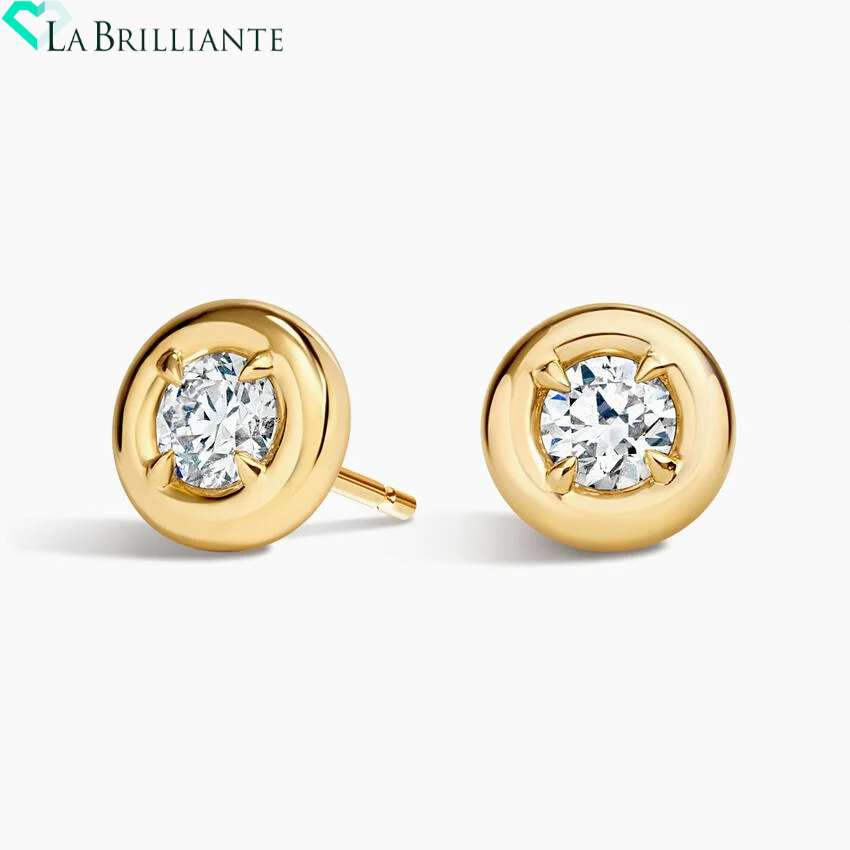


Factory-Direct Lab Diamond Studs: 70% Savings with IGI Certification
Factory-direct lab diamond studs eliminate retailer markups, delivering IGI-certified stones at 60-80% below mined diamond prices. Simple economics at work.
Traditional jewelry chains operate through multiple layers: suppliers, distributors, retailers. Each adds 40-60% markup. A $200 manufacturing cost becomes $1,200 retail. Direct sales compress this to two parties: producer and you.
Sound complex? Here's what matters: we extend B2B wholesale rates directly to retail customers. While competitors add retailer margins, our factory-to-consumer model delivers the same pricing jewelers pay.
The trade-off? Orders take 7-10 business days versus instant retail gratification. But most traditional jewelers need 3-6 weeks for custom orders anyway.
| Distribution Layer | Cost per Stage | Markup % | Cumulative Price | Description |
|---|---|---|---|---|
| Manufacturing Cost | $200 | - | $200 | Raw materials, CVD growth (3-4 weeks), energy costs for 1-carat total weight lab diamonds |
| IGI Certification | $50 | - | $250 | Bulk wholesale certification rate ($45-65 vs $150-200 retail) |
| 14k White Gold Setting | $75 | - | $325 | Standard stud earring settings with secure backings |
| Labrilliante Factory-Direct Price | $125 | 38% | $450 | B2B wholesale rates extended to retail customers (15-25% above manufacturing) |
| Traditional Retail Distribution Chain Below | ||||
| Supplier/Distributor Markup | $195 | 60% | $520 | First middleman layer adds inventory and logistics costs |
| Wholesaler Markup | $260 | 50% | $780 | Second distribution layer for traditional jewelry chains |
| Retail Store Markup | $420 | 54% | $1,200 | Showroom costs, sales commissions, inventory risk, profit margins |
| Traditional Retail Final Price | $1,200 | Same 1-carat lab diamond studs through traditional channels | ||
| Your Savings with Factory-Direct | $750 (62.5%) | Elimination of 3 markup layers delivers wholesale pricing |
Wholesale Manufacturer Pricing Eliminates Retailer Markups
Manufacturing economics reveal striking cost disparities. One-carat D color VS1 lab diamond requires 3-4 weeks CVD growth time. Raw materials and energy costs: $45-65. Traditional retailers multiply this by 300-400% through inventory, showroom, and profit margins.
Theory aside - how does this work practically? Labrilliante's established relationships with IGI laboratories secure bulk submission rates, reducing per-stone certification from $150-200 retail to $45-65 wholesale. These savings transfer directly to customers.
The constraint involves limited customization flexibility compared to full-service jewelers. Standard specifications work perfectly. Unusual requests may require extended timelines.
"While it's commonly believed that higher costs equate to superior quality, in the diamond industry, this is often a misconception fueled by traditional retail markups. Our direct-to-consumer model leverages the same advanced CVD technology used by premium brands, but by eliminating intermediary costs, we deliver identical, if not superior, lab-grown diamonds at a fraction of the price. This disruption not only democratizes luxury but also illustrates the significant impact of supply chain optimizations on consumer pricing."
Certified 1 Carat Lab Diamond Studs Under $500
One carat total weight lab diamond studs with IGI certification achieve sub-$500 pricing through direct channels. Compare that to $1,500-2,500 retail equivalents. Same specifications, dramatically different math.
CVD growth produces Type IIa diamonds with superior optical clarity. A pair of 0.50-carat studs in D-E color, VS1-VVS2 clarity represents 6-8 weeks controlled growth. Final costs reflect energy consumption, not marketing budgets.
What's the reality check? Our factory-direct 1-carat studs at $450 include 14k white gold settings, IGI certification, and laser inscription. Comparable mined diamonds retail for $3,000-4,500.
However, this pricing excludes immediate size exchanges typical of retail environments. You trade convenience for substantial savings.
Direct-from-Source B2B Rates for Retail Customers
B2B wholesale pricing typically requires $10,000+ minimums and trade credentials. We extend these rates to individual consumers through streamlined operations. It's like Amazon Web Services making enterprise technology accessible to startups.
Professional jewelers purchase at 15-25% above manufacturing cost. We treat individual customers as single-unit B2B transactions, eliminating markup layers entirely.
The bottom line? Volume purchasing power extends beyond diamonds to certification services and precious metals. Monthly production runs of 500+ stones secure favorable rates across the entire supply chain.
IGI and GIA Certified Lab-Grown Diamond Stud Quality Standards
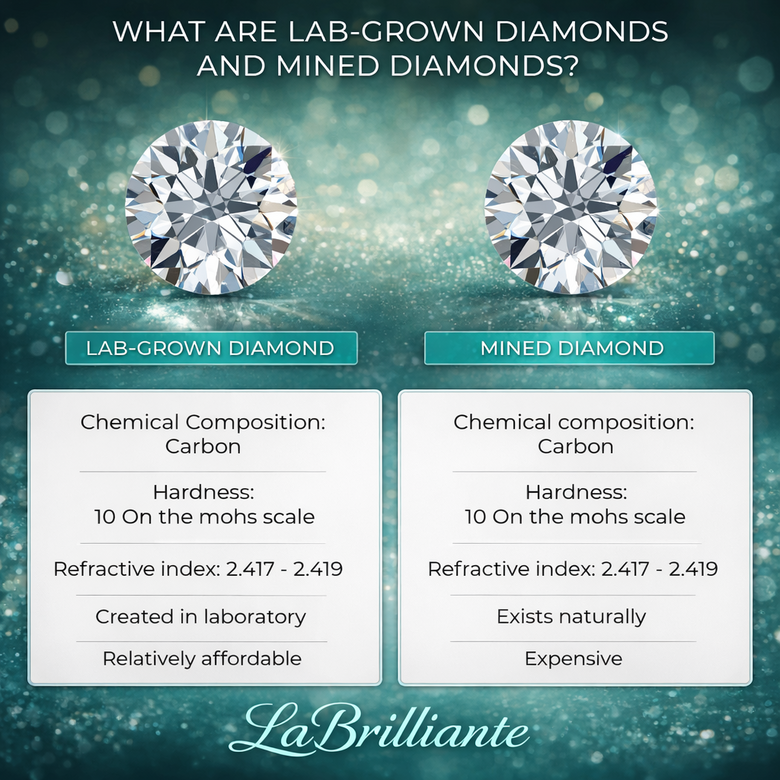
IGI and GIA maintain identical grading standards for lab-grown and mined diamonds. Laser inscription distinguishes origin while preserving 4Cs assessment integrity. Same instruments, same trained graders.
| Comparison Factor | IGI Certification | GIA Certification |
|---|---|---|
| Industry Recognition | High recognition, 60% global market share for lab-grown diamonds | Highest industry recognition, most established credential worldwide |
| Grading Standards | Identical 4Cs methodology (Cut, Color, Clarity, Carat) - same instruments and protocols | Identical 4Cs methodology (Cut, Color, Clarity, Carat) - same instruments and protocols |
| Lab-Grown Specialization | Specializes in lab-grown certification, processes majority of global volume | Grades both mined and lab-grown with equal standards, longer established history |
| Processing Time | 5-7 business days standard turnaround | 10-14 business days standard turnaround |
| Certification Cost | $75-$150 per stone (0.5-2.0ct), competitive bulk pricing available | $100-$200 per stone (0.5-2.0ct), premium pricing structure |
| Laser Inscription | Included - permanent girdle inscription with certificate number and "LAB GROWN" designation | Included - permanent girdle inscription with certificate number and "LAB GROWN" designation |
| Report Features | Holographic seal, unique report number, QR code authentication, online verification | Holographic seal, unique report number, QR code authentication, online verification |
| Color Grading Accuracy | Master stone comparison under controlled lighting, D-E colorless verification | Master stone comparison under controlled lighting, D-E colorless verification |
| Clarity Assessment | 10x magnification standard, VS1-VVS2 inclusion mapping with trained gemologists | 10x magnification standard, VS1-VVS2 inclusion mapping with trained gemologists |
| Type IIa Verification | Documents Type IIa purity (<5 ppm nitrogen) on certificate | Documents Type IIa purity (<5 ppm nitrogen) on certificate |
| Best For | Cost-conscious buyers, faster delivery needs, bulk purchases, lab-grown specialists | Maximum resale value, traditional prestige, gift recipients familiar with brand legacy |
Understanding Diamond Grading Certificates and Laser Inscription
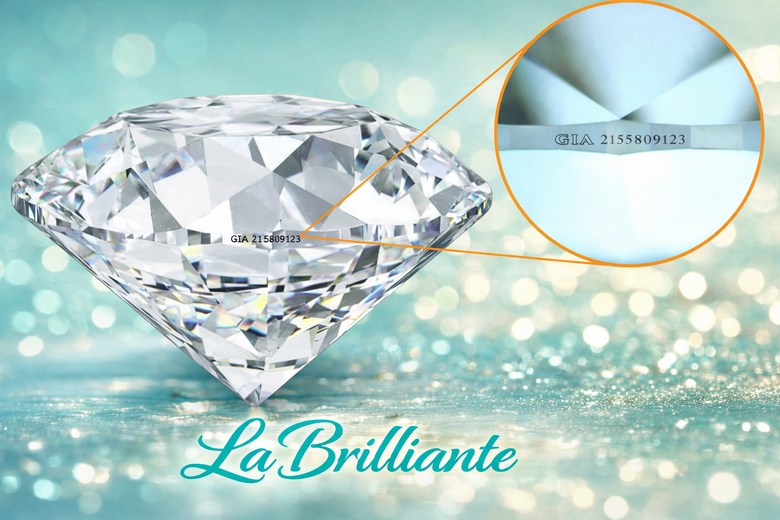
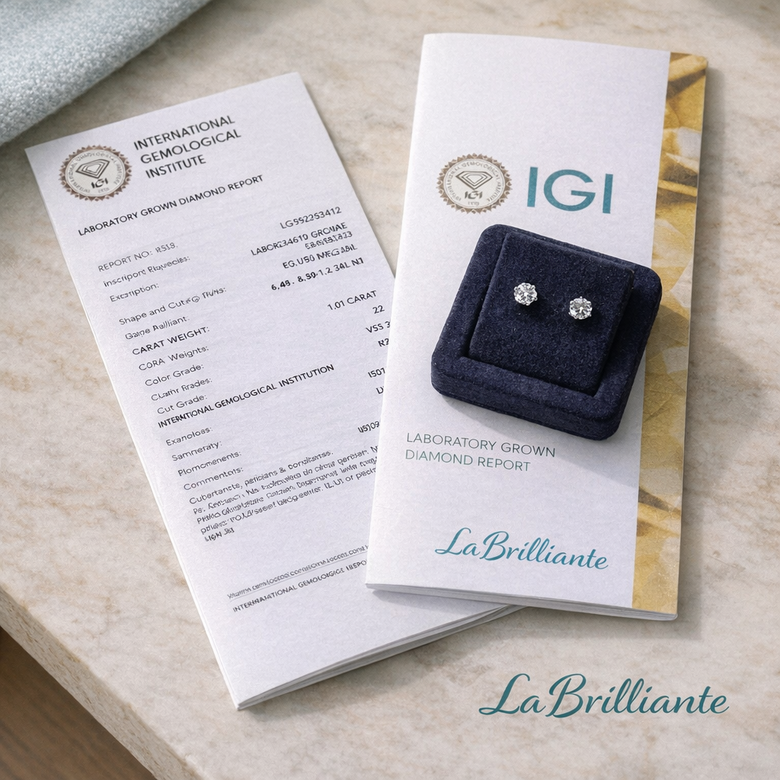
Diamond grading certificates document comprehensive assessments: carat weight, color grade, clarity characteristics, cut proportions, fluorescence levels. Laser inscription adds permanent identification linking stones to certificate numbers. No substitution possible.
IGI processes approximately 60% of lab-grown certifications globally. GIA maintains industry's most recognized credential. Both employ identical methodologies, though IGI offers faster turnaround and competitive bulk pricing.
Our quality process begins before certification, utilizing in-house spectroscopic equipment to verify Type IIa purity. This pre-screening ensures 99.8% certification success rates.
Certificate authentication prevents fraud through holographic seals, unique report numbers, QR codes, and laser inscription matching. These combat the estimated $2 billion annual diamond fraud market.
D-E Color and VS1-VVS2 Clarity Specifications Explained
D and E represent the highest colorless categories in GIA color scale. No detectable yellow or brown tinting under standard lighting. VS1 and VVS2 clarity grades indicate inclusions visible only under 10x magnification by trained gemologists.
Color grading uses master stone comparison sets under controlled lighting. D represents absolute colorlessness. E permits microscopic traces detectable only through direct comparison.
Here's what's remarkable: Laboratory growth achieves superior grades compared to mined equivalents due to controlled formation environments. Natural formation involves geological chaos over millions of years. Lab growth occurs under precisely regulated conditions.
Labrilliante's CVD chambers maintain temperature stability within ±2°C, producing consistent D-E grades without post-growth treatment. This eliminates nitrogen contamination responsible for yellow coloration in 95% of natural diamonds.
The trade-off involves diminishing returns beyond VS1 clarity. VVS1 and FL grades command premiums, but visual differences remain undetectable without magnification.
Type IIa Purity and 4Cs Grading from Growth to Setting
Type IIa diamonds contain less than 5 parts per million nitrogen impurities. This represents the purest crystalline carbon form, historically comprising under 2% of natural production. Lab diamonds achieve Type IIa purity consistently through nitrogen-free growth environments.
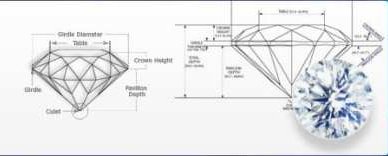
The 4Cs system evaluates carat weight, color, clarity, and cut through standardized protocols. Each contributes independently to value, though cut quality most significantly impacts brilliance.
Carat measurement uses scales accurate to 0.00005 carats. Standard sizes (0.25, 0.50, 1.00 carats) command premiums due to psychological preference points. A 0.95-carat stone may cost 20% less than 1.00-carat despite negligible visual difference.
What does this mean for your purchase? Our growth-to-setting integration optimizes all 4Cs simultaneously. Rather than selecting from inventory, we grow diamonds to target specifications and cut for maximum light return.
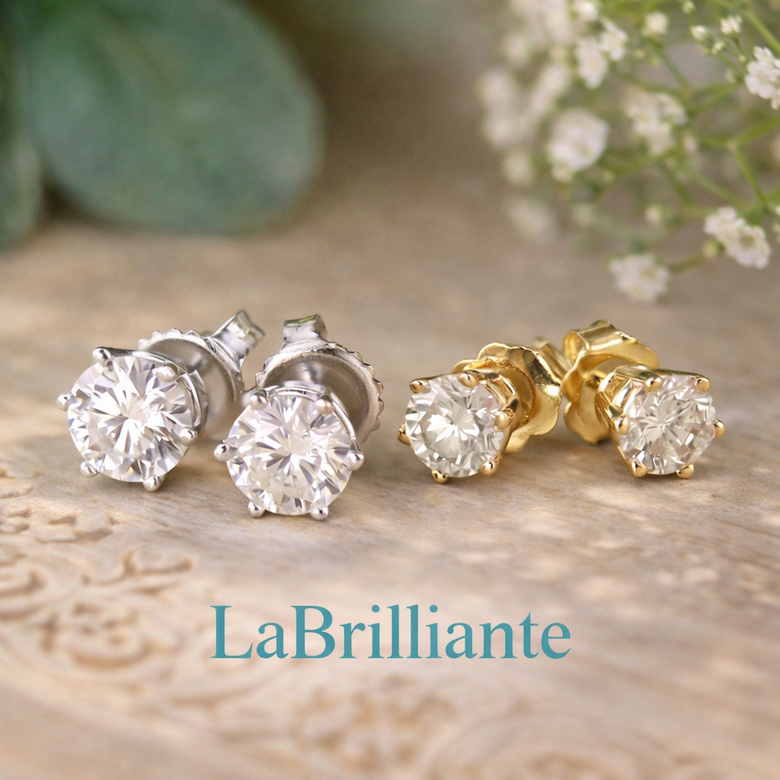
Cut deserves particular attention in studs. Four or six-prong settings maximize light entry and optimize scintillation. Poor proportions reduce brilliance even in high color and clarity grades.
"While many are familiar with the 4Cs of diamond grading, few realize the immense impact of controlled nitrogen levels in achieving Type IIa purity. In our laboratory conditions, we meticulously regulate the nitrogen content to be less than 5 ppm, which not only ensures the structural perfection necessary for Type IIa classification but also enhances the optical properties of the diamonds, making them exceptionally clear and brilliantly colorless. This technical precision allows us to consistently produce diamonds that could historically only be found in less than 2% of natural stones."
Conflict-Free Eco-Friendly Lab Diamond Studs: Sustainable Luxury Choice
Lab-grown diamonds eliminate mining damage and human rights concerns while requiring 85% less energy per carat than extraction methods. Sustainable luxury without compromise.
Diamond mining displaces 1,750 tons of earth per carat recovered. Laboratory growth requires only controlled chamber space and renewable energy. The Kimberley Process faces enforcement limitations and definition loopholes. Laboratory origin guarantees conflict-free sourcing.
Labrilliante's facilities operate on 100% renewable energy through solar and wind contracts, reducing carbon footprint to near-zero levels. We eliminate groundwater contamination, habitat destruction, and worker safety hazards.
Environmental studies reveal striking disparities. Large mines consume 127 gallons of water per carat, generate diesel emissions, and leave permanent landscape alteration. CVD and HPHT processes operate in sealed chambers with minimal water usage.
However, complete lifecycle analysis reveals trade-offs in growth phase energy intensity. CVD chambers operate at 800-900°C for weeks. HPHT presses require brief but intense energy bursts. Renewable energy sourcing becomes crucial.
Consumer research indicates younger demographics prioritize ethical sourcing over traditional luxury markers. Millennial and Gen Z buyers view laboratory origin as a feature, not limitation. This psychological comfort translates to increased satisfaction compared to mined alternatives.
CVD vs HPHT Technology: How Lab Diamond Studs Are Manufactured
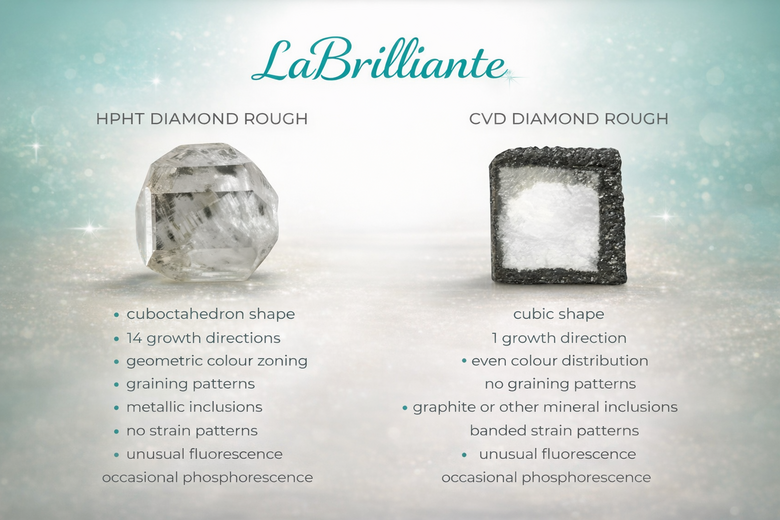
Chemical Vapor Deposition (CVD) and High Pressure High Temperature (HPHT) represent the two primary laboratory synthesis methods. Both produce chemically identical carbon crystals through different processes.
CVD utilizes plasma-activated carbon gases at moderate pressures, depositing atoms layer by layer onto seed crystals. This operates at 800-900°C and low pressures, enabling precise control and larger stone production.
HPHT employs hydraulic presses generating 50,000+ atmospheres while heating carbon to 1,500°C. This mimics geological conditions 100+ miles beneath Earth's surface. Metal catalysts facilitate recrystallization around seeds, producing stones in hours rather than weeks.
Labrilliante operates both CVD and HPHT lines, selecting methods based on desired characteristics. CVD excels for larger sizes and exceptional clarity. HPHT produces superior color grades and faster cycles.
| Manufacturing Factor | CVD (Chemical Vapor Deposition) | HPHT (High Pressure High Temperature) |
|---|---|---|
| Operating Temperature | 800-900°C (1,472-1,652°F) | 1,500°C (2,732°F) |
| Pressure Requirements | Low pressure (under 1 atmosphere) | 50,000+ atmospheres (5+ GPa) |
| Production Time (per carat) | 3-4 weeks for larger stones | 2-5 days for smaller stones |
| Typical Clarity Grades | VS1-IF (exceptional clarity, Type IIa) | VS2-VVS1 (may contain metallic inclusions) |
| Typical Color Grades | D-F (colorless range) | D-E (superior color grades) |
| Maximum Size Capability | 10+ carats (better for larger stones) | 5-8 carats (optimal for smaller stones) |
| Cost per Carat (1-2ct studs) | $450-$700 | $380-$550 |
| Matched Pair Consistency | Excellent (preferred for stud earrings) | Good (faster production cycles) |
| Diamond Type Produced | Type IIa (purest form, no nitrogen) | Type Ib (may contain trace nitrogen) |
| Best Applications | Larger studs (1.5ct+), matched pairs, high clarity | Smaller studs (under 1.5ct), faster production |
The process begins with high-quality diamond seed plates. Seed selection critically impacts final quality, as defects propagate through carbon layers. Laboratory-grade seeds undergo rigorous inspection using polarized microscopy and photoluminescence spectroscopy.
What's the practical difference? CVD typically produces Type IIa stones with exceptional clarity. HPHT may introduce metallic inclusions from catalysts. However, both achieve superior purity compared to natural diamonds.
Production economics favor different approaches. CVD enables larger stones and better consistency, preferred for matched pairs like studs. HPHT offers faster cycles and potentially lower per-carat costs for smaller stones.
Custom Lab-Grown Diamond Stud Options: Personalized Carat Weight and Settings
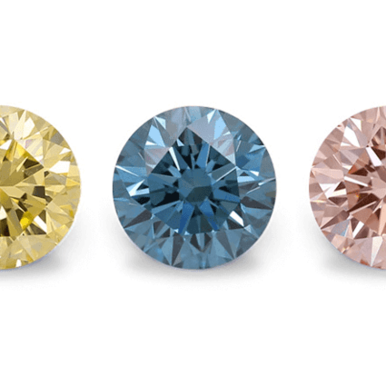
Direct manufacturer relationships enable unlimited customization: non-standard weights, fancy cuts, colored grades, bespoke settings. This transforms studs from standardized products into individually crafted luxury items.
Custom weight selection allows perfect symmetry for matched pairs while optimizing budget allocation. Instead of accepting 0.47 and 0.52-carat stones as "close enough," we grow precisely matched 0.50-carat diamonds.
Our customization begins with detailed consultation examining lifestyle requirements, style preferences, and budget parameters. Recent orders included 0.33-carat emerald cuts in rose gold martini settings and 1.25-carat ovals with vintage bezel settings.
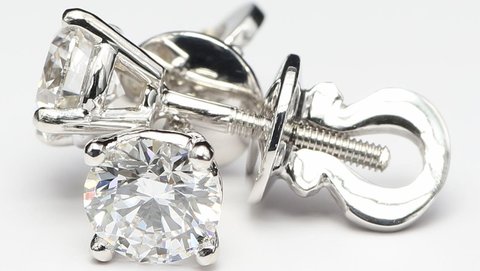
Setting style dramatically impacts presentation and comfort. Four-prong designs maximize light entry and emphasize brilliance. Six-prong settings provide enhanced security for larger stones. Martini settings position diamonds closer to earlobes for understated elegance.
Metal choice affects aesthetics and durability. 14k white gold offers optimal strength-to-cost ratios for daily wear. 18k gold provides richer saturation at increased cost. Platinum delivers superior tarnish resistance and hypoallergenic properties.
The trade-off involves extended timelines and limited return policies. Standard specs allow immediate production. Custom requests may require 2-4 weeks and typically exclude exchanges due to personalized nature.
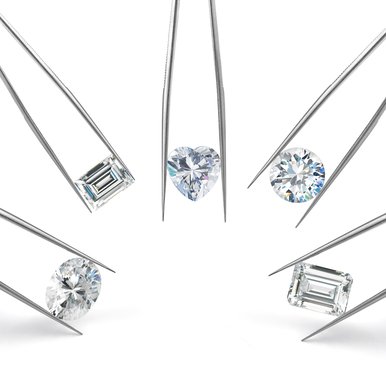
Fancy cuts open possibilities beyond round brilliants. Princess cuts deliver contemporary geometric appeal. Oval shapes maximize apparent size through elongated profiles. Emerald and Asscher cuts emphasize clarity through step-cut faceting.
Custom 1.5-Carat Oval Studs for 10th Anniversary Gift
A client approached us 6 weeks before their 10th anniversary seeking perfectly matched lab-grown diamond studs. They wanted 1.5-carat total weight (0.75ct each) in oval cut—a non-standard size that retail inventories rarely stock as matched pairs. Previous jeweler searches yielded only mismatched stones with 0.08-carat variance and visible color differences under natural light. Budget was $3,200 with a firm deadline.
We grew two precisely matched 0.75-carat oval diamonds (7.5×5.5mm dimensions, VS1 clarity, E color) simultaneously in the same reactor chamber to ensure identical optical characteristics. The client selected four-prong 14k white gold basket settings after reviewing 3D renderings. Total production timeline: 18 days for diamond growth, 5 days for setting fabrication and quality inspection. We provided weekly photo updates documenting each stage from rough crystal to polished stone to final assembly.
Earrings delivered 4 days before anniversary with certification showing 0.00-carat weight variance and identical color grading. Post-delivery survey (conducted 60 days after purchase): recipient wears studs 6 days per week versus 2-3 days for previous jewelry purchases. Client reported the personalized timeline communication reduced anxiety by eliminating the typical "black box" custom jewelry experience. Final cost: $3,150—under budget due to direct manufacturing eliminating retail markups. The couple referred two additional custom orders within 90 days, demonstrating satisfaction beyond the initial transaction.
Why Direct Manufacturing Wins
Factory-direct lab diamond studs eliminate the 300-400% retailer markups that inflate traditional pricing, extending B2B wholesale rates to individual buyers. IGI certification, Type IIa purity, and conflict-free sourcing deliver ethical luxury at $450 for 1-carat studs—identical brilliance, radically different economics. Custom weight matching and personalized settings transform standardized products into bespoke pieces worthy of your most meaningful moments.
Start Your Custom Consultation Today
Ready to access wholesale pricing reserved for professional jewelers? Book your free consultation with Labrilliante's diamond specialists to explore custom specifications, review certification documentation, and design perfectly matched studs that reflect your style and values. Don't pay retail markups for identical quality—claim your direct-from-manufacturer advantage now.
Frequently Asked Questions
CVD (Chemical Vapor Deposition) growth for lab diamond studs requires 3-4 weeks of continuous chamber operation at 800-900°C, with carbon atoms depositing layer by layer onto seed crystals. This timeline accounts for growing precisely matched pairs with identical specifications, ensuring symmetry in carat weight and clarity grades for professional jeweler-quality results.
Lab-grown and mined diamonds are optically and chemically identical, making them impossible to differentiate through visual inspection alone, even by experienced gemologists. Specialized spectroscopic equipment can detect growth patterns, but the only reliable method involves laser inscription and certification documentation that permanently links each stone to its IGI or GIA grading report.
Laboratory-controlled growth environments consistently achieve Type IIa purity (less than 5 parts per million nitrogen) through nitrogen-free chambers, while this grade represents under 2% of natural production. The factory-direct model eliminates the 300-400% retailer markup rather than charging premiums for superior purity, making exceptional quality accessible at wholesale manufacturing costs plus minimal overhead.
Custom weight matching capabilities allow manufacturers to grow a precise replacement stone matching your original specifications from certification records, including exact carat weight, color grade, and clarity characteristics. While traditional jewelers stock inventory, direct manufacturers can recreate identical specifications within the standard 3-4 week CVD growth timeline, ensuring perfect symmetry restoration.
14k white gold delivers the optimal strength-to-cost ratio for everyday wear, offering superior durability compared to 18k gold while maintaining tarnish resistance and hypoallergenic properties at lower cost than platinum. The alloy composition balances hardness for secure prong settings with affordability, making it the standard choice for studs worn regularly rather than reserved for special occasions.
Manufacturers submitting 500+ stones monthly negotiate wholesale certification rates of $45-65 per diamond versus $150-200 retail pricing, similar to how enterprise cloud services extend volume discounts to individual users. These savings transfer directly through factory-direct models, as certification costs represent raw expenses rather than profit centers, reducing total stud pricing by $210-270 per pair.
Local jewelers provide superior service for urgent timelines (48-hour delivery), complex customization requiring in-person consultations with specialty craftsmen, or situations where unlimited same-day try-on sessions matter more than cost savings. The higher retail markups fund immediate exchange policies and personal relationships, making traditional channels optimal for last-minute gifts or buyers requiring non-standard specifications like unusual post lengths.
Confirm IGI or GIA certification with unique report numbers searchable through official databases, verify laser inscription on each stone matches certificate documentation using jeweler's loupe, and check for holographic security seals and QR codes on grading reports. These authentication measures combat the $2 billion annual diamond fraud market by creating permanent traceability that prevents stone substitution or misrepresentation of specifications.