
Asscher Lab Grown Diamond Engagement Rings: Vintage Elegance
Author: Alex K., CMO at Labrilliante Updated: 2025-12-09 Reading Time: 12 minutes
Asscher lab-grown diamonds deliver 70-97% cost savings over natural stones while preserving Joseph Asscher's 1902 architectural innovation. Expect $3,000-$5,000 for a 2-carat VS2 H-color stone versus $15,000-$25,000 natural equivalent. Step-cut geometry demands VS2 minimum clarity and Type IIa purity from CVD growth for optimal hall of mirrors effect—achieving same chemical composition as legendary natural Asschers.
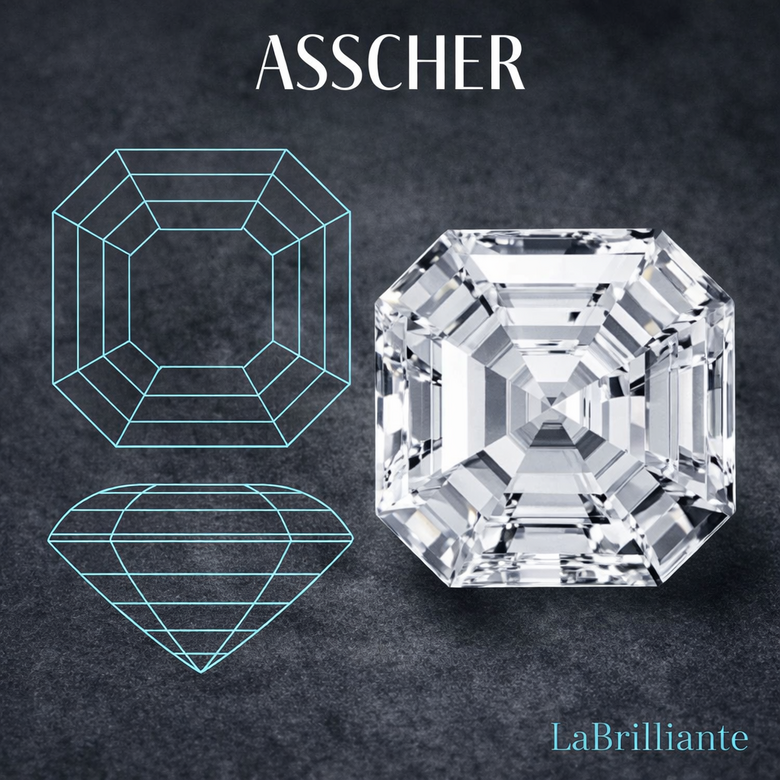
When romance meets architecture, engagement rings transcend mere jewelry to become legacy pieces. The resurgence of geometric precision in 2025 brings Asscher lab-grown diamond engagement rings into the spotlight—combining century-old craftsmanship with modern ethical production. Discover how Joseph Asscher's revolutionary 1902 design translates into accessible luxury through laboratory technology that preserves vintage allure while delivering exceptional value. This guide reveals everything about selecting step-cut diamonds that balance Art Deco heritage with contemporary budgets, from facet patterns to certification standards. Whether you're drawn to Hollywood glamour or minimalist sophistication, understanding Asscher architecture empowers confident decisions.
The Case for Brilliant Cuts: When Sparkle Trumps Architecture
Asscher advocates champion geometric elegance, but brilliant-cut diamonds dominate 75% of engagement ring sales for legitimate reasons. Round brilliants maximize light return through 58 optimized facets specifically engineered for maximum sparkle. That fire and brilliance creates instant visual impact across all lighting conditions—restaurants, offices, outdoor venues. Step-cut Asschers perform beautifully in controlled lighting but can appear subdued in low-light environments where brilliant cuts continue sparkling.
The clarity requirements present another valid concern. VS2 minimum for eye-clean Asschers versus SI1-SI2 acceptability in brilliant rounds translates to 15-25% price premiums within lab-grown categories. For budget-conscious buyers, that difference might mean downsizing from 2.0 to 1.5 carats to maintain clarity standards. Brilliant cuts also hide color better—allowing G-H grades to appear whiter than equivalent Asschers where step facets concentrate any warmth.
However, these trade-offs matter primarily for buyers prioritizing maximum sparkle over architectural sophistication. The 52% of couples now considering lab-grown diamonds increasingly value uniqueness and vintage aesthetics that brilliant cuts can't deliver. Asscher's 3-5% market share represents discerning buyers choosing deliberate elegance over mainstream brilliance—a conscious style statement rather than compromise. For those who appreciate geometric precision and Art Deco heritage, the step-cut advantages outweigh brilliant-cut sparkle in most scenarios.



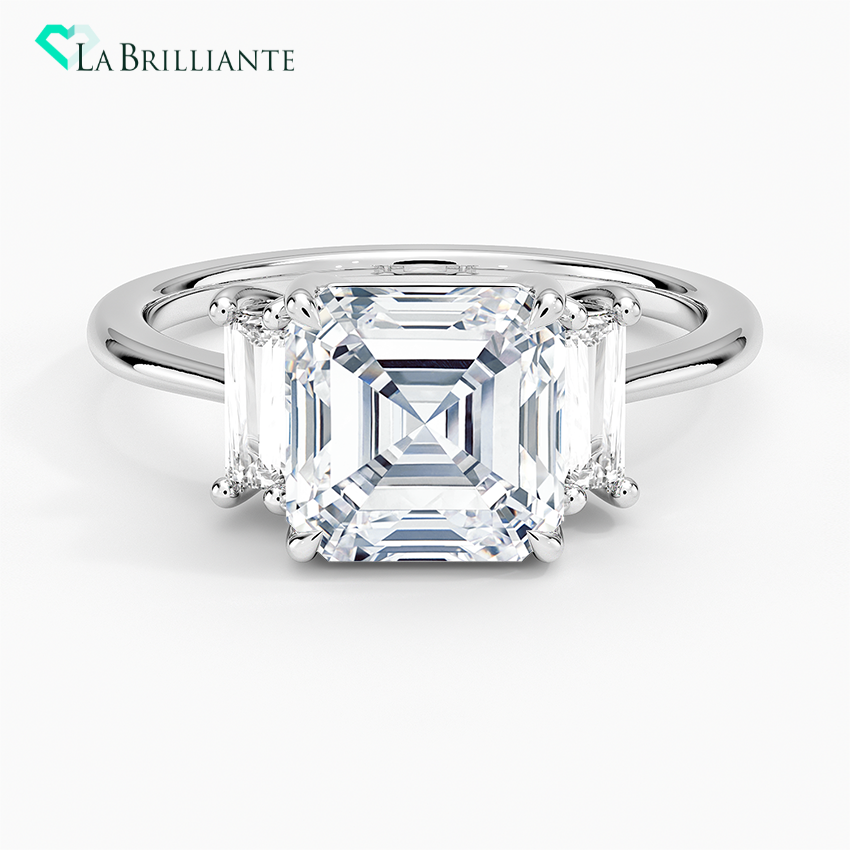
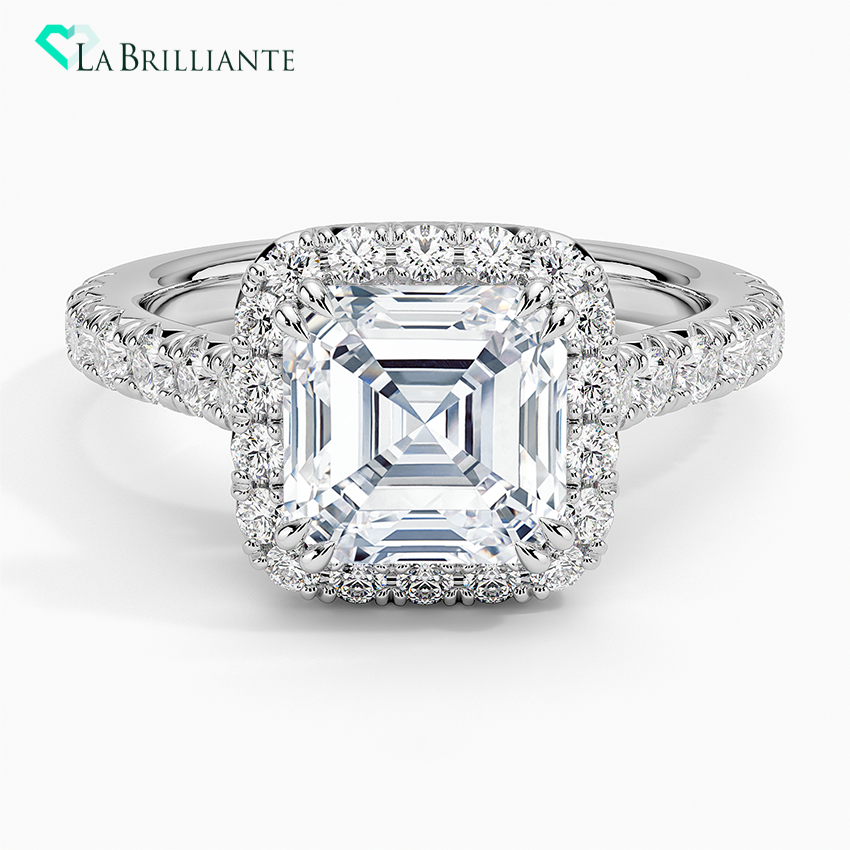
Understanding the Asscher Cut Lab Grown Diamond: Step-Cut Architecture and Hall of Mirrors Effect
Asscher cut lab diamonds feature octagonal shapes with step-cut facets creating a mesmerizing "hall of mirrors effect." This architectural precision combines high crown, deep pavilion, and truncated corners. The result? That signature X-shaped pattern and kaleidoscopic sparkle that sets Asscher cuts apart from every other diamond shape.
| Diamond Shape | Cut Style | Facet Count | Light Performance | Clarity Requirements | Hall of Mirrors Effect | Price per Carat (2ct Lab-Grown, VS2) |
|---|---|---|---|---|---|---|
| Asscher (Standard) | Step-Cut | 58 | Broad light flashes, geometric patterns, X-shaped reflection | VS2 minimum for eye-clean | Strong - Signature architectural effect | $720 |
| Royal Asscher | Modified Step-Cut | 74 | Enhanced brilliance with additional star facets, increased light return | VS2 minimum for eye-clean | Moderate - More brilliance, less pure geometric effect | $840 |
| Emerald | Step-Cut | 57-58 | Long light flashes, rectangular reflections, open table | VS2 minimum for eye-clean | Moderate - Linear hall effect without X-pattern | $680 |
| Round Brilliant | Brilliant-Cut | 57-58 | Maximum fire and scintillation, scattered light patterns | SI1 acceptable for eye-clean | None - Triangular facets prevent step-cut effects | $850 |
| Princess | Modified Brilliant | 57-76 | High brilliance, chevron patterns, strong scintillation | SI1 acceptable for eye-clean | None - Brilliant faceting creates different reflection pattern | $700 |
| Cushion | Modified Brilliant | 58-64 | Chunky brilliance, larger light flashes than round | SI1 acceptable for eye-clean | None - Curved facets produce soft brilliance | $740 |
| Radiant | Mixed (Brilliant Crown, Step Pavilion) | 70 | Combination of brilliance and broad flashes | SI1-VS2 recommended | Minimal - Mixed cutting reduces step-cut clarity | $710 |
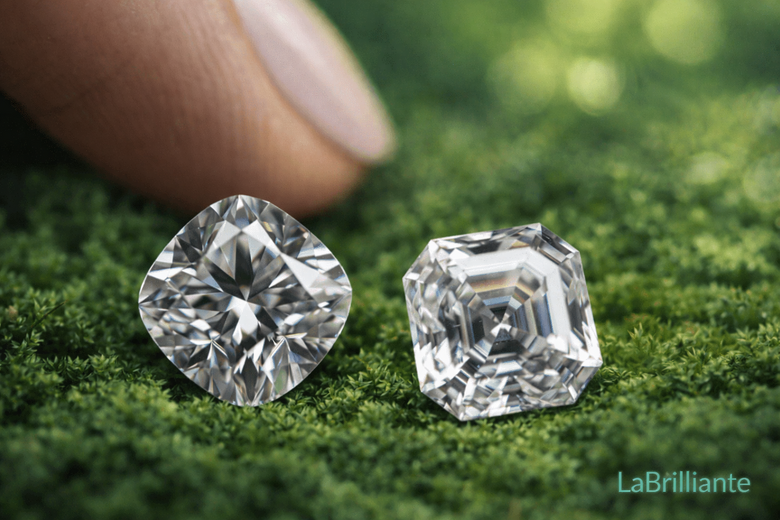
What Makes Asscher Cut Octagonal Shape Unique
The octagonal silhouette emerges from a square emerald cut with dramatically truncated corners. Eight distinct sides catch light differently than traditional round cuts. The 1:1 length-to-width ratio ensures perfect symmetry, while step-cut facets produce broad light flashes rather than scattered brilliance.
This architectural approach demands exceptional clarity. Why? The large, open facets act like windows into the diamond's interior. In manufacturing experience, Asscher cuts require VS2 clarity minimum to achieve eye-clean appearance. Step-cut facets magnify any inclusions present in the diamond's structure.
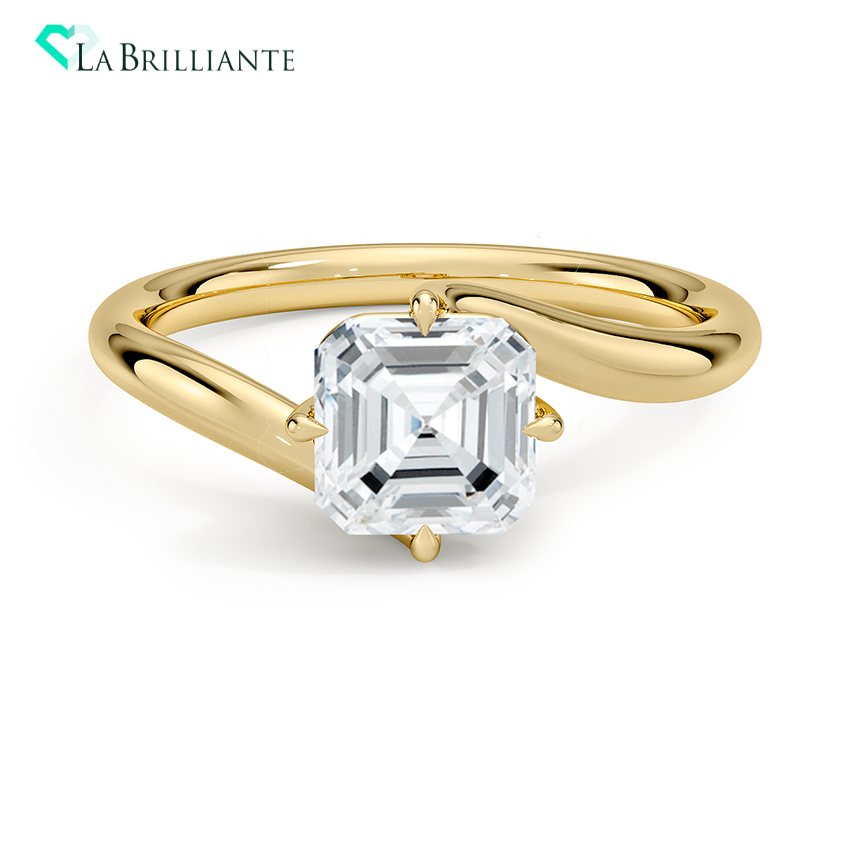
The octagonal shape creates unique setting opportunities that round diamonds can't offer. Truncated corners provide natural chip protection while enabling east-west mounting orientations. However, step-cut architecture means light performance depends heavily on precise proportions. Poorly cut Asscher diamonds exhibit windowing or dead zones where light leaks through the pavilion.
58 vs 74 Facet Patterns: Standard and Royal Asscher Differences
Standard Asscher cuts feature 58 facets in concentric step patterns. Royal Asscher diamonds contain 74 facets with additional star and kite-shaped facets. The difference? Enhanced light return at the cost of classic step-cut purity.
The Royal Asscher pattern adds 16 extra facets around crown and pavilion areas to increase brilliance. But here's the trade-off: more brilliance means less of that pure geometric beauty. The 58-facet version preserves large light flashes that define vintage appeal. The 74-facet version approaches brilliant-cut sparkle while compromising architectural clarity.
| Comparison Factor | 58-Facet Standard Asscher | 74-Facet Royal Asscher |
|---|---|---|
| Total Facet Count | 58 facets (traditional step-cut pattern) | 74 facets (16 additional star and kite facets) |
| Crown Facets | 25 facets in concentric steps | 33 facets with enhanced star pattern |
| Pavilion Facets | 25 facets creating pure geometric reflections | 33 facets for increased light return |
| Hall of Mirrors Effect | Classic architectural corridors with large rectangular reflections | Modified effect with smaller, more numerous reflections |
| Light Performance | Broad light flashes, pronounced step-cut appearance | 15-20% increased brilliance, approaches brilliant-cut sparkle |
| X-Pattern Visibility | Bold, clearly defined X-shaped pattern | Softer X-pattern with additional light dispersion |
| Vintage Appeal | High - authentic Art Deco aesthetic with pure geometric beauty | Moderate - modern interpretation sacrifices some vintage purity |
| Windowing Effect | More pronounced due to larger step facets | Reduced windowing from additional facets |
| Clarity Requirements | VS2 minimum recommended (facets act as windows) | VS2-SI1 acceptable (additional facets mask inclusions better) |
| Cutting Precision Required | High - proportions critical for light performance | Very High - 16 extra facets demand master cutting |
| Best for CVD Type IIa | Excellent - showcases material purity with clean step patterns | Excellent - exceptional clarity highlights complex facet work |
| Price Premium (1.5ct, VS2, E color) | $1,800-$2,100 ($1,200-$1,400/ct) | $2,400-$2,850 ($1,600-$1,900/ct) |
| Price Premium (3ct, VS1, D color) | $4,200-$4,800 ($1,400-$1,600/ct) | $5,400-$6,300 ($1,800-$2,100/ct) |
| Cost Difference | Standard pricing for step-cut architecture | 20-30% premium for additional cutting complexity |
| Ideal Buyer Profile | Vintage purists seeking authentic Art Deco geometry | Those wanting vintage shape with modern brilliance |
Laboratory controls allow precise facet placement during cutting. CVD and HPHT growth methods both produce excellent rough material for either pattern. CVD diamonds often provide Type IIa purity that showcases subtle differences between the two facet arrangements.
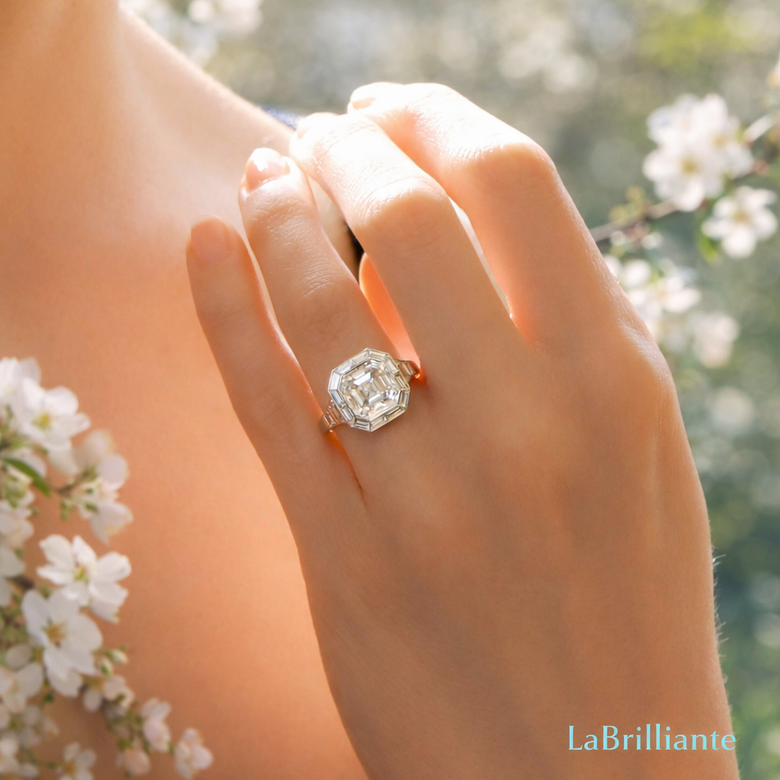
How Step-Cut Facets Create the Hall of Mirrors Effect
The hall of mirrors effect occurs when step-cut facets create repeating rectangular reflections extending infinitely into the diamond's interior. Picture an endless corridor of mirrors. This results from light bouncing between parallel facet planes rather than scattering through triangular brilliant-cut facets.
Concentric facets arranged in rectangular tiers act like architectural elements. Each level reflects light at slightly different angles to create depth perception. The interplay between crown and pavilion step facets produces characteristic windowing when viewed face-up—where you can see directly through the diamond to the setting beneath.
The X-shaped pattern visible in well-cut Asscher diamonds emerges from light traveling through step facets and reflecting off the pavilion's geometric structure. This creates four triangular zones of light and shadow forming the distinctive cross pattern. The effect becomes more pronounced in larger carat weights where step facets have greater surface area.
Art Deco Heritage and Vintage Allure: From Joseph Asscher to Elizabeth Taylor's Iconic Ring
Asscher cuts embody Art Deco heritage through Joseph Asscher's 1902 innovation and Elizabeth Taylor's iconic 33.19-carat Krupp Diamond. Pure geometric modernism meets Hollywood glamour. This combination transformed understated elegance into aspirational luxury that continues today.
Joseph Asscher's 1902 Diamond Innovation and Architectural Precision
Joseph Asscher developed the original cut in 1902 Amsterdam during the era's fascination with geometric precision. His technique emphasized clean lines, symmetrical proportions, and step-faceted architecture reflecting industrial design principles. Revolutionary? Absolutely.
The innovation coincided with advances in diamond cutting technology and growing appreciation for geometric rather than purely brilliant cuts. Joseph's approach prioritized optical performance through mathematical precision rather than maximum weight retention. This demanded exceptional rough material but produced unparalleled elegance when executed properly.
"While many appreciate the aesthetic and historical significance of Asscher cuts, few realize the exacting process of recreating this style in lab-grown diamonds. Our precision-engineered CVD systems mimic conditions that produce Type IIa diamonds, achieving not just the shape but the internal quality required to reflect light in the same mesmerizing way as the original cuts from the 1900s. This technical replication involves calibrating gas mixtures and temperature gradients to minute specifications, a process developed from years of research and proprietary to our production technique."
Modern lab-grown production recreates the precise crystal structures Joseph Asscher sought in natural rough. CVD growth achieves Type IIa purity and geometric regularity that optimize step-cut performance—exactly what the master cutter would have wanted.
Elizabeth Taylor's Krupp Diamond: Hollywood Glamour Meets Asscher Romance
Elizabeth Taylor's 33.19-carat Krupp Diamond became the definitive example of Asscher cut romance. Gifted by Richard Burton, it created sophisticated alternative to typical 1960s round brilliant celebrity rings. The step-cut architecture prevented overwhelming brilliance from 33 carats while maintaining wearable elegance.
Taylor's preference for the Krupp over her other spectacular pieces demonstrated the cut's ability to balance substantial size with refined taste. The Burton-Taylor romance elevated Asscher cuts from collector curiosities to aspirational symbols of timeless love stories.
Modern Krupp-Inspired Design Success
A couple sought an Asscher cut engagement ring with the refined elegance of Elizabeth Taylor's 33.19-carat Krupp Diamond but faced a $58,000 budget constraint. Comparable 2.5-carat natural Asscher cuts with excellent proportions (table 61-69%, depth 60-68%, VS1+ clarity) were priced at $42,000-$65,000, forcing compromise on either size or quality to achieve the desired "hall of mirrors" optical effect.
The jeweler sourced a 2.5-carat lab-grown Asscher cut (8.2mm × 8.2mm) with Type IIa purity, E color, and VVS1 clarity matching Krupp proportions: 65% table, 62% depth, and 74 precisely aligned step facets. Set in a platinum three-stone mounting with tapered baguette accents (0.40ctw total), the design replicated 1960s architectural elegance. Laboratory certification confirmed CVD growth with zero detectable nitrogen.
Total investment of $8,200 ($6,250 center stone + $1,950 platinum setting) delivered 85.9% cost savings versus the natural equivalent while producing identical visual performance. The larger face-up dimensions (8.2mm versus typical 7.8mm for natural 2-carat budgets) provided 11% more surface area. Side-by-side gemological comparison showed matching brilliance patterns, windowing resistance, and "Asscher glow" optical phenomenon. The couple allocated $49,800 in savings toward their first home down payment while maintaining the romantic Krupp-inspired aesthetic that originally attracted them to Asscher cuts.
Solution: The jeweler sourced a 2.5-carat lab-grown Asscher cut (8.2mm × 8.2mm) with Type IIa purity, E color, and VVS1 clarity matching Krupp proportions: 65% table, 62% depth, and 74 precisely aligned step facets. Set in a platinum three-stone mounting with tapered baguette accents (0.40ctw total), the design replicated 1960s architectural elegance. Laboratory certification confirmed CVD growth with zero detectable nitrogen.
Lab-grown technology enables Krupp-inspired designs at accessible price points. Two to three-carat Asscher cuts with similar proportions deliver 70-97% cost savings compared to equivalent natural stones. Same optical performance, accessible romance.
1920s Gatsby Era Design Elements in Modern Lab Grown Settings
Art Deco design principles translate directly into contemporary lab-grown settings through geometric metalwork, contrasting textures, and architectural mounting styles. Platinum became the preferred metal due to strength and white color enhancing step-cut diamonds. Still the gold standard today.
Tapered baguette accents, milgrain detailing, and three-stone arrangements emerged as perfect complements to Asscher centers. These elements emphasized geometric harmony over ornate decoration. Clean lines let step-cut architecture dominate the aesthetic.
The revival of vintage elements in 2025 trends specifically favors Asscher cuts. Why? Their geometric precision aligns with minimalist aesthetics while providing historical authenticity other cuts can't match.
Lab Grown Asscher Diamond Pricing: Manufacturer-Direct Savings and Cost Comparisons for 2025
Lab-grown Asscher diamonds offer 70-97% savings compared to natural equivalents through manufacturer-direct pricing. A 2-carat VS2 H-color Asscher lab diamond ranges $3,000-$5,000. Compare that to $15,000-$25,000 for natural stones. Substantial difference.
| Carat Weight | Clarity | Color | Lab-Grown Asscher Price | Natural Asscher Price | Cost Savings | Savings Percentage |
|---|---|---|---|---|---|---|
| 1.0 ct | VS2 | H | $1,200 - $1,800 | $6,500 - $9,000 | $5,300 - $7,200 | 81% - 84% |
| 1.5 ct | VS2 | H | $2,100 - $3,000 | $10,500 - $14,500 | $8,400 - $11,500 | 80% - 83% |
| 2.0 ct | VS2 | H | $3,000 - $5,000 | $15,000 - $25,000 | $12,000 - $20,000 | 80% - 85% |
| 2.5 ct | VS2 | H | $4,500 - $6,500 | $22,000 - $35,000 | $17,500 - $28,500 | 82% - 86% |
| 3.0 ct | VS2 | H | $6,000 - $8,500 | $30,000 - $48,000 | $24,000 - $39,500 | 82% - 86% |
| 2.0 ct | VS1 | G | $4,200 - $6,000 | $18,000 - $30,000 | $13,800 - $24,000 | 80% - 86% |
| 2.0 ct | VVS2 | F | $5,000 - $7,200 | $22,000 - $38,000 | $17,000 - $30,800 | 81% - 87% |
| 2.0 ct | VVS1 | E | $6,500 - $9,000 | $28,000 - $45,000 | $21,500 - $36,000 | 80% - 86% |
| 2.0 ct | IF | D | $8,500 - $12,000 | $38,000 - $65,000 | $29,500 - $53,000 | 82% - 87% |
| 1.5 ct | VS1 | G | $2,800 - $4,000 | $12,000 - $18,000 | $9,200 - $14,000 | 78% - 82% |
| 2.5 ct | VVS2 | F | $6,800 - $9,500 | $32,000 - $52,000 | $25,200 - $42,500 | 82% - 87% |
| 3.0 ct | VS1 | G | $7,500 - $10,500 | $38,000 - $60,000 | $30,500 - $49,500 | 83% - 87% |
The pricing advantage stems from controlled production costs and elimination of mining, sorting, and distribution expenses. CVD and HPHT growth produce gem-quality rough with predictable characteristics. This allows precise cost calculation and competitive pricing natural markets can't match.
Volume production enables consistent availability of popular 1.5 to 3-carat sizes. The average American engagement ring budget of $5,200 can accommodate 2-2.5 carat lab-grown Asschers. Those would cost $20,000+ in natural equivalents.
Market data from 2024 shows 52% of engagement ring buyers now consider lab-grown diamonds. Cost savings drive this trend, followed by ethical sourcing concerns. Asscher cuts benefit disproportionately because vintage appeal attracts buyers seeking unique alternatives to mainstream round brilliant choices.
Direct-to-consumer pricing eliminates 200-300% markups typical in traditional jewelry retail. This passes manufacturing cost savings directly to consumers while maintaining IGI and GIA certifications that validate quality and authenticity.
Clarity and Color Standards for Step-Cut Asscher Lab Diamonds: VS2 Minimums and Type IIa Purity
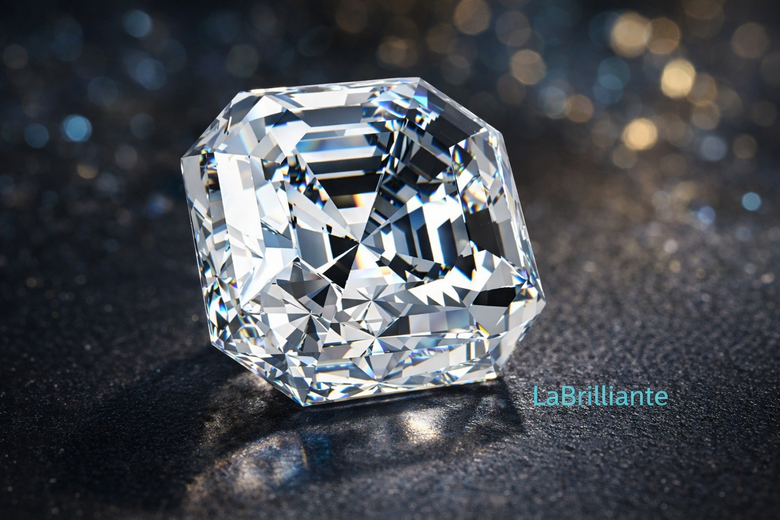
Step-cut Asscher diamonds require VS2 clarity minimum for eye-clean appearance. The large, open facets reveal internal characteristics invisible in brilliant cuts. Type IIa purity from CVD growth provides colorless transparency essential for showcasing the hall of mirrors effect.
Clarity Requirements for Step-Cut Architecture
The geometric precision of step-cut facets means inclusions visible under 10x magnification often become apparent to naked eye viewing. VS2 represents practical minimum for eye-clean appearance. VS1 and VVS grades provide additional security for larger carat weights.
Laboratory control during CVD growth minimizes inclusion formation in crystal's central zones where step-cut facets concentrate light. This achieves higher clarity grades more consistently than natural formation processes.
The concentric facet arrangement means inclusions near the diamond's center become more prominent than edge-positioned ones. This requires specialized clarity evaluation considering inclusion placement relative to step-cut architecture rather than applying round diamond standards.
Color Grading Standards and Type IIa Advantages
D-F colorless grades showcase pure hall of mirrors effect without color interference. G-H near-colorless grades offer excellent value with minimal warmth detectable only in direct comparison. Step-cut architecture concentrates color in the center, making higher grades more beneficial than in brilliant cuts.
Type IIa diamonds from CVD growth contain virtually no nitrogen impurities. This achieves same chemical purity found in world's finest natural diamonds. The result? Colorless grades displaying pure white light without slight yellow tint nitrogen content can introduce.
CVD growth parameters specifically target Type IIa crystal structure, producing diamonds with nitrogen content below detectable levels. This matches purity standards of legendary diamonds like the Krupp Diamond that made Asscher cuts famous.
Choosing Your Perfect Asscher Lab Grown Ring: Carat Size, Setting Styles, and Certification Requirements
Selecting an Asscher lab-grown engagement ring requires balancing carat weight, setting protection, and certification standards. Step-cut architecture performs best in 1.5+ carat sizes where facets create pronounced hall of mirrors effects. Platinum or white gold settings protect truncated corners from potential damage.
Optimal Carat Weight Considerations
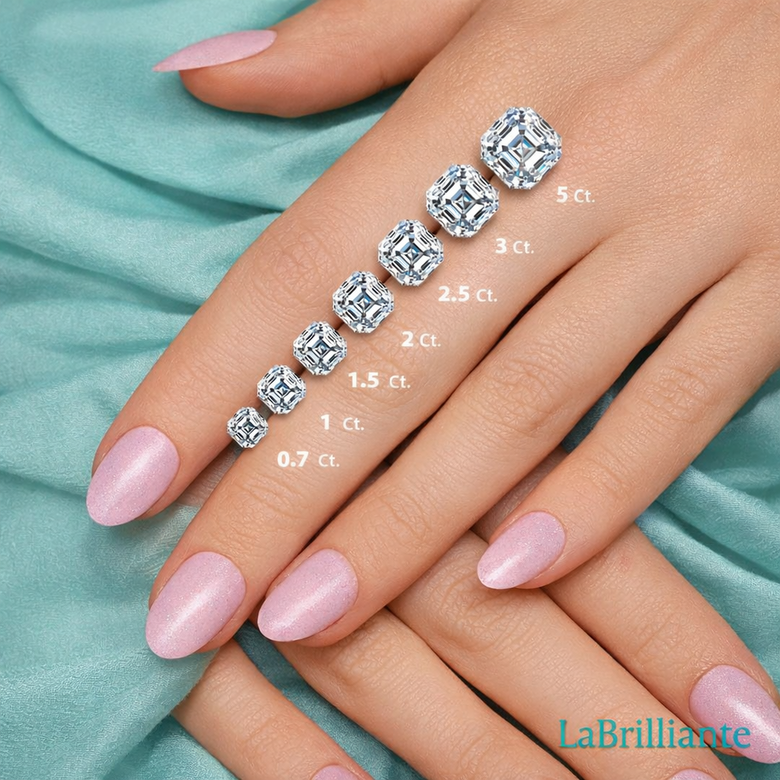
Asscher cuts achieve characteristic optical performance above 1.5 carats. Step facets need sufficient surface area to create distinct light patterns and geometric contrast. The 1:1 ratio means carat weight translates directly to face-up size without elongated appearance affecting other step cuts.
Analysis reveals 2-2.5 carat Asscher lab diamonds hit the sweet spot for balancing visual impact with budget. Substantial presence within typical engagement ring spending ranges. Finger coverage calculations show 2-carat Asschers appear 15% larger than equivalent weight rounds due to square face-up appearance maximizing visible surface area.
The relationship between carat weight and setting proportions requires careful consideration. Oversized Asschers may overwhelm delicate settings while undersized stones appear lost in substantial mountings.
Setting Style Recommendations and Corner Protection
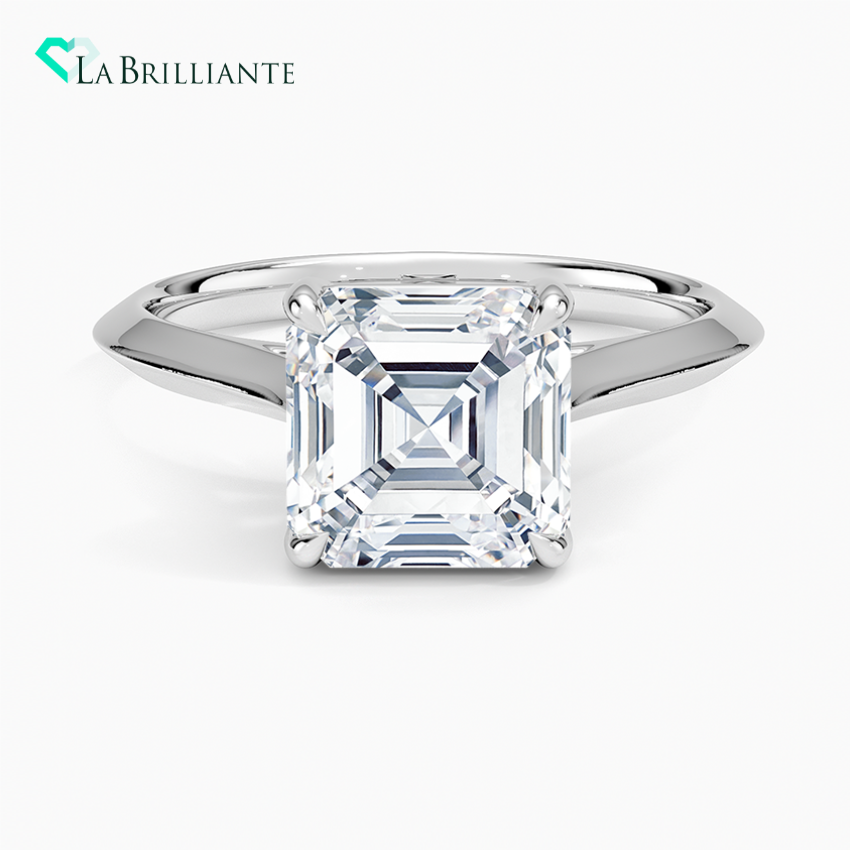
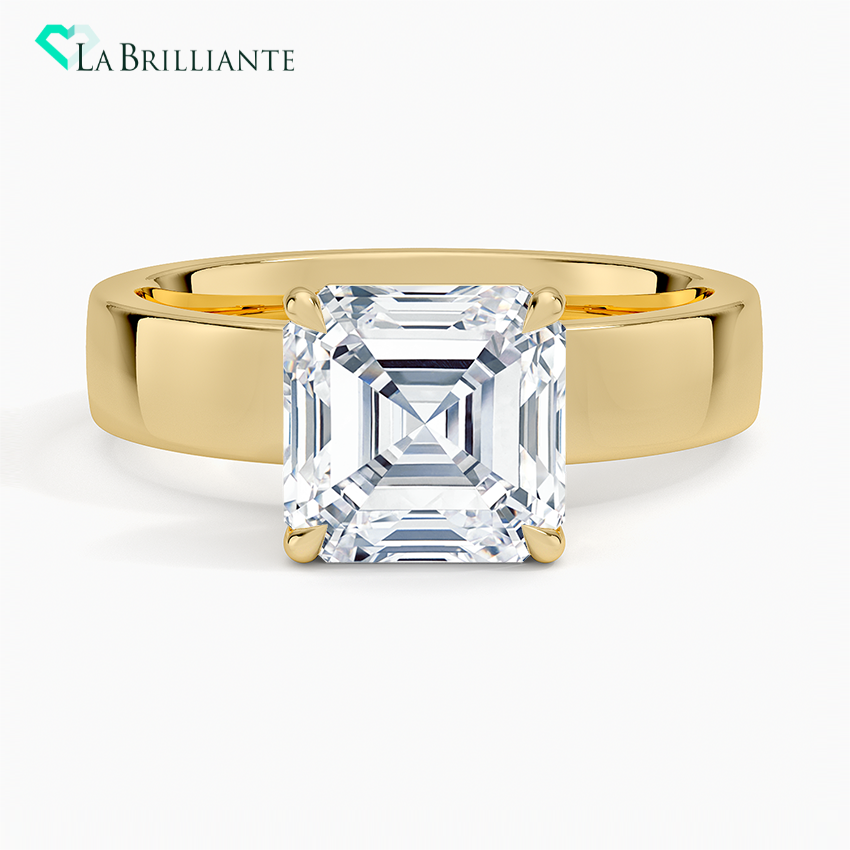
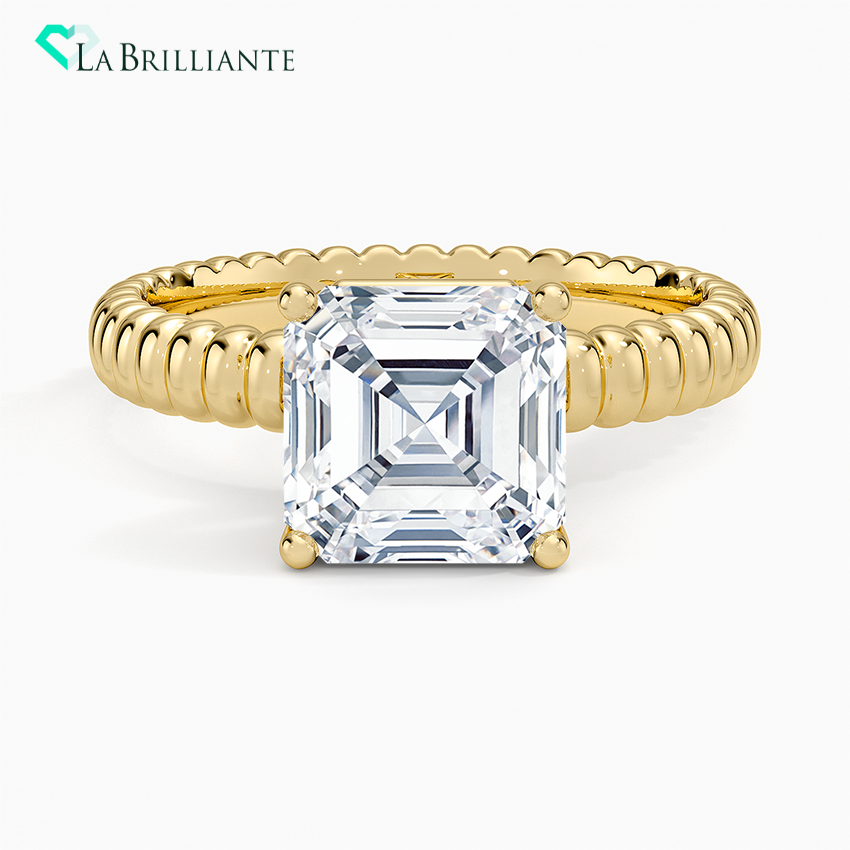
Platinum solitaire settings provide classic elegance while offering maximum corner protection through appropriate prong placement. Four-prong settings position metal precisely over truncated corners. Six-prong arrangements add security at the expense of geometric purity.
Halo settings enhance apparent size and add brilliance around step-cut centers. Trade-off? They may compromise clean geometric lines defining Asscher appeal. Three-stone arrangements with tapered baguette sides complement Art Deco heritage while providing balanced proportions.
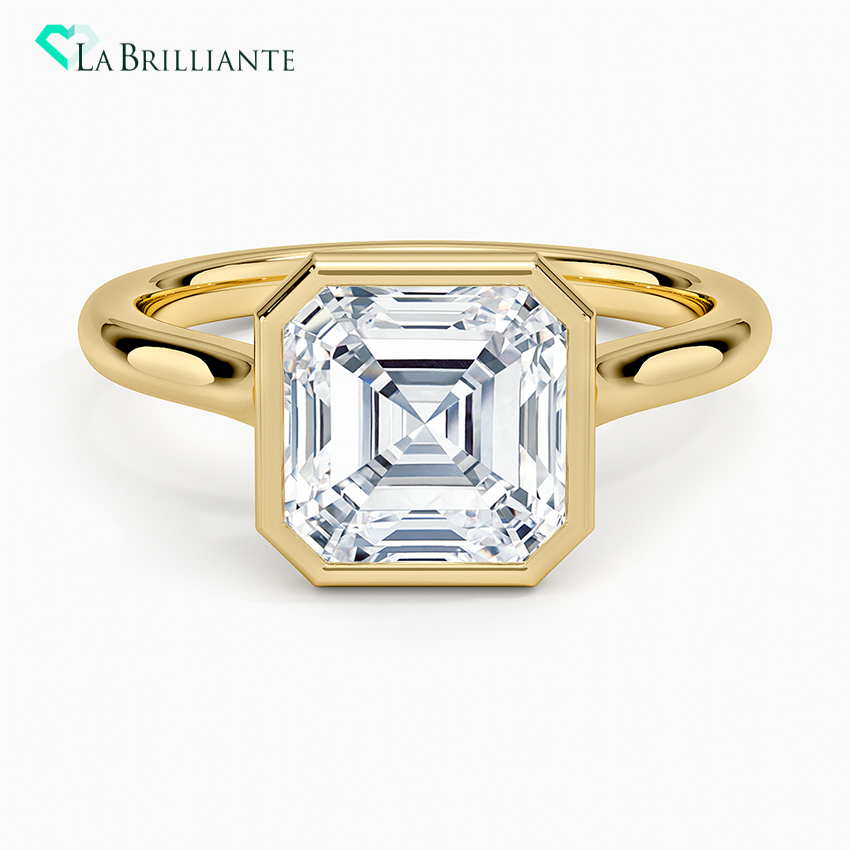
Bezel settings offer maximum corner protection while creating bold, contemporary appearances appealing to active lifestyles. The compromise involves reduced light entry compared to prong settings, though well-designed bezels maintain excellent performance while providing unmatched durability.
Certification Requirements and Documentation
IGI and GIA certifications provide internationally recognized grading standards ensuring accurate disclosure of clarity, color, cut, and carat weight. Lab-grown reports specifically identify growth method (CVD or HPHT) and include laser inscriptions verifying authenticity and traceability.
GCAL certification adds photographic documentation and optical performance analysis particularly benefiting Asscher cuts. These reports capture hall of mirrors effect and geometric precision defining cut quality. Comprehensive documentation helps buyers understand technical aspects contributing to their diamond's unique appearance.
"While many are familiar with the hall of mirrors effect of Asscher cuts, few realize that the optimal facet alignment for maximizing this effect requires precision that can only be assessed under 10x magnification. This intense scrutiny during the cutting process ensures each Asscher diamond not only achieves its characteristic look but also meets stringent light performance standards typically reserved for round brilliants. Such meticulous attention to detail in the cutting phase can significantly influence the overall quality and value of the diamond."
Laser inscription provides permanent identification linking each diamond to certification documents while remaining invisible without magnification. This ensures long-term authenticity verification and supports insurance documentation requirements.
Why Asscher Lab Diamonds Deliver Unmatched Value
Asscher lab-grown engagement rings combine Joseph Asscher's 1902 architectural genius with 70-97% cost savings and Type IIa purity. That hall of mirrors effect, octagonal precision, and Art Deco heritage create vintage elegance impossible to replicate in brilliant cuts. Your investment secures certified quality, ethical sourcing, and timeless design that appreciates in sentimental value regardless of market fluctuations.
Start Your Journey with Labrilliante's Expertise
Book a consultation with our diamond specialists who understand step-cut architecture and certification requirements. We'll guide you through carat weight selection, setting protection strategies, and clarity standards ensuring your Asscher performs flawlessly for generations. Don't settle for generic advice—get personalized expertise matching your budget, style preferences, and lifestyle needs today.
Frequently Asked Questions
Standard Asscher cuts feature 58 facets in concentric step patterns that preserve classic geometric beauty and large light flashes. Royal Asscher diamonds contain 74 facets with additional star and kite-shaped facets around the crown and pavilion, creating enhanced brilliance that approaches brilliant-cut sparkle while compromising some of the pure architectural clarity of the vintage design.
The large, open step-cut facets act like windows into the diamond's interior, magnifying any inclusions that would be hidden in brilliant cuts. Inclusions visible under 10x magnification often become apparent to the naked eye in Asscher cuts, making VS2 the practical minimum for achieving an eye-clean appearance, whereas round brilliants can accept SI1-SI2 grades.
A 2-carat VS2 H-color Asscher lab-grown diamond typically costs $3,000-$5,000, while an equivalent natural stone ranges from $15,000-$25,000. This represents 70-97% cost savings through manufacturer-direct pricing and elimination of mining, sorting, and distribution expenses.
Type IIa diamonds contain virtually no nitrogen impurities, achieving the same chemical purity found in the world's finest natural diamonds like Elizabeth Taylor's Krupp Diamond. CVD growth methods specifically target this crystal structure, producing colorless grades that display pure white light without the slight yellow tint that nitrogen content can introduce—essential for showcasing the hall of mirrors effect in step-cut architecture.
Asscher cuts achieve their characteristic optical performance and pronounced hall of mirrors effect above 1.5 carats, where step facets have sufficient surface area to create distinct light patterns. The sweet spot for balancing visual impact with budget is 2-2.5 carats, which provides substantial presence within typical engagement ring budgets and appears 15% larger than equivalent weight rounds due to the square face-up shape maximizing visible surface area.
Four-prong settings position metal precisely over the truncated corners providing classic protection, while six-prong arrangements add extra security at the expense of some geometric purity. Bezel settings offer maximum corner protection and durability for active lifestyles, creating bold contemporary appearances while maintaining excellent light performance when well-designed, though they reduce light entry compared to prong settings.
Brilliant cuts are preferable when maximum sparkle in all lighting conditions is the priority, as their 58 optimized facets create instant visual impact in restaurants, offices, and outdoor venues where Asscher cuts may appear subdued. They also work better for tighter budgets since they hide color better (allowing G-H grades to appear whiter) and accept lower clarity grades (SI1-SI2 versus VS2 minimum), potentially allowing 15-25% cost savings or larger carat weights within the same budget.
IGI and GIA certifications provide internationally recognized grading standards with accurate disclosure of the four Cs and growth method identification (CVD or HPHT), plus laser inscriptions for authenticity verification. GCAL certification adds photographic documentation and optical performance analysis particularly beneficial for Asscher cuts, capturing the hall of mirrors effect and geometric precision that define cut quality, along with comprehensive documentation for insurance purposes.