



GIA Caught a Pink Lab-Grown Diamond Posing as Natural Rough
Author: Alex K., CMO at Labrilliante
Key takeaways:
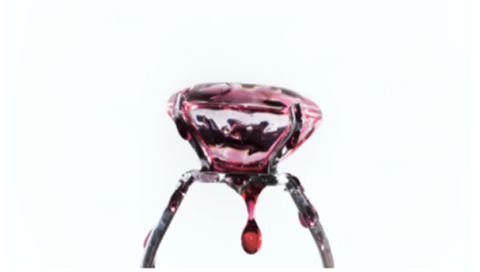
On November 11 that GIA identified a 6.06 ct pink stone resembling natural rough as a treated CVD lab-grown diamond, the first documented case of its kind
Professional Jeweller reported on November 13 that Queensmith's fancy colored diamond sales rose 109% this year, with lab-grown credited for making color affordable
Diamond Foundry unveiled a 200 mm single-crystal diamond wafer, but TrendForce notes it is one sample with no production timeline yet
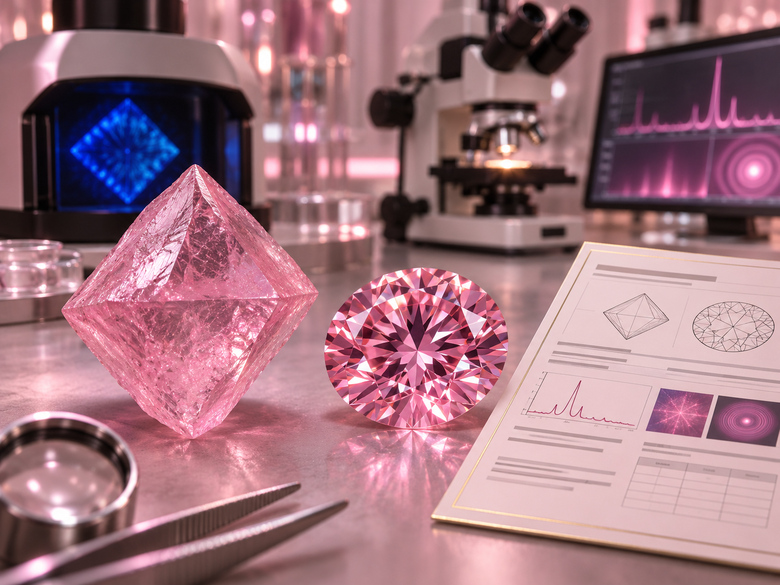
Three stories from the past two weeks show lab-grown diamond being examined more closely than ever, by gemologists, by couples shopping for color, and by engineers. In each case, the closer the look, the clearer the picture.
The Lab Caught It
GIA received a 6.06 ct pink specimen at its New York laboratory. It looked like a natural octahedral diamond, with rounded faces and the triangular etch marks typical of natural crystals. One thing gave it away early: unusually sharp edges.
Initial spectroscopy suggested the pink color came from multiple treatments, including HPHT. Further testing showed the stone was actually a CVD lab-grown diamond. Infrared spectroscopy pointed to a type IIa stone, which made the octahedral shape unusual, and additional absorption features indicated irradiation and annealing. DiamondView imaging then confirmed it was CVD-grown and treated to produce the pink color.
According to the report, which cites an article in the fall issue of GIA's Gems & Gemology, this is GIA's first documented case of a treated CVD diamond deliberately fashioned to imitate a natural octahedral crystal. A near-colorless CVD specimen had been reported before. GIA's conclusion is that surface appearance alone can be misleading when it comes to origin.
That fits what GIA's Dr. Wuyi Wang told JNA in October: stones shaped to look like natural rough don't create a serious identification problem, because laboratory testing reads material properties rather than shape.
For retailers selling lab-grown diamonds, the takeaway is straightforward. This was an attempt to pass a lab-grown stone off as natural, and the lab caught it. The lesson is not that lab-grown is hard to trust; it's that origin, treatment, and color must be documented, not guessed from how a stone looks. When you buy colored lab-grown stones, ask whether the color is as-grown or treated, and make sure the grading report says so.
Why Color Is Where the Growth Is
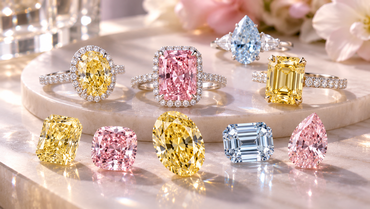
Professional Jeweller reported on Queensmith's 2027 Engagement Ring Trends Report. The London jeweler's data covers every engagement ring it designed and made between September 2025 and September 2026, plus a survey of 2,000 UK adults. Fancy colored diamond sales rose 109% this year, led by warm-toned and yellow stones.
Queensmith credits lab-grown directly. Natural fancy colored diamonds, especially pinks and blues, are rare and priced accordingly, which kept color out of reach for most couples. Lab-grown has changed that. The appeal skews young: 14% of 25–44-year-olds said they'd choose a colored diamond, nearly three times the 5% of over-55s. For couples who want something truly rare, the report notes a natural colored diamond is still a beautiful choice.
It's one retailer's data, so treat it as a signal rather than a national figure. But it lines up with the broader pattern of couples putting their budget into size and personality, with the average lab-grown stone at Queensmith reaching 1.92 ct this year
Put the two stories side by side and a useful point emerges. Color is exactly where customers are most excited and where documentation matters most. A pink stone with a clear report, an honest origin, and a stated treatment history is a very different product from one nobody can explain.
A 200 mm Diamond Wafer, With Caveats
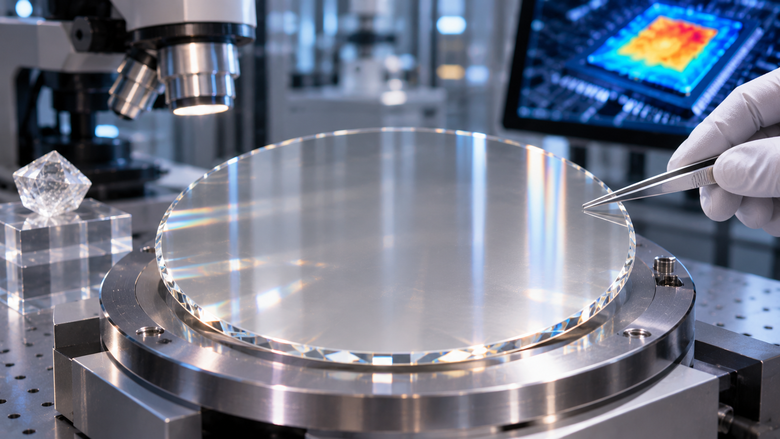
Diamond Foundry announced what it says is the first 200 mm continuous single-crystal diamond, according to TrendForce on November 17. The sample was shown as grown, without polishing, on a silicon substrate using a template incorporating iridium and a zirconium oxide layer, after 25 years of research. The size matters because 200 mm is a standard in semiconductor manufacturing, and diamond conducts heat better than almost any other material, which makes it a candidate for cooling AI chips.
TrendForce is clear about the limits: it's a single sample, yield, polishing, wafer bonding, reliability, and cost all need work, and the company hasn't disclosed a mass-production timeline or confirmed customers. It's a proof of feasibility, not a production line. Still, it's one more sign that lab-grown diamond is building a serious technology story alongside the jewelry one.
What This Means for Your Floor
The thread through all three stories is scrutiny, and scrutiny favors the transparent. GIA's lab can tell what a stone really is. Customers are choosing color knowing it's lab-grown. Engineers are testing the same material for demanding technical uses.
For jewelers, the practical response is to build your lab-grown assortment on documentation: certified stones, a stated origin, and a clear answer on any treatment. LaBrilliante supplies certified lab-grown diamonds, including colored stones, with the paperwork to back every one.