




Natural Diamond Brands Are Spending Big to Defend Their Turf
Author: Alex K., CMO at Labrilliante
Key takeaways:
Reuters reported on October 20 that Anglo American raised its 2026 diamond output guidance to 25–28 million carats, while still citing lab-grown competition as a pressure on De Beer
GIA's Dr. Wuyi Wang told JNA that lab-grown stones shaped to mimic natural rough crystals remain easy to identify in the lab
Mint reported on October 10 that IGI certification revenue for lab-grown jewelry in India grew 44% year over year, versus 2% for natural-diamond jewelry
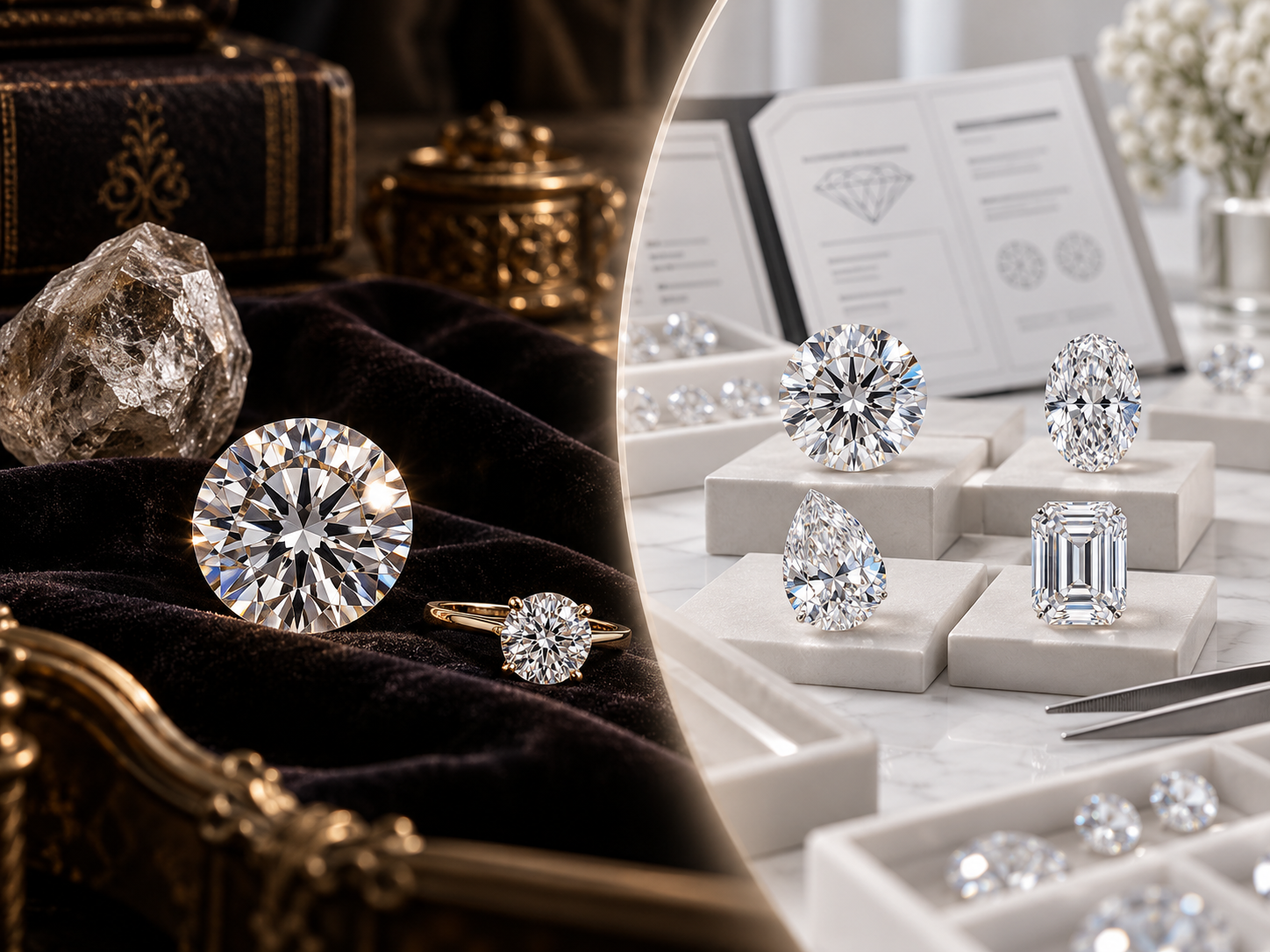
Three stories from the past ten days, from three different corners of the industry, point in the same direction. Mined-diamond producers are adjusting, natural-diamond retailers are spending to defend their position, and lab-grown keeps growing underneath both.
Supply: Higher Output, Same Pressure
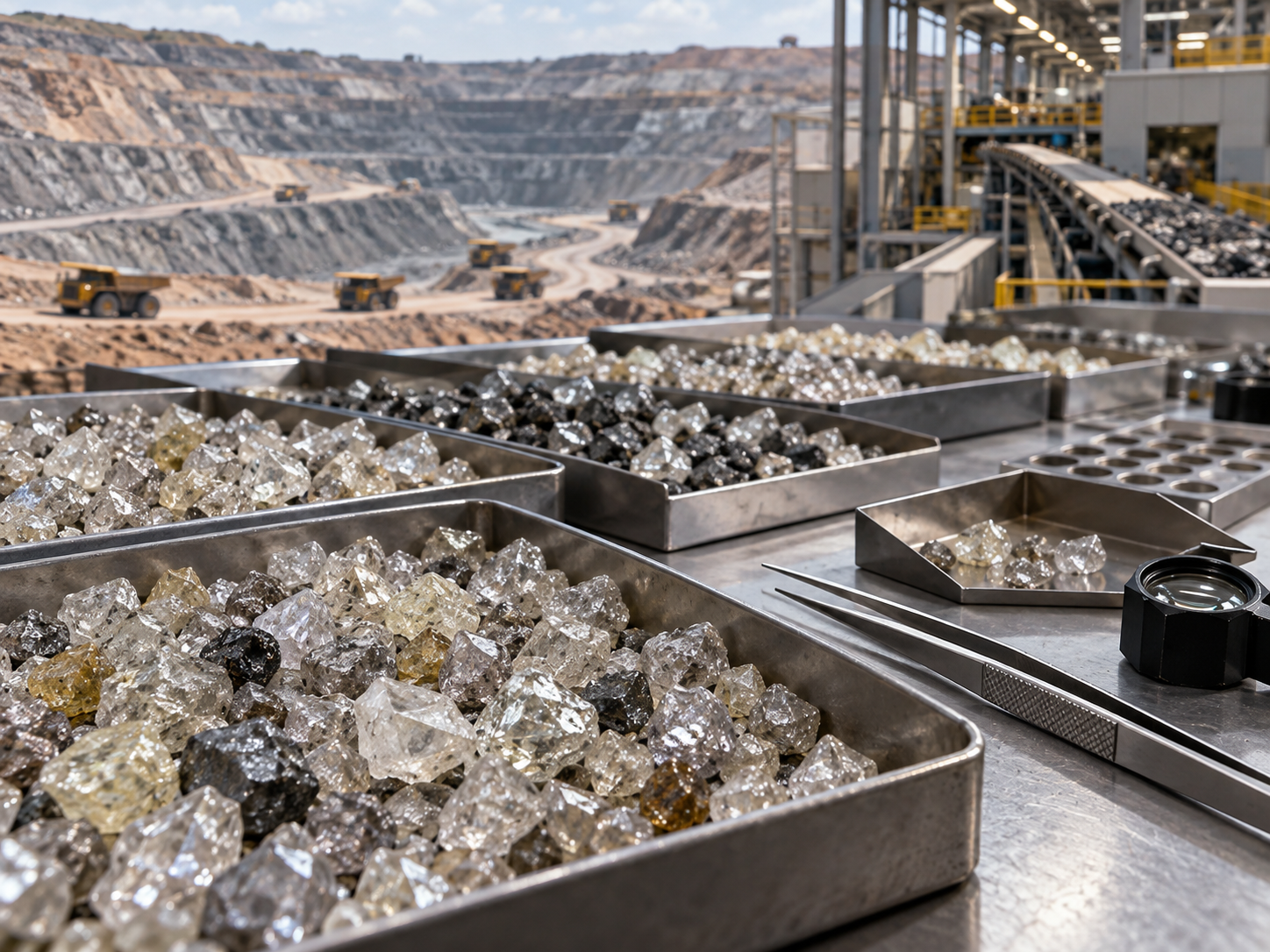
Reuters reported on October 20 that Anglo American lifted its 2026 diamond production guidance to 25–28 million carats, up from 21–26 million. The driver was structural, not a demand surge: Anglo now owns the Gahcho Kué mine in Canada outright, which adds to its attributable output. Rough production reached 21.7 million carats in the first nine months of the year, against 17.9 million in the same period of 2025.
Anglo did say rough-diamond trading looks to be stabilizing, with demand improving in the United States and India and inventories better balanced. But it also said lab-grown competition continues to weigh on the market, and that losses and write-downs at De Beers remain a drag while the planned sale of the business proceeds.
While supply is going up on paper, the underlying pressure hasn't gone anywhere. A producer adding carats into a market where cheaper alternatives keep reshaping demand is not the same thing as a market recovering.
Trust: Disguised Stones, Easy Detection
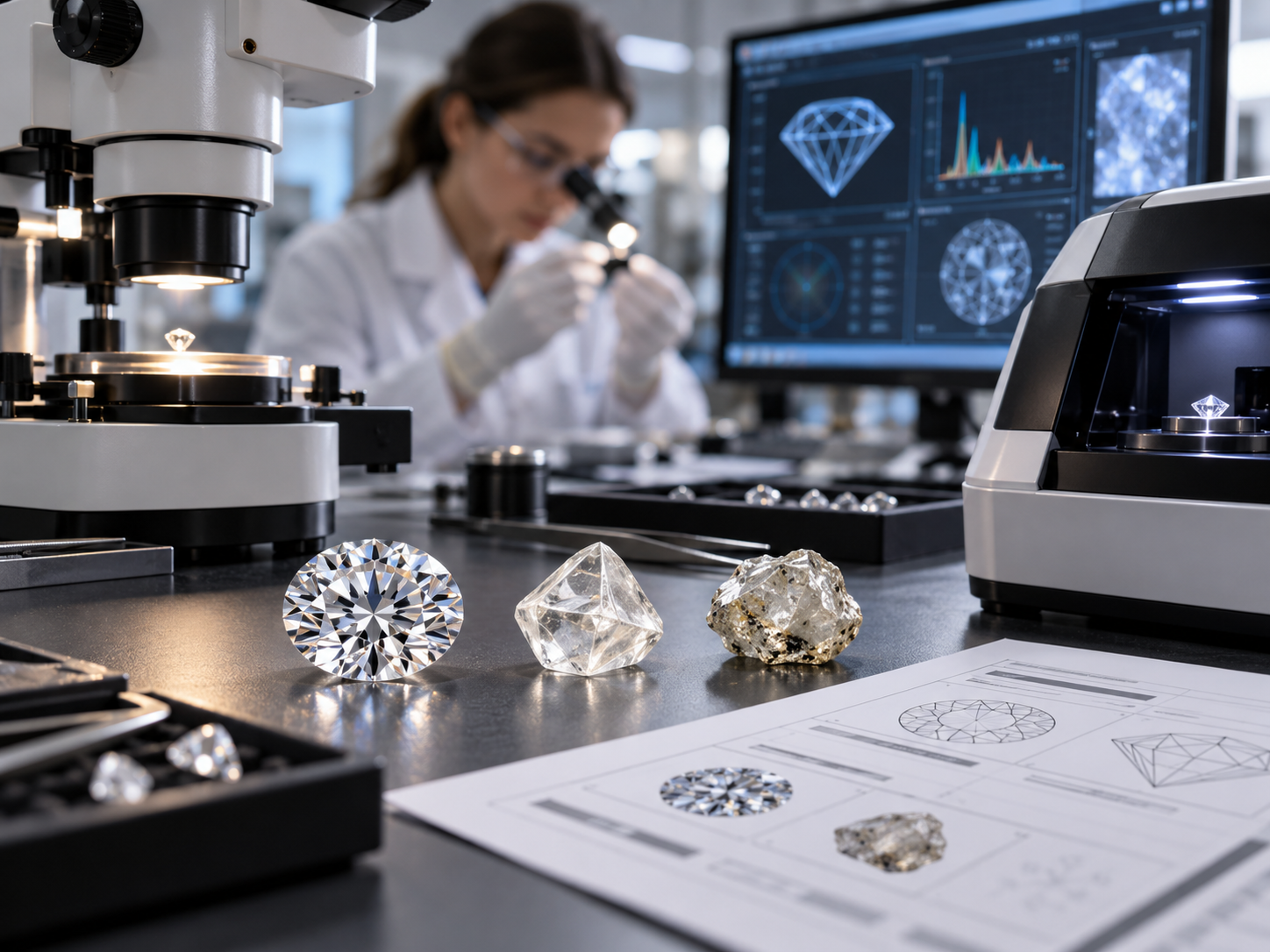
JNA's interview with GIA senior vice president Dr. Wuyi Wang, published October 15, covered a tactic GIA has now seen several times: lab-grown diamonds manufactured and shaped to look like natural rough crystals. Wang's assessment is that this doesn't create a serious problem for the lab. GIA's screening reads material properties, such as impurities and growthrelated characteristics, rather than outward shape, so the same protocols work on originalgrowth crystals, polished stones, and deliberately disguised ones.
For retailers, that's reassuring, with one caveat worth stating plainly: appearance alone was never a reliable test. Clear disclosure and certified grading are what hold up, and a supplier who documents every stone gives you the same protection at your counter that GIA's methods give in the lab. GIA also plans to begin cut grading for marquise, oval, and pear shapes in early 2027, which will extend that clarity to more fancy shapes.
Demand: India Shows Where the Momentum Is
Mint's October 10 report looked at how De Beers, Titan's Tanishq, and Aditya Birla Group's Indriya are making the case for natural diamonds in India: rarity, heritage, emotional permanence, and value retention, plus a push to widen buying occasions beyond weddings into gifting and everyday milestones.
The data underneath that campaign is telling. IGI certification revenue for lab-grown jewelry rose 44% year over year, and for loose lab-grown stones 25%. Natural jewelry grew 2% and natural loose stones 6%. More than 1,000 lab-grown showrooms now operate across India, and a lab-grown stone costs roughly one-tenth as much as a natural diamond of comparable size. Meanwhile, De Beers' average realized rough price fell 32% to $105 per carat in the first half of 2026.
India is also a market with room to run: about 12% of Indian jewelry pieces contain diamonds, compared with roughly 70% in the United States. Forevermark plans to grow from 10 Indian stores in July to 20 by year-end and 100 by 2030, while Titan operates both Tanishq for natural diamonds and its beYon lab-grown brand. The big groups aren't choosing a side; they're segmenting, with lab-grown competing on size and affordability and natural repositioned around scarcity.
What This Means for Your Floor
The pattern is consistent. Natural-diamond players are investing heavily in storytelling and store expansion, which signals how seriously they take the shift. At the same time, certification volumes, showroom counts, and price gaps show where customer behavior is actually moving.
For retailers, the practical read is that both categories will coexist, and the strongest counters will be the ones that explain the difference honestly. Lead with size, value, and certified quality on the lab-grown side, and let customers choose with full information.
LaBrilliante is here to help you build that lab-grown assortment: certified, disclosed, and priced so your customers can see exactly what they're getting.