



The Diamond Market Is Splitting in Two
Author: Alex K., CMO at Labrilliante
Key takeaways:
National Jeweler reported on September 30 that De Beers' CEO and Botswana's president both say diamond demand is recovering, with analyst Edahn Golan noting prices for 1-carat-and-up natural diamonds rose 3% to 4% month over month in August
The same data shows a clear split: lab-grown is gaining traction at lower price points, while natural diamonds are strongest at higher ones
TikTok now treats loose diamonds as a restricted, invite-only category and requires GIA or IGI certification for every stone, natural or lab-grown
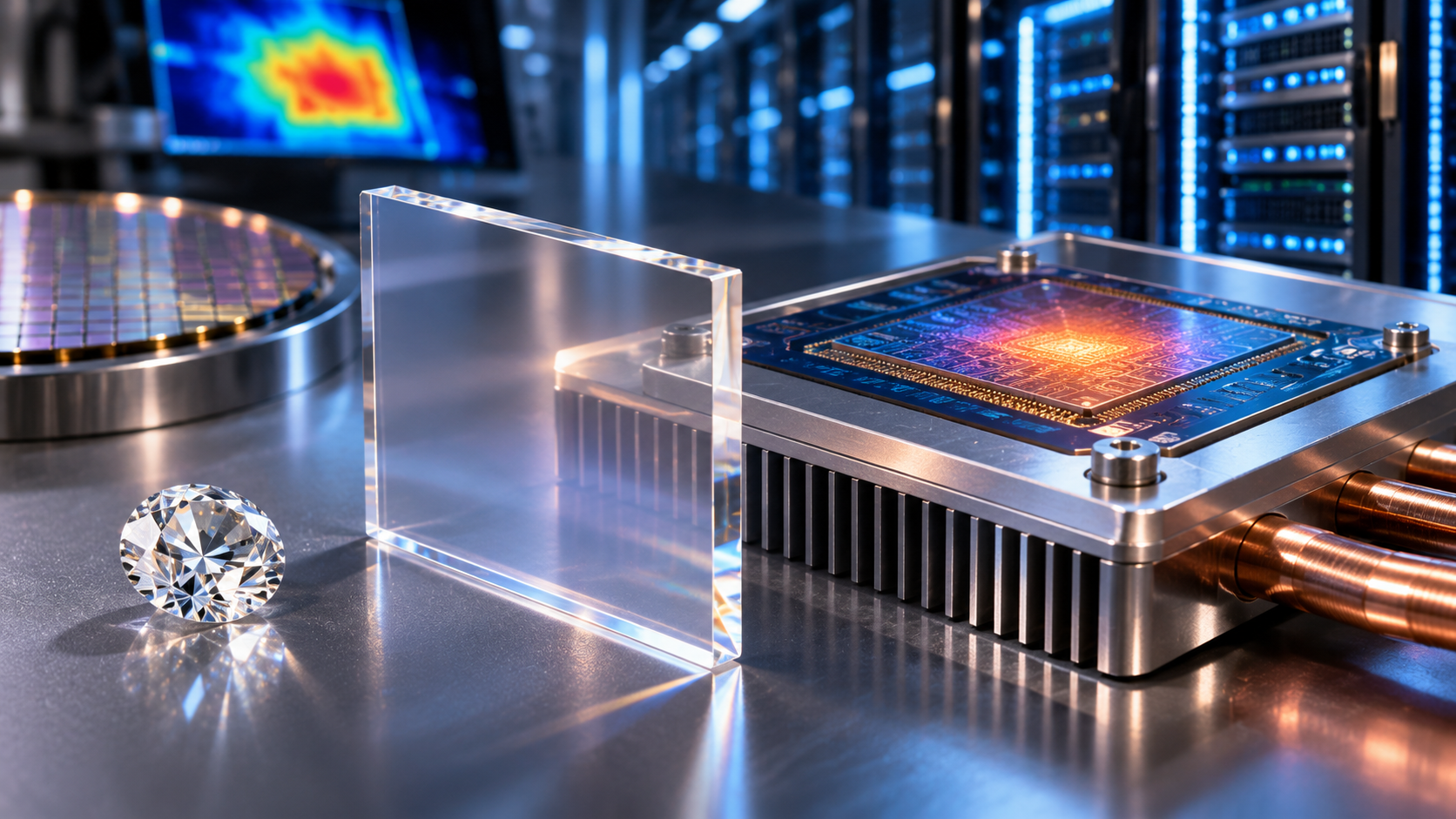
Three stories from the past few weeks describe an industry that is sorting itself out. Natural-diamond producers are saying the worst is behind them, a major social platform is demanding paperwork for every loose stone, and a Japanese research team has found a new way to put lab-grown diamond to work outside the jewelry case.
A Recovery for Natural, With a Catch
National Jeweler's September 30 report covered back-to-back events in New York, where Botswana's President Duma Boko described diamond demand as "bouncing back." De Beers CEO Al Cook, in a separate interview with China Global Television Network, said prices are rising and demand is stabilizing.
Data from industry analyst Edahn Golan of Tenoris supports part of that. Golan said prices for diamonds of 1 carat and up rose 3% to 4% month over month in August, which he called a significant increase. Two-carat stones were the one exception that month, though their prices had already risen earlier this year. Prices for smaller goods began rising earlier in 2026, and Golan said September data might show further gains.
The picture is more mixed on a year-over-year basis. Prices are still lower across most categories, with the exception of diamonds of 3 carats and up, which Golan described as doing exceptionally well. And his early-August retail update pointed to continued bifurcation: lab-grown diamonds are gaining traction at lower price points, while natural diamonds benefit from strength at higher ones.
That's a fair description of where the market sits, and it's worth taking at face value. A rebound in large natural stones doesn't change what most bridal and fashion customers are shopping for, which is a beautiful, certified diamond at a price that fits a real budget. That is the lane lab-grown owns
TikTok Makes Certification the Entry Ticket
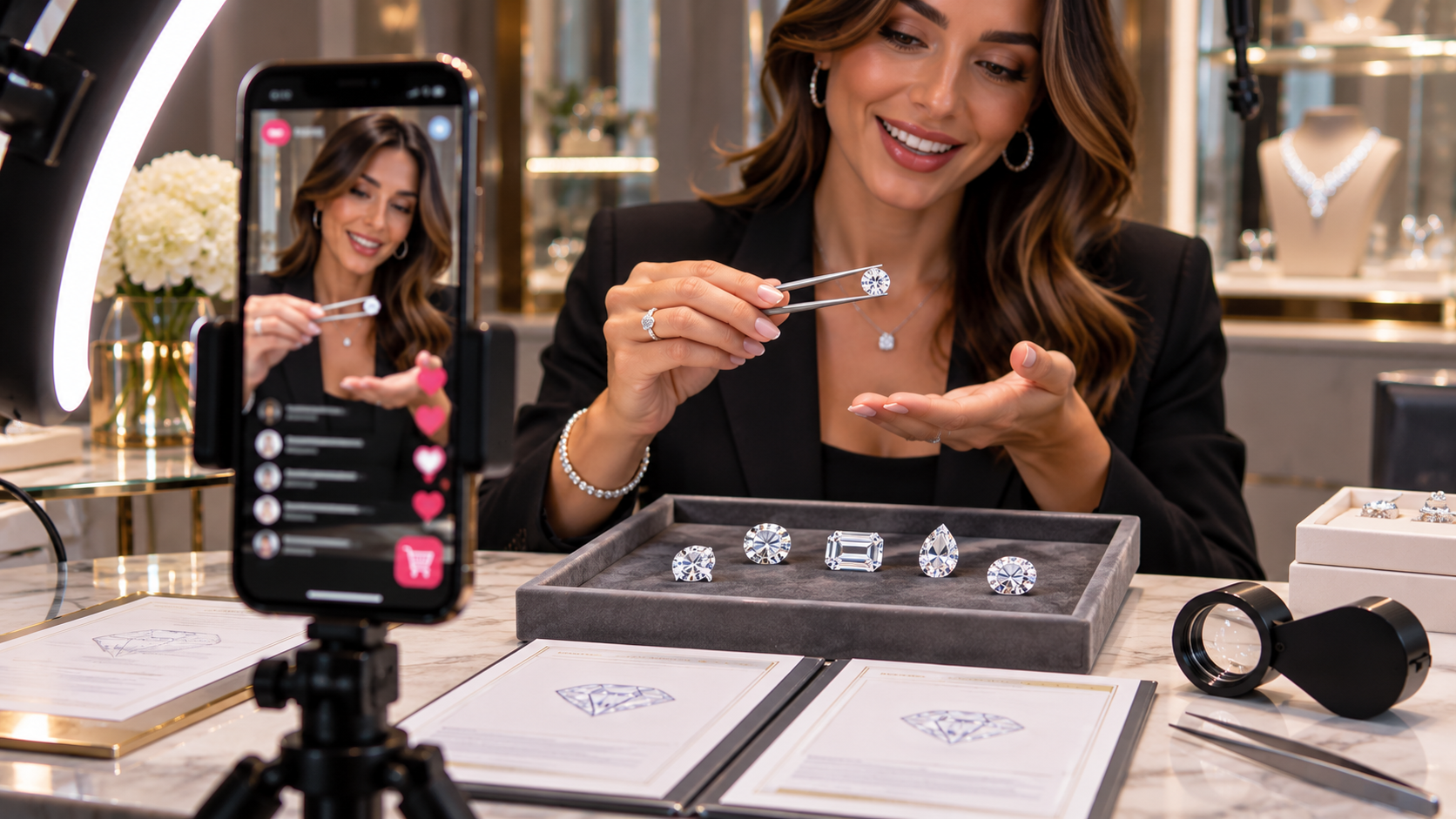
IDEX Online reported that TikTok has reclassified loose diamonds as a restricted, invite-only category in the U.S. Sellers need TikTok's approval before listing or selling, and the platform's authenticity policy states that all diamonds must have a GIA or IGI certification. The rules took effect with a policy published October 26 and cover both product listings and livestream sales.
The policy also bars sellers from passing off lab-grown stones as natural, marketing simulants like cubic zirconia or moissanite as genuine diamonds, or falsifying grading documents. It prohibits misstating weight, color, clarity, cut, origin, or certification, and it rules out unsupported claims about quality, value, investment potential, or resale value.
What hasn't changed is the format itself. The "DiamondTok" phenomenon runs on high-energy livestreams with bidding that can wrap up in as little as 20 seconds, countdown clocks, and starting prices sometimes as low as $1. IDEX notes that TikTok doesn't publish diamond-specific sales figures, so the scale of the trade is hard to pin down, though individual streams draw audiences in the hundreds.
For a retailer selling certified lab-grown stones, the message is straightforward. A platform with this much reach has put in writing that a GIA or IGI report is the baseline, and your counter can offer something a countdown clock can't: time to look at the stone, compare it with the report, and ask questions.
Researchers Find a Way to Slice Lab-Grown Diamond Along Its Most Useful Plane
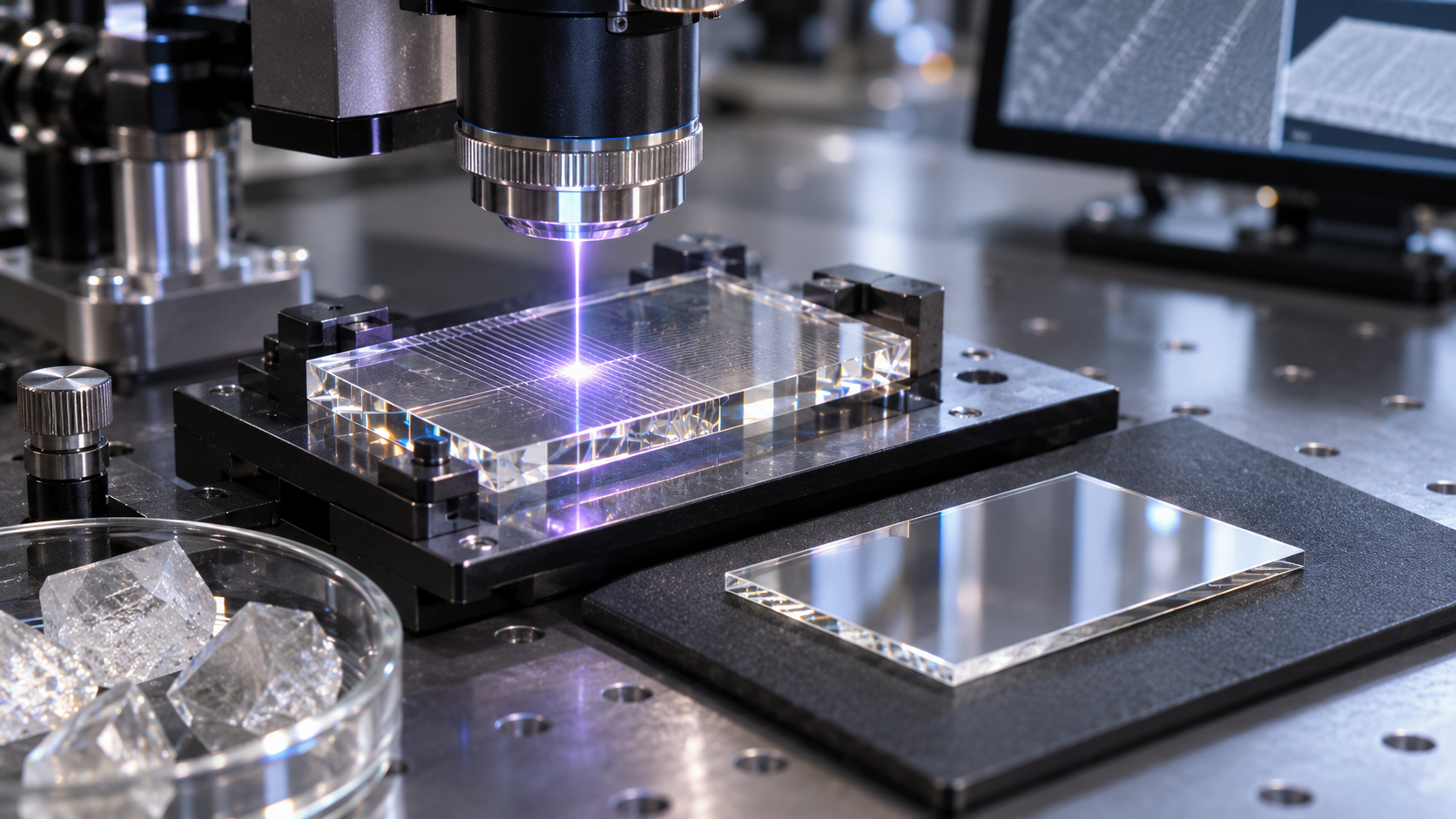
Phys.org reported on November 2 on a study from Chiba University, published in Diamond and Related Materials on November 1 and led by Professor Hirofumi Hidai. The team compared three single-crystal lab-grown diamonds, one made by HPHT and two by CVD with different nitrogen levels, using laser pulses ranging from 233 femtoseconds to 30 picoseconds.
The samples behaved differently. The two CVD diamonds could be modified with much shorter pulses than the HPHT stone, and nitrogen content alone didn't explain the differences, which suggests each crystal's growth history leaves microscopic defects that matter. The CVD samples also showed less stable laser-modified regions and more variation than the HPHT one.
Using 10-picosecond pulses, the team then wrote a controlled grid inside an 8 mm x 8 mm CVD diamond, adding points at the midpoints between existing ones over four steps. The diamond then split cleanly along the {100} plane, the easiest one to polish, with a light tap from tweezers. The slice was roughly 710 times larger than the 300 micrometer HPHT slice from the team's earlier work.
The reason this matters: diamond's thermal conductivity, wide bandgap, and optical transparency make it attractive for heat spreaders in AI chips, high-power semiconductors, and laser optics, but its hardness makes it expensive to shape into thin substrates. The researchers say the process is potentially scalable and could reduce manufacturing costs and improve material use. They also point to a sustainability angle, since diamond-based power devices could help cut energy losses in data centers, power infrastructure, and electric vehicles.
What This Means for Your Floor
Put these together and the through-line is trust and clarity. Natural diamond is recovering at the top of the market. Lab-grown is strong where most customers shop, and it is quietly building a technology story that has nothing to do with engagement rings. And platforms like TikTok are making certification the minimum for anyone selling a loose stone.
For jewelers, the practical response is to lead with documentation, explain the price difference plainly, and let customers choose with full information. Retailers who do that are well placed whichever way the natural recovery goes.
LaBrilliante supplies certified lab-grown diamonds with the paperwork your customers are learning to expect.